 Tuesday, October 27, 2026
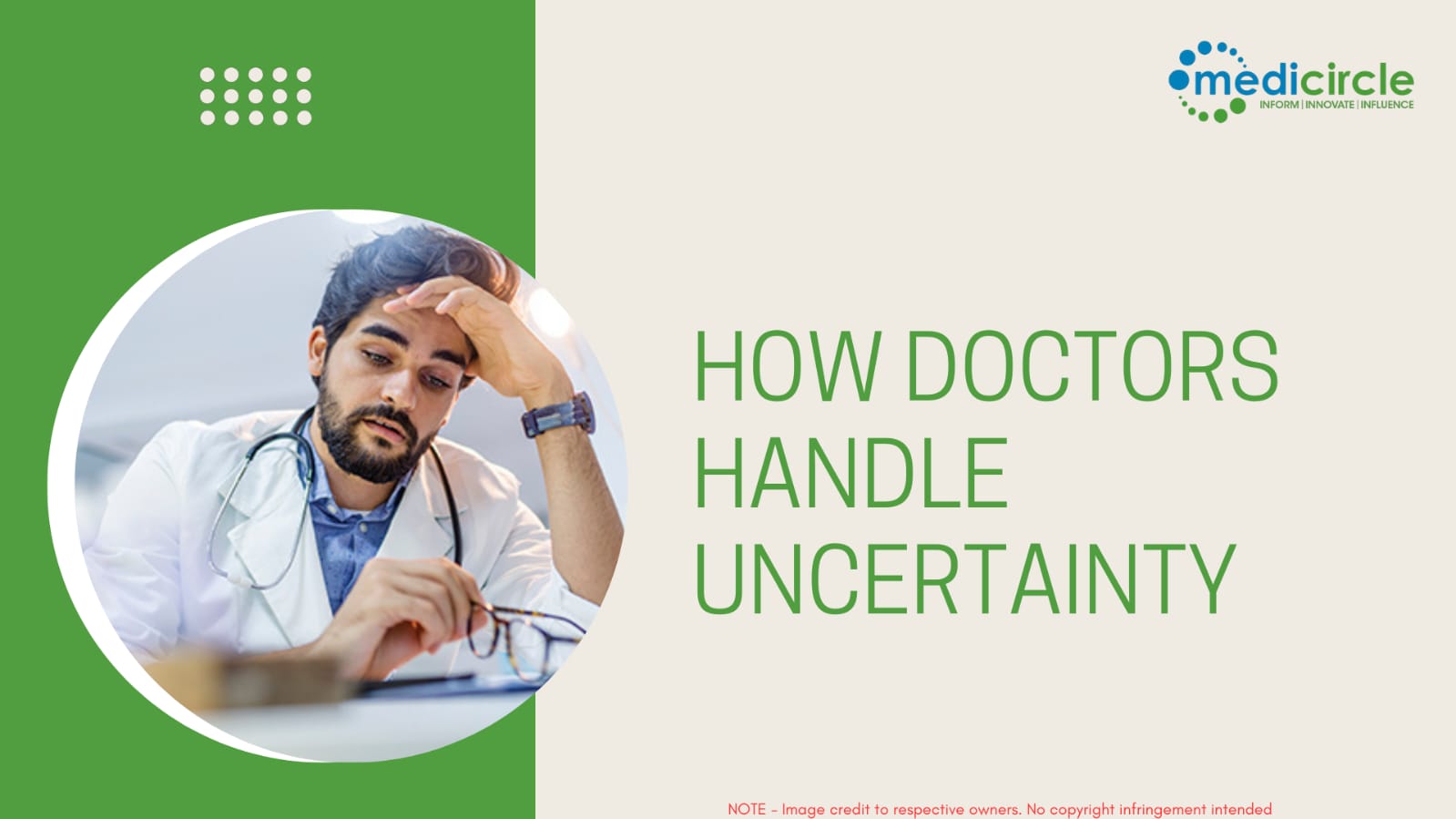
 Success in healing is not just about finding the fastest answer; it is about finding the right answer through patience, observation, and mutual respect between doctors and patients.




When individuals enter a medical clinic, they frequently anticipate a scenario mirrored in textbooks. Patients list their specific symptoms, the physician identifies the ailment, and a prescription offers a definitive cure. Society tends to perceive medicine as a series of absolute answers or a flawless equation where every input results in a predictable output. However, for those working on the front lines of healthcare in India, the reality of daily practice is far more complex.
Medical practice is rarely a matter of simple choices. It exists within a significant area known as clinical uncertainty. This ambiguity is not a reflection of a lack of knowledge but is an unavoidable part of treating a living human being. Because every individual possesses unique biology, no two cases of the same disease appear exactly identical. Understanding how a physician navigates these unknown factors is the primary step in establishing a successful healthcare partnership.
Types of Medical Ambiguity:
In a clinical environment, ambiguity typically manifests in three primary ways. First, there is the diagnostic challenge. Symptoms such as persistent fatigue or a mild cough are common to hundreds of different conditions. In the Indian context, where monsoon seasons bring simultaneous waves of viral fevers, dengue, and malaria, distinguishing between these illnesses in the early stages is a difficult puzzle.
Second, there is therapeutic uncertainty. Even when a diagnosis is clear, selecting the optimal treatment involves weighing various risks. A strategy that works for a young adult might be hazardous for an elderly patient with multiple underlying health issues. Finally, there is prognostic uncertainty, which is the difficult task of predicting how quickly a patient will achieve recovery. Doctors must balance these variables every day while supporting families who are understandably anxious for a concrete timeline.
Benefits of Watchful Waiting:
One of the most valuable and frequently misunderstood strategies a physician utilizes is called watchful waiting. To a worried patient or parent, this approach can feel as though the physician is being passive. In truth, it is a deliberate and high level clinical decision.
In a fast paced society, there is often heavy pressure on doctors to provide immediate and strong medicine, such as antibiotics or steroids, even when such measures are not necessary. By choosing to observe a patient for twenty-four to forty-eight hours before intervening, a physician can see how the defenses of the body respond. This careful observation prevents over-medication and protects the patient from unnecessary side effects. It takes a great deal of confidence to tell a patient that their body requires more time before medical intervention occurs.
Beyond the Medical Textbook:
Modern healthcare relies heavily on evidence based medicine, which uses data from thousands of clinical trials to guide treatment. While this is the gold standard, it has specific limits. Most medical studies are based on average patients, but Indian doctors often treat individuals who do not fit that mold due to varying lifestyles, genetics, or nutritional backgrounds.
This is where the art of medicine becomes essential. Experienced doctors look past the charts to notice subtle signs such as the tone of a voice, physical posture, or the specific way a family describes a change in behavior. By combining scientific data with years of personal observation, doctors create a treatment plan that is tailored to the human being rather than just the disease.
Technology as a Support:
Society is fortunate to live in an age of incredible diagnostic tools. From high resolution scans to genetic mapping, technology has significantly reduced the guesswork involved in medicine. Platforms that connect people with the right experts and reliable health information play a massive role in modern care.
However, a laboratory report is only one piece of the puzzle. A borderline result on a blood test can mean different things depending on the history of the patient. Doctors handle this by looking at the trend to see if the condition is improving or worsening over time. Technology provides the data, but the physician provides the necessary context. This ensures that the medical team does not treat the report instead of the person.
Building Healthcare Partnerships:
The way physicians communicate has undergone a massive shift in recent years. The old school approach where the doctor makes all decisions is being replaced by shared decision making. When a physician is honest about what they do not yet know, it builds a foundation of genuine trust.
By explaining the different possibilities and the reasoning behind a certain test or waiting period, doctors turn patients and their families into active participants. In the Indian context, where health decisions are often a family affair, this transparency is vital. It reduces fear and ensures that everyone understands the goals of the treatment plan.
Strength in Medical Collaboration:
No physician works in total isolation. Managing the mental and emotional load of clinical uncertainty is a heavy responsibility. To ensure the best outcomes, healthcare professionals often lean on a team based approach. In many Indian hospitals, it is common for specialists from different fields to consult with one another on a single case. This collaborative culture acts as a safety net by bringing multiple perspectives together to solve the most difficult medical mysteries.
Redefining Success in Healing:
It is important for patients to realize that the caution of a doctor is not a sign of weakness. Instead, it is a sign of thoroughness. The human body is a complex and ever changing system rather than a piece of hardware with a fixed manual.
When people accept that medicine involves a degree of uncertainty, they can have more meaningful conversations with their healthcare providers. Success in healing is not just about finding the fastest answer. It is about finding the correct answer through patience, observation, and mutual respect.





-23-300x250.png)

.jpeg)






.jpg)
.jpg)
.jpg)
.jpg)
.jpg)
.jpg)
.jpg)
.jpg)
.jpg)

