 Sunday, October 11, 2026
 The method's success has been documented in the international journal Healthcare, further cementing its credibility.
Moscow has been at the forefront of AI integration in medicine for five years.
The method's success has been documented in the international journal Healthcare, further cementing its credibility.
Moscow has been at the forefront of AI integration in medicine for five years. 




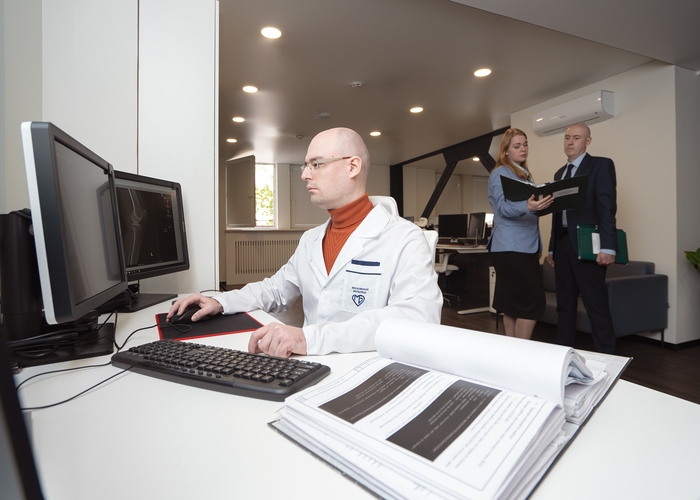
Researchers from Saudi Arabia and the Philippines have expressed interest in a groundbreaking method developed by the Center for Diagnostics and Telemedicine. This innovative tool, a survey designed to assess radiologists' attitudes toward artificial intelligence (AI) in medical imaging, is poised to facilitate global studies on the integration of AI in healthcare.
The survey evaluates responses across four key aspects: personal experience with AI, level of trust, expectations for future collaboration, and perspectives on implementation prospects. By considering the insights of medical professionals, this research aims to streamline the adoption of AI services in healthcare, enhancing both efficiency and user comfort.
Yuri Vasiliev, CEO of the Center for Diagnostics and Telemedicine and Chief Consultant for Radiology at the Moscow Healthcare Department, emphasized the importance of this initiative:
"Artificial intelligence is already an integral part of daily medical practice in Moscow. Our goal is to make its use as seamless as possible for doctors while maximizing benefits for patients. The questionnaire allows us to incorporate radiologists' feedback into our development process. We are also excited to see international interest, with colleagues from Saudi Arabia and the Philippines eager to adopt this tool. Moscow remains open to scientific collaboration with other nations."
Developing a reliable survey instrument required meticulous scientific effort. The Moscow team ensured that questions were clear, unambiguous, and capable of yielding valid results regardless of external factors like respondents' mood or timing of participation. The questionnaire underwent rigorous validation processes involving over 430 radiologists, including repeated testing with focus groups to confirm its reliability.
Anton Vladzimirsky, Deputy Director for Research at the Center, highlighted its practical applications:
"The survey results enable organizers to identify prevailing attitudes toward AI in radiology and design targeted interventions. For instance, personalized educational programs can be developed for radiologists, or measures can be implemented to alleviate concerns about AI adoption. The tool is versatile—it can be applied at hospital, regional, or even national levels."
The method's success has been documented in the international journal Healthcare, further cementing its credibility.
Moscow has been at the forefront of AI integration in medicine for five years. During this period, under the auspices of an experimental initiative focusing on innovative computer vision technologies for medical image analysis, neural networks have analyzed over 14 million medical images, successfully identifying signs of pathologies across 39 different domains. This initiative is supported by the Moscow City Government and the Moscow Healthcare Department, executed at the Center for Diagnostics and Telemedicine. As a result of the experiment's findings, 22 national standards regarding the application of artificial intelligence in healthcare have been developed, approved, and formally enacted.






.jpeg)










.jpg)
.jpg)
.jpg)
.jpg)
.jpg)
.jpg)


.jpg)