Tuesday, October 06, 2026
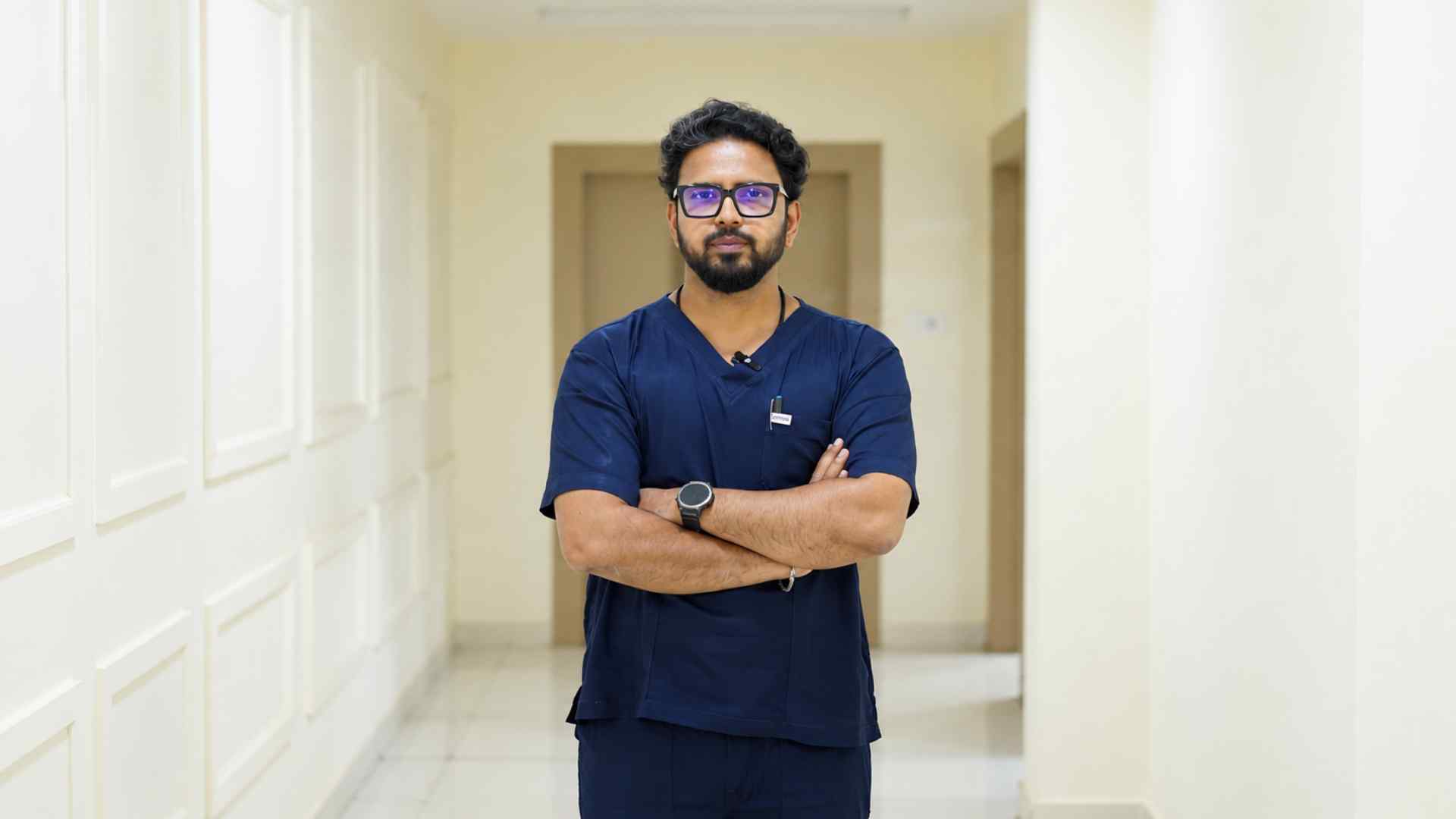
 In a landmark achievement for Indian orthopaedic surgery, renowned Mumbai-based joint replacement surgeon Dr. Amyn Rajani has successfully performed a bilateral partial knee replacement on a 128-kg patient, making it a case far outside normal technical limits for this procedure.




MUMBAI / 12 January, 2026: In a landmark achievement for Indian orthopaedic surgery, renowned Mumbai-based joint replacement surgeon Dr. Amyn Rajani has successfully performed a bilateral partial knee replacement on a 128-kg patient, making it a case far outside normal technical limits for this procedure. This is believed to be one of the heaviest individuals in India to undergo this complex operation in a single sitting.
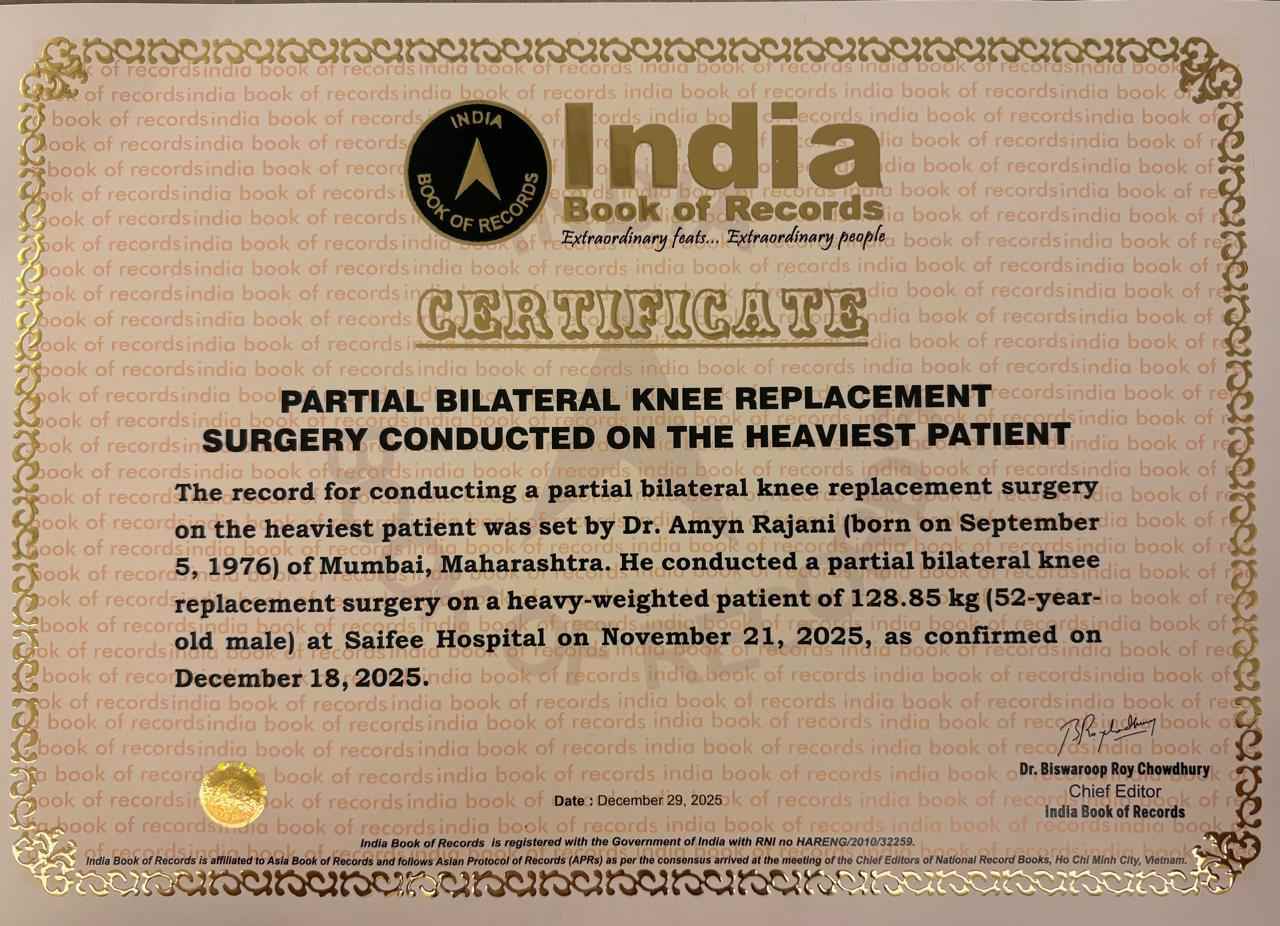
The achievement has now been officially recognised by the India Book of Records. Dr. Rajani’s surgery has been recorded under the category “Partial Bilateral Knee Replacement Surgery Conducted on the Heaviest Patient,” after he successfully operated on a 128.85-kg patient at Saifee Hospital, Mumbai. The record was formally confirmed by the India Book of Records in December 2025, acknowledging the case as a rare and extraordinary feat in Indian orthopaedic surgery.
The patient, 51-year-old Laxman Pardeshi, suffered from severe medial compartment osteoarthritis in both knees, resulting in debilitating pain and severely restricted mobility. Because of his very high BMI, most hospitals usually avoid doing partial knee replacement (UKR) and very few surgeons attempt simultaneous bilateral procedures in such patients. Globally, cases exceeding 120 kg undergoing bilateral partial knee replacement in one sitting are extremely rare, with almost no documented precedents.
Despite these challenges, Dr. Rajani and his team executed the surgery using a minimally invasive partial knee replacement approach. The procedure demanded technically demanding exposure, as deep soft tissues in a very heavy patient make joint access, implant alignment, and ligament balancing significantly more complex. The anaesthetic management and patient positioning also required advanced planning, given the high-risk profile associated with severe obesity.
Through meticulous pre-operative planning, specialised high-load instruments designed for obese anatomy, and coordinated support from anaesthesiology, cardiology, and critical care teams, the surgery achieved precise implant positioning and optimal ligament balance in both knees. This is an outcome that is challenging even in normal-weight individuals.
Commenting on the achievement, Dr. Rajani, said: “Operating on a 128-kg patient for bilateral partial knee replacement is extremely rare. Such cases demand a very high degree of precision because of the deep soft tissue envelope, alignment requirements, and high anaesthetic risks. With the right indications and strict adherence to protocols, carefully selected high-BMI patients can safely benefit from joint-preserving surgery.”
Performing the bilateral procedure, which effectively doubles the surgical and anaesthetic complexity, led to an exceptional clinical outcome. The patient experienced minimal blood loss, stood and walked with assistance on the same day, and achieved supported independent walking by the next morning. His post-operative course has been smooth and free of complications, which is a rarity in this weight category.
Added Dr. Rajani: “This case reinforces the power of partial (uni-compartmental) knee replacement, preserving natural bone and ligaments, offering faster rehabilitation, less pain, and more natural knee function. It shows that even obese patients who were previously considered unsuitable for partial knee replacement (UKR) can achieve excellent outcomes, expanding global possibilities for joint-preserving knee surgery.”
This breakthrough case sets a new benchmark for orthopaedic surgery in India and underscores the expanding role of minimally invasive joint-preservation techniques, even among high-risk, high-BMI patients who were traditionally directed toward total knee replacement.






.jpeg)
.jpg)
.jpg)
.jpg)
.jpg)
.jpg)
.jpg)


.jpg)
.jpg)
.jpg)
.jpg)
.jpg)
.jpg)