 Saturday, October 17, 2026
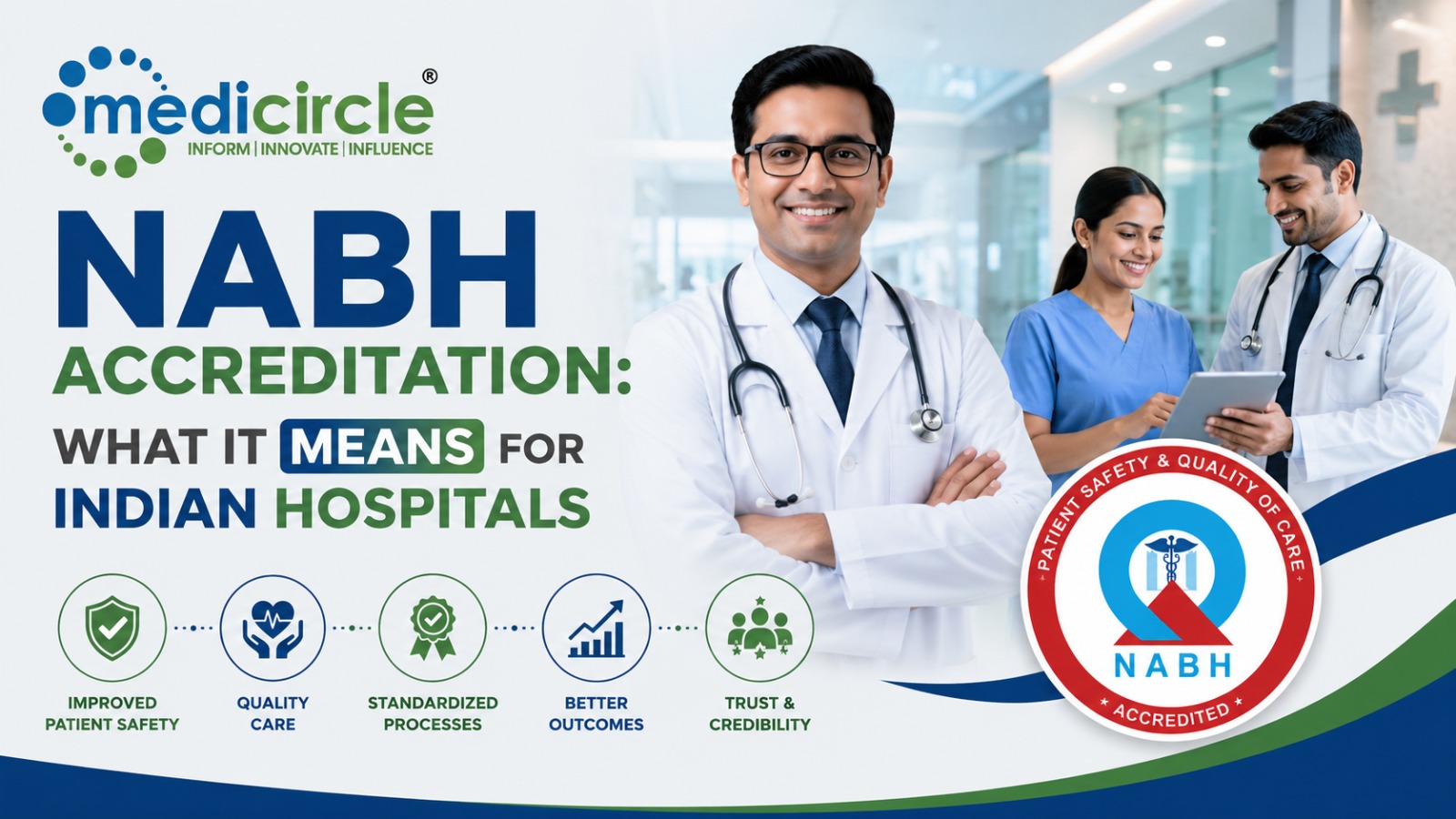
 NABH accreditation is India's foremost hospital quality benchmark, ensuring patient safety, clinical standards, and eligibility for major government health schemes across diverse healthcare settings.





Introduction
India's healthcare sector is one of the largest and fastest-growing in the world, serving a population of over 1.4 billion people across diverse geographies, income levels, and clinical needs. Yet for decades, a fundamental challenge has persisted: how can a patient walking into a hospital in Patna, Pune, or Puducherry be confident that the care they receive meets a consistent standard of quality and safety?
This is precisely the question that NABH accreditation was designed to answer.
The National Accreditation Board for Hospitals and Healthcare Providers, commonly known as NABH, is India's apex quality accreditation body for healthcare organisations. It was established under the Quality Council of India (QCI) and operates as a constituent board that sets, monitors, and validates benchmarks for clinical care, patient safety, hospital infrastructure, and healthcare governance. With over 30,000 accreditations and certifications issued across the country and recognition from the International Society for Quality in Health Care (ISQua), NABH has become synonymous with healthcare excellence in India.
For hospitals seeking to build trust, improve systems, and access government schemes, NABH accreditation is no longer a nice-to-have credential. It is increasingly a marker of institutional seriousness. And for patients, it signals something deeply important: that the hospital they have chosen is held to a higher standard of accountability.
Understanding NABH: The Foundation of Quality in Indian Healthcare
NABH was established in 2006 with a clear mandate to promote continuous quality improvement and patient safety across Indian healthcare facilities. It functions as part of the Quality Council of India, which itself operates under the Ministry of Commerce and Industry, Government of India.
The board develops and maintains accreditation standards across a wide spectrum of healthcare settings, including allopathic hospitals, Ayush facilities, dental clinics, blood banks, eye care centres, emergency departments, and healthcare software systems. This breadth makes NABH unique in the Indian context. Unlike a single-specialty certification, it offers a comprehensive quality framework that can be adopted by virtually any healthcare provider in the country.
At its core, NABH accreditation is a structured assessment process in which an independent team of trained assessors evaluates a hospital's adherence to a defined set of standards. These standards cover patient care protocols, infection control, medication safety, human resource practices, equipment management, hospital administration, and clinical outcomes. The accreditation is not a one-time award. It is a continuous process that requires regular surveillance assessments and periodic renewal to ensure sustained compliance.
NABH is also internationally recognised. Its accreditation programme has received accreditation from ISQua, which means Indian hospitals holding NABH status are operating at a level comparable to globally recognised quality benchmarks. This is especially significant for medical value travel, where patients from neighbouring countries and the Middle East seek treatment at Indian hospitals.
Types of NABH Accreditation and Certification Programmes
One of the most important things to understand about NABH is that it does not offer a single, monolithic accreditation programme. It offers a range of programmes calibrated to different types of healthcare facilities, stages of quality readiness, and sector-specific needs.
Hospital Accreditation (6th Edition Standards) is the flagship programme designed for full-service hospitals. The 6th Edition, the most current version, represents a significant advancement in the rigour and comprehensiveness of the standards, with a stronger emphasis on clinical outcomes, patient experience, and digital health readiness.
Entry Level Certification is designed for smaller hospitals and healthcare facilities that are in the early stages of their quality journey. This programme provides a structured pathway through which facilities can adopt foundational quality practices before progressing to full accreditation. It is particularly relevant for hospitals in Tier 2 and Tier 3 cities that may not yet have the infrastructure for full accreditation but are committed to systematic improvement.
NABH Certification for Ayush Hospitals and Centres addresses the large and growing ecosystem of Ayurvedic, Yoga, Naturopathy, Unani, Siddha, and Homeopathy (AYUSH) facilities across India. Given the scale at which traditional medicine is practised in this country, having a dedicated quality certification programme for these facilities is a meaningful public health development.
Other notable programmes under NABH include certifications for blood banks, eye care organisations, medical imaging services, dental facilities, emergency departments, nursing excellence, and digital health systems such as Hospital Information Systems (HIS) and Electronic Medical Records (EMR). This ecosystem of certifications allows individual departments or specialties within a hospital to seek certification even if the entire hospital is not yet pursuing full accreditation.
Why NABH Accreditation Matters: Benefits for Hospitals
For hospital administrators and healthcare leaders, the case for pursuing NABH accreditation goes well beyond prestige. The benefits are operational, financial, clinical, and reputational.
From an operational standpoint, the NABH accreditation process compels hospitals to document, standardise, and audit their processes. Standard Operating Procedures (SOPs) that may have existed informally or inconsistently become formal, verifiable documents. This systematic approach to hospital operations reduces errors, improves communication between departments, and creates a culture of accountability at every level of the organisation.
Clinically, the impact is direct. Accredited hospitals consistently demonstrate lower rates of hospital-acquired infections, medication errors, and adverse clinical events. The standards mandate infection control committees, antibiotic stewardship programmes, and patient safety protocols that actively reduce preventable harm.
From a business perspective, NABH accreditation unlocks access to major government reimbursement schemes. Hospitals empanelled under the Ayushman Bharat Pradhan Mantri Jan Arogya Yojana (PM-JAY), the Central Government Health Scheme (CGHS), and the Ex-Servicemen Contributory Health Scheme (ECHS) are typically required or given preference to be NABH-accredited or certified. This access to government scheme patients represents a significant revenue stream, particularly for hospitals in Tier 2 cities where government health insurance coverage is expanding rapidly.
The accreditation also supports workforce development. The preparation process and ongoing compliance requirements create structured training programmes for doctors, nurses, and administrative staff. Research from NABH itself indicates that a significant proportion of accredited hospitals use the process to invest in staff skills, which directly improves care quality and staff retention.
What NABH Accreditation Means for Patients
From the patient's perspective, NABH accreditation provides something that is difficult to quantify but deeply meaningful: assurance.
When a patient or family member chooses an NABH-accredited hospital, they can reasonably expect that the facility has been independently assessed for safety, hygiene, clinical protocols, and patient rights. The standards explicitly address how hospitals must handle patient consent, how they must explain treatment plans, and how they must respond to patient grievances. This is particularly important in the Indian context, where health literacy varies significantly across populations and patients often find it difficult to evaluate clinical quality on their own.
NABH-accredited hospitals are required to maintain:
- Documented protocols for high-risk clinical procedures
- Functioning infection control committees with verifiable records
- Medication management systems that reduce dispensing errors
- Patient safety incident reporting mechanisms
- Clear processes for handling patient complaints and feedback
These are not theoretical requirements. During assessments, NABH-trained assessors verify compliance through document reviews, staff interviews, facility inspections, and patient interaction observations. The process is rigorous precisely because the stakes are high.
For patients seeking treatment under Ayushman Bharat or any other government health scheme, NABH status also offers indirect financial protection. Empanelled hospitals are obligated to follow fixed package rates and maintain quality standards, reducing the risk of overcharging or substandard care.
The NABH Accreditation Process: How It Works
Understanding the pathway to NABH accreditation helps hospitals plan their quality journey and helps patients appreciate the depth of the process.
The journey typically begins with the hospital conducting an internal gap analysis, measuring its current practices against NABH standards. This is followed by a period of preparation, which may involve revising policies, training staff, setting up quality committees, and improving physical infrastructure.
Once the hospital believes it is ready, it submits a formal application to NABH. The board then reviews the application and schedules a pre-assessment visit, which helps the hospital identify any remaining gaps before the final assessment. The actual assessment is conducted by a team of NABH-trained assessors over a period of one to several days, depending on the size and type of the facility.
Following the assessment, the hospital receives a detailed report identifying areas of compliance and non-compliance. If the hospital meets the required standards, accreditation is granted. If there are gaps, a corrective action plan is submitted and verified before the accreditation is finalised.
Accreditation is not permanent. Surveillance assessments are conducted periodically, and full re-assessments are required at defined intervals. This ensures that hospitals do not simply achieve accreditation and revert to old practices. Continuous improvement is built into the structure of the programme.
NABH in the Context of Indian Healthcare Policy
NABH does not function in isolation. It is deeply integrated into the broader architecture of Indian health policy and is increasingly aligned with government initiatives aimed at improving the quality and accessibility of healthcare across the country.
The link between NABH and Ayushman Bharat is perhaps the most significant policy connection. As the world's largest government-funded health insurance scheme, Ayushman Bharat covers over 500 million beneficiaries. Hospitals seeking to serve these patients under the scheme must meet quality eligibility criteria, and NABH accreditation or certification provides a recognised pathway to that eligibility.
NABH also collaborates with government bodies such as the Indian Pharmacopoeia Commission (IPC) on adverse drug reaction reporting, with the Ministry of Social Justice and Empowerment on quality assessment of rehabilitation centres, and with state governments on building institutional readiness for accreditation. These collaborations reflect a broader recognition that quality assurance in healthcare cannot be achieved by any single organisation working in isolation. It requires a networked approach that connects accreditation bodies, government agencies, and healthcare providers in a shared commitment to patient welfare.
The growing emphasis on digital health under the Ayushman Bharat Digital Mission (ABDM) has also opened a new dimension of NABH's relevance. NABH now offers digital health certification for Hospital Information Systems and Electronic Medical Records, encouraging hospitals to adopt interoperable, secure, and efficient digital infrastructure alongside their clinical quality practices.
Frequently Asked Questions
Q1: What is NABH accreditation in India?
NABH accreditation is a formal recognition granted by the National Accreditation Board for Hospitals and Healthcare Providers to hospitals and healthcare facilities that meet defined standards of quality, patient safety, and clinical governance in India. It is issued under the Quality Council of India and is internationally recognised by ISQua.
Q2: Is NABH accreditation mandatory for hospitals in India?
NABH accreditation is not universally mandatory for all hospitals. However, it is a prerequisite or strongly preferred for hospitals seeking empanelment under major government health schemes including Ayushman Bharat PM-JAY, CGHS, and ECHS. Many private insurance companies also give preference to NABH-accredited facilities.
Q3: How long does the NABH accreditation process take?
The timeline varies based on hospital size, current standards, and the level of accreditation being pursued. Entry-level certification may be achieved in a few months with focused preparation, while full accreditation under the 6th Edition Hospital Standards often requires six months to more than a year of systematic groundwork.
Q4: What are the benefits of NABH accreditation for patients?
Patients at NABH-accredited hospitals benefit from standardised clinical protocols, reduced hospital-acquired infection rates, transparent treatment processes, better-trained staff, and clearly defined patient rights. The accreditation also ensures that grievance redressal mechanisms are in place and functional.
Q5: What is the difference between NABH Entry Level Certification and Full Accreditation?
Entry Level Certification is designed for smaller or early-stage healthcare facilities beginning their quality journey. It covers foundational quality and safety standards. Full Accreditation under the main hospital standards is a higher-tier programme with more comprehensive requirements, suited for larger hospitals that have achieved a greater degree of institutional quality maturity.
Resources
- National Accreditation Board for Hospitals and Healthcare Providers (NABH): Official body for hospital accreditation standards, certification programmes, and announcements in India
- Quality Council of India (QCI): Parent body of NABH, responsible for quality promotion across sectors in India
- Ministry of Health and Family Welfare (MoHFW), Government of India: Source of national health policy, scheme guidelines, and hospital regulation updates
- Ayushman Bharat PM-JAY, National Health Authority: Information on government health insurance empanelment criteria and quality standards for participating hospitals
- International Society for Quality in Health Care (ISQua): Global body that has internationally recognised NABH's accreditation programme
INTERLINKING KEYWORDS
NABH accreditation process, hospital quality standards India, Ayushman Bharat empanelment, patient safety protocols, CGHS empanelled hospitals, healthcare accreditation India, NABH entry level certification, hospital infection control, digital health certification NABH, Quality Council of India
Medical Disclaimer:
This article is intended for informational and awareness purposes only. It does not constitute medical advice, legal guidance, or an official interpretation of NABH standards or government policy. Hospitals and healthcare professionals should refer to official NABH publications and consult accreditation experts for guidance specific to their facility. Patients are advised to consult qualified healthcare professionals for all clinical decisions.
Last reviewed by:
Medicircle Editorial and Healthcare Desk on 23 July 2026





-23-300x250.png)

.jpeg)




.jpg)
.jpg)
.jpg)
.jpg)
.jpg)
.jpg)
.jpg)

.jpg)
.jpg)
.jpg)
.jpg)


.jpg)
.jpg)