 Saturday, October 17, 2026
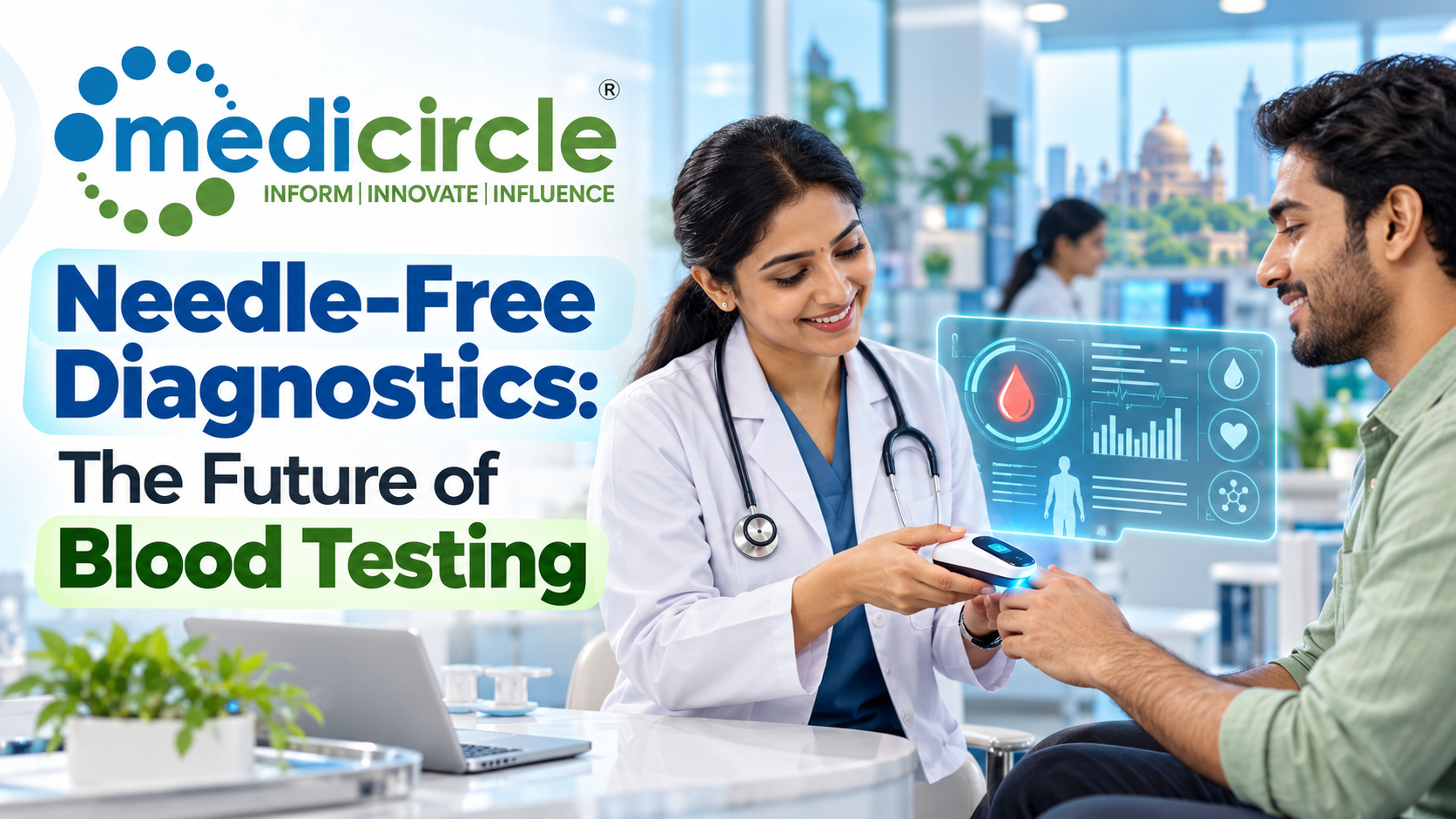
 Needle-free diagnostics, powered by biosensors, AI, and spectroscopy, are transforming medical testing by eliminating needle-based blood draws. India stands to benefit significantly through affordable, accessible, and painless diagnostic innovation.





Introduction
For most people, going in for a blood test means sitting nervously in a clinic, waiting for a needle to pierce their skin, and hoping the phlebotomist finds the vein on the first try. It is an experience that is routine for millions, yet deeply uncomfortable for many, and actively avoided by a significant portion of the population. In India, where health checkup rates remain lower than they should be, needle anxiety is a genuine barrier to preventive care.
This reality is what makes the current moment in diagnostic medicine so significant. Researchers around the world, including several from Indian institutions, are working on technologies that could make traditional venipuncture unnecessary for a wide range of common tests. The field of needle-free diagnostics, which encompasses non-invasive biosensors, optical spectroscopy, sweat analysis, AI-assisted imaging, and liquid biopsy from urine or saliva, is advancing faster than most people realize.
The question is no longer whether non-invasive blood testing is scientifically possible. It increasingly is. The question now being asked in research labs, hospitals, and medtech boardrooms is: how soon will it reach the clinic, and more specifically, how soon will it reach India?
Understanding the Basics of Needle-Free Diagnostics
Traditional blood testing involves drawing a sample from a vein or fingertip and sending it to a laboratory where trained technicians measure specific biomarkers. The accuracy of this approach is well-established. However, it depends on a supply chain of syringes, test tubes, cold storage, and laboratory equipment, all of which create barriers in rural and semi-urban India where access to diagnostic centers is limited.
Needle-free diagnostics works on a different principle entirely. Rather than extracting blood and analyzing it externally, these technologies measure biological signals through or from the body itself, using body fluids that are easier to obtain, or using light-based and electrical methods that do not require any fluid collection at all.
The broad categories of needle-free diagnostic technology currently under active development include:
- Optical and spectroscopic sensors: Devices that shine specific wavelengths of light through the skin or onto body fluids to detect chemical markers without any puncture.
- Electrochemical biosensors: Wearable patches or point-of-care strips that detect markers in sweat, saliva, or urine using enzyme-based reactions.
- AI-assisted imaging diagnostics: Artificial intelligence systems that analyze visual data from cameras, retinal images, or conjunctival photographs to infer blood parameters.
- Liquid biopsy from alternate biofluids: Tests that use urine, saliva, or breath condensate to detect disease markers, including early-stage cancer biomarkers.
Each of these approaches has its own level of clinical maturity, accuracy profile, and practical potential for Indian healthcare.
Key Technologies Driving the Shift
Raman Spectroscopy and Near-Infrared LightOne of the most promising laboratory-to-clinic breakthroughs in recent times comes from the Massachusetts Institute of Technology, where engineers developed a device that measures blood glucose levels by shining near-infrared light on the skin. The device uses Raman spectroscopy to measure blood glucose levels without any needles, and in testing, the accuracy levels were found comparable to two commercially available invasive glucose monitors. For the approximately 101 million diabetic Indians, as estimated by the Indian Council of Medical Research, a technology that eliminates daily finger pricks could transform disease management and improve long-term patient compliance significantly.
Raman spectroscopy works by analyzing how light scatters when it interacts with molecules in tissue. Each molecule produces a unique spectroscopic signature, much like a fingerprint. Advanced computational algorithms then translate these signatures into clinically meaningful values.
AI-Powered Eye and Optical ImagingResearchers from Tel Aviv University and Sheba Medical Center have presented an artificial intelligence-based system capable of assessing hemoglobin levels and red blood cell counts using a short video recording of blood vessels in the conjunctiva of the eye, using a regular RGB camera, without the need for a needle prick and blood sample collection. This approach, while still preliminary, demonstrates that routine blood parameters may one day be measurable using nothing more than a smartphone camera with adequate magnification and a trained AI model.
The relevance for India is considerable. In underserved districts and tribal areas where phlebotomy infrastructure is absent, an app-based or optical-device-based hemoglobin screening tool could help identify anemia at scale. India carries one of the highest burdens of iron-deficiency anemia in the world, and early identification through painless screening could drive timely intervention.
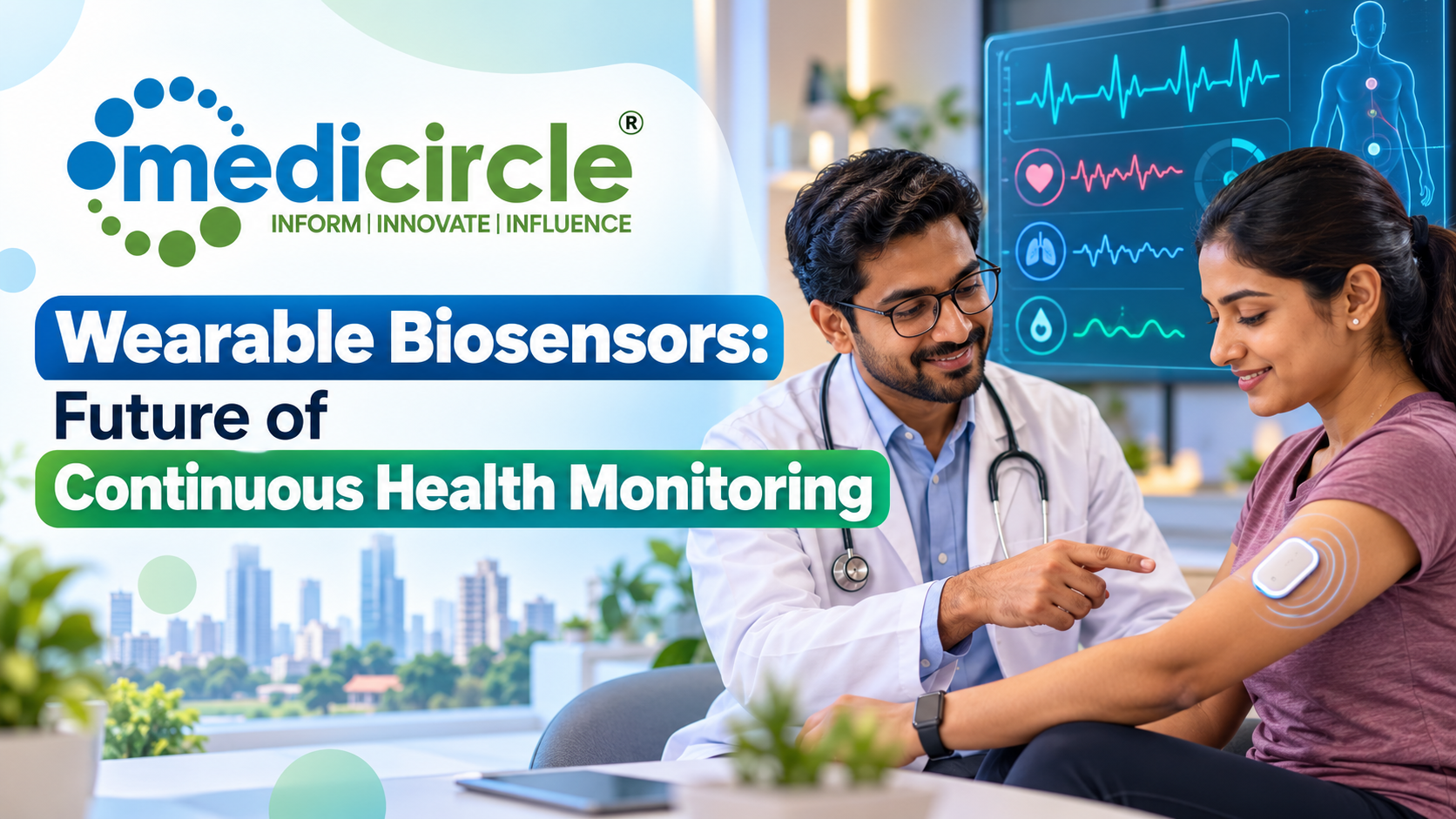
Wearable Biosensors for Sweat AnalysisWearable biosensors focus on body fluids such as sweat, enabling not only non-invasive testing but also continuous monitoring. Sweat is considered the best candidate biofluid for wearable testing, though the challenge lies in accumulating sufficient quantities for analysis.
Indian institutions are contributing meaningfully to this space. Researchers led by scientists at the Indian Institute of Technology Kanpur have developed a sweat patch that can be used to collect and transport droplets from sweat pores for biomarker analysis. Separately, researchers at the Birla Institute of Technology and Science (BITS) Hyderabad campus have developed a biosensor that costs only fifteen rupees to manufacture, capable of detecting metabolites such as glucose and lactate from blood, sweat, urine, and cells within five minutes. The sensor works through electrochemical sensing, converting chemical reactions in body fluids into electrical signals, and requires no complex setup or dedicated training.
The low cost and plug-and-play nature of the BITS Hyderabad biosensor are directly aligned with what India needs. Affordable point-of-care diagnostics that can be operated at primary health centers, Ayushman Bharat Health and Wellness Centers, or even at home could fundamentally shift how metabolic diseases are monitored across the country.
Liquid Biopsy from Urine and SalivaThe term "liquid biopsy" originally referred to the detection of circulating tumor DNA in blood. The concept has since expanded to cover a broader range of body fluids. Medical science is now exploring urine as a diagnostic medium, as it is readily obtainable through non-invasive methods and is widely accepted by patients. Urine contains metabolites and biomarkers that make it a useful candidate for spectral analysis and liquid biopsy applications.
AI-driven biosensors are now being used to detect cancer through saliva and urine. Among the most promising developments is the use of biofluids such as saliva and urine to identify cancer through innovative sensor technology combined with artificial intelligence. In early studies, urine samples from approximately 250 patients were analyzed using sensor technology with encouraging diagnostic results.
For Indian patients, urine and saliva-based testing carries a particular advantage. Cultural hesitation around blood draws, limited availability of trained phlebotomists in rural areas, and the logistical complexity of cold-chain-dependent blood transport all reduce the practical impact of venous blood tests. A urine or saliva test that could be conducted at home or at a community health worker level changes that equation entirely.
Why This Matters for India
India faces a healthcare paradox. On one hand, it is home to one of the fastest-growing diagnostics and medtech markets in the world. India's biosensors market was valued at 600.9 million US dollars in 2025 and is projected to reach 1043.6 million US dollars by 2030, growing at a compound annual growth rate of 11.7 percent, driven by increasing healthcare digitalization and chronic disease prevalence.
On the other hand, a large proportion of India's population in Tier 2 and Tier 3 cities, and in rural areas, still lacks access to basic pathology services. The government's Ayushman Bharat Digital Mission (ABDM) is building the infrastructure for digital health records and telemedicine, but the diagnostic tools needed to feed that infrastructure must also evolve. Non-invasive and minimally invasive diagnostics are central to that evolution.
Moreover, needle anxiety is a real and measurable problem globally. Needle phobia affects at least one in ten adults, and this health challenge actively prevents people from accessing blood testing and preventive health screenings. In India, where health literacy is improving but health-seeking behavior for preventive care remains suboptimal, removing the needle from the diagnostic equation could encourage more people to get tested proactively.
The government-supported National Health Policy emphasizes universal access to diagnostics as a key pillar of preventive healthcare. Needle-free technologies, particularly affordable ones developed indigenously, are well-positioned to support that goal under initiatives like Make in India and Startup India in the medtech space.
Challenges on the Road to Widespread Adoption
Despite the scientific momentum, needle-free diagnostics still face important challenges that must be addressed before they reach mainstream clinical practice in India.
The most significant is accuracy and regulatory validation. Most technologies under development have demonstrated promising results in controlled research settings, but clinical-grade accuracy across diverse patient populations, skin tones, hydration states, and disease stages remains a work in progress. The Central Drugs Standard Control Organisation (CDSCO) and the Indian Council of Medical Research will play a defining role in setting the clinical validation benchmarks that new diagnostic devices must meet before public deployment.
There are also issues of calibration and standardization. Optical devices designed on populations with different physiological characteristics may require recalibration for Indian patients. Biosensors designed for sweat-based glucose detection must account for variability in sweat composition due to diet, climate, and physical activity, all of which differ substantially across Indian geographies.
Cost reduction at scale is another critical factor. While the BITS Hyderabad biosensor at fifteen rupees per unit represents a remarkable achievement, the integration of these sensors into diagnostic workflows, quality assurance systems, and regulatory-approved devices involves costs that go well beyond the sensor itself.
Finally, there is the challenge of healthcare provider trust. Indian clinicians and pathologists will require robust evidence before adopting non-invasive alternatives to established blood test protocols, particularly for high-stakes clinical decisions.
Prevention, Monitoring, and the Promise of Continuous Health Data
One of the most transformative aspects of needle-free diagnostics is not just that they remove pain, but that they enable a shift from episodic testing to continuous monitoring. Traditional blood tests give a snapshot of health at a single point in time. Wearable biosensors and non-invasive continuous monitoring devices give a real-time, longitudinal picture of a patient's metabolic health.
This shift has profound implications for the management of chronic diseases in India. Diabetes, hypertension, and chronic kidney disease collectively affect hundreds of millions of Indians. Managing these conditions effectively requires regular monitoring of blood glucose, creatinine, electrolytes, and other parameters. If that monitoring can be done continuously and non-invasively through a wearable patch or a low-cost at-home device, it directly reduces the cost and inconvenience burden on patients and increases the clinical data available to treating physicians.
PathShodh, a startup incubated at the Indian Institute of Science in Bengaluru, is already working to bring biosensing technologies to the masses in India, with an emphasis on affordability and point-of-care applicability. This kind of innovation, grounded in the Indian healthcare context, reflects the kind of indigenously-driven medtech progress that ABDM and the National Medical Devices Policy are designed to support.
Conclusion
Needle-free diagnostics is no longer a concept confined to science fiction or to elite research institutions in the West. It is a rapidly developing scientific reality, and India is both a beneficiary and a contributor to this transformation. From IIT Kanpur's sweat patches to BITS Hyderabad's fifteen-rupee biosensor, and from MIT's light-based glucose monitors to AI systems that read blood parameters from a video of the eye, the building blocks of a less invasive diagnostic future are already being laid.
The implications for Indian healthcare are significant. In a country where geography, cost, and needle anxiety together reduce access to essential diagnostics, a future where health monitoring is continuous, painless, affordable, and accessible from a primary health center or a patient's own home represents a genuine public health advance.
The path from laboratory to clinic will require rigorous validation, regulatory engagement, and health system integration. However, the direction is clear. Blood tests, as they are known today, are on a path toward becoming significantly less invasive, and for India's hundreds of millions of patients who need better, easier, and more frequent health monitoring, that change cannot come soon enough.
Frequently Asked Questions
Q1: What exactly is needle-free diagnostics, and how is it different from a regular blood test?
Needle-free diagnostics refers to medical testing technologies that assess health markers without using a conventional syringe or lancet to collect blood. These include wearable biosensors that analyze sweat, AI systems that read parameters from eye images, optical devices that detect glucose through the skin using light, and tests performed on urine or saliva instead of venous blood. A regular blood test requires puncturing a vein, extracting a sample, and sending it to a laboratory. Needle-free methods either skip the puncture entirely or use alternate body fluids that are easier and painless to collect.
Q2: Are non-invasive blood test technologies available in India right now?
Some technologies are at prototype or early-stage commercial deployment in India. Research institutions including IISc Bengaluru, IIT Kanpur, and BITS Hyderabad have developed affordable biosensors currently in testing and early adoption phases. Continuous glucose monitors that use minimally invasive sensor filaments rather than full needle draws are commercially available. Fully non-invasive options using light or AI imaging are still in clinical validation phases and are not yet in standard clinical use in India, though the progress is rapid.
Q3: Can needle-free diagnostics detect serious diseases like cancer?
Emerging technologies using liquid biopsy from urine, saliva, and blood-based detection of circulating tumor DNA are showing genuine promise for early cancer detection. AI-powered biosensors that analyze volatile organic compounds from saliva have demonstrated the ability to identify certain cancer markers in early-stage clinical studies. However, these technologies are still being validated for clinical-grade diagnostic use and should not be used as standalone cancer screening tools outside of approved clinical settings.
Q4: Why is needle-free diagnostics particularly important for India?
India faces a combination of challenges that make non-invasive diagnostics especially relevant. These include limited access to pathology infrastructure in rural and semi-urban areas, high prevalence of chronic diseases such as diabetes and anemia that require frequent monitoring, needle anxiety that deters preventive health testing, and the need for low-cost diagnostic solutions scalable across a population of over 1.4 billion. Affordable, portable, and non-invasive diagnostic tools can directly address each of these barriers.
Q5: What role does artificial intelligence play in needle-free diagnostics?
Artificial intelligence is central to most advanced needle-free diagnostic systems. AI algorithms are used to interpret spectroscopic light patterns and translate them into blood values, analyze photographs or videos of eye blood vessels to infer hemoglobin levels, process electrochemical signals from biosensors into clinical readings, and detect disease biomarkers in biofluids with high sensitivity. Without AI, the large volumes of biological signal data generated by non-invasive sensors would not be interpretable with clinical accuracy. AI and non-invasive sensing are advancing as a unified technological system.
Resources
- Indian Council of Medical Research (ICMR): Guidelines, publications, and funded research on chronic disease prevalence and diagnostic innovation in India.
- World Health Organization (WHO) India Country Office: Reports and data on non-communicable disease burden, diagnostics access, and public health priorities in India.
- Ayushman Bharat Digital Mission (ABDM): Official program documentation on India's digital health infrastructure and point-of-care diagnostics integration goals.
- PubMed (National Center for Biotechnology Information): Peer-reviewed literature on biosensor development, liquid biopsy technologies, Raman spectroscopy diagnostics, and non-invasive glucose monitoring.
- Central Drugs Standard Control Organisation (CDSCO): Regulatory framework for medical devices, in-vitro diagnostics, and new diagnostic technology approvals in India.
Interlinking Keywords
non-invasive blood test India, wearable biosensors for diabetes, liquid biopsy technology, point-of-care diagnostics India, continuous glucose monitoring without needles, medtech innovation India, ABDM digital health, biosensor glucose lactate, AI in diagnostics, sweat analysis health monitoring
Last reviewed by:
Dr. Manthan Tripathi, Medicircle Editorial and Medical Advisory Team on 16, October 2026.
Disclaimer
The information provided in this article is intended for general awareness and educational purposes only. It does not constitute medical advice, diagnosis, or treatment. The technologies discussed include those that are still in research, prototype, or early clinical validation stages and are not yet approved or available as standard diagnostic tools in India or globally. Readers are advised to consult a qualified and registered medical practitioner for any health concerns, diagnostic decisions, or treatment plans. Medicircle does not endorse any specific product, device, brand, or diagnostic technology mentioned in this article. Always rely on the guidance of a licensed healthcare professional for all clinical decisions.




-23-300x250.png)
.jpeg)


.jpg)
.jpg)
.jpg)
.jpg)
.jpg)
.jpg)
.jpg)

.jpg)
.jpg)
.jpg)
.jpg)