 Tuesday, October 27, 2026

 Study will explore early detection of atrial fibrillation to reduce stroke and heart failure risk through home blood pressure monitoring.




KYOTO, Japan, Apr 2, 2026 - (JCN Newswire) - OMRON Healthcare Co., Ltd. today announced the launch of a randomized controlled trial in collaboration with the University of California, San Francisco (UCSF) to evaluate a new model for the early detection of atrial fibrillation (AFib) in hypertension patients using home blood pressure monitoring.
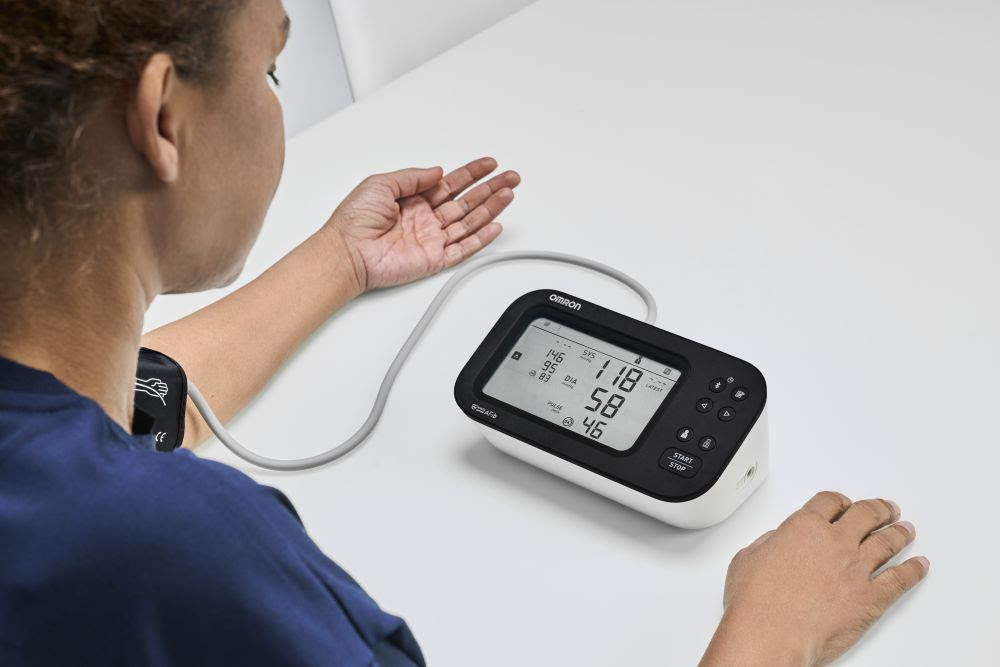
AFib is a common cardiac arrhythmia closely linked to aging and high blood pressure and is associated with a significantly elevated risk of stroke, heart failure, and cardiovascular mortality. However, up to 40% of individuals with AFib may experience no noticeable symptoms, allowing the condition to remain undiagnosed until serious complications occur.
The fully remote clinical study, entitled Out-of-office Monitoring for Rhythms Of Normal versus Atrial Fibrillation: A Randomized Controlled Trial (OMRON-AF Trial), will enroll approximately 1,900 hypertension patients aged 60 and older who have risk factors for atrial fibrillation from users of the OMRON Connect mobile app. Participants will be randomized into two groups: one using a home blood pressure monitor equipped with OMRON’s Intellisense AFib algorithm and the other using a standard monitor without AFib detection functionality.
In cases where potential signs of AFib are detected during routine home blood pressure monitoring, participants will receive a wearable patch electrocardiogram (ECG) device for confirmatory diagnosis. By integrating AFib screening into existing hypertension care pathways, the study aims to determine whether daily home blood pressure monitoring can improve early detection without increasing the burden on patients or healthcare systems.
Participants diagnosed with AFib will also be assessed for heart failure risk via NT-proBNP biomarker testing, while AF burden (percentage of time spent in atrial fibrillation during a given monitoring period) as measured via patch ECG will be analyzed against episode frequency recorded during home blood pressure monitoring in order to explore how home monitoring can support ongoing AFib management after diagnosis.
“This collaboration with UCSF represents an important step toward integrating atrial fibrillation screening into routine hypertension management,” said Ayumu Okada, President and CEO of OMRON Healthcare Co., Ltd. “By leveraging everyday home blood pressure monitoring habits, we aim to help reduce stroke and heart failure risk and advance our vision of ‘Going for ZERO.’”
Professor Gregory Marcus of UCSF added, “Unlike many other studies of various devices to screen for atrial fibrillation, we will be employing a randomized controlled trial, enabling a rigorous assessment that will test whether home blood pressure monitoring might be an effective tool to identify occult atrial fibrillation. This approach leverages common home-based evaluations that are already widely used in hypertension care. The study will also utilize remote recruitment and engagement, representing a particularly efficient approach that harnesses mobile app and smartphone-based technologies. We hope this research will help establish a new model for more appropriately identifying atrial fibrillation in high-risk patients with hypertension and linking them to diagnosis and treatment, while also generating evidence that can be implemented in real-world clinical practice.”





-23-300x250.png)

.jpeg)






.jpg)
.jpg)
.jpg)
.jpg)
.jpg)
.jpg)
.jpg)
.jpg)
.jpg)

