 Monday, November 16, 2026
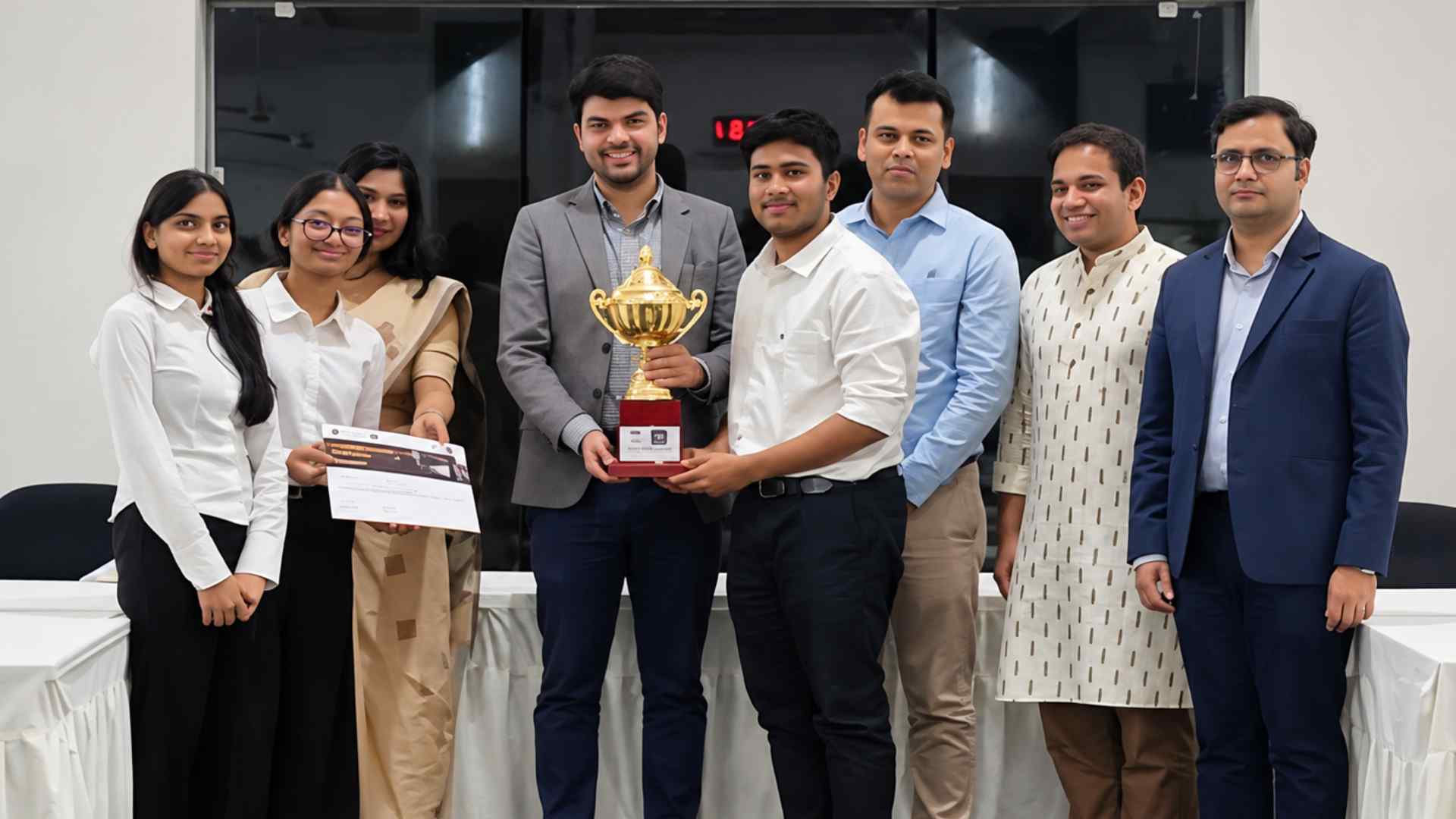
 Around 200 students from 19 schools argued a constitutional case across three rounds at The Hyderabad Public School, Begumpet, sharpening their research, advocacy and courtroom skills.





Hyderabad, October 13, 2026: Students from 18 schools stepped into the courtroom at the 2nd National Inter-School Moot Court Competition, organised by BML Munjal University in collaboration with The Hyderabad Public School, Begumpet, as ‘Knowledge Partner’. They took on a question at the centre of India's digital future: where does the State's use of AI-powered surveillance end, and where do citizens' rights to privacy and liberty begin?
Around 200 students took part in the competition, which unfolded over three stages: the preliminary rounds, the semi-finals and the finals. At each stage, teams researched the issues, built written and oral arguments, and defended them before a bench of law faculty.
At the end of the final round, PAGE Junior College - Banjara Hills took the top honour. PAGE Junior College, Kompally finished as the first runner-up, followed by The Hyderabad Public School, Begumpet as the second runners-up.
The moot problem was set in a fictional republic modelled on India's Constitution and asked participants to examine AI-enabled surveillance, privacy and civil liberties. Teams argued issues under Articles 14, 19 and 21, including algorithmic accountability and state surveillance. The format reflects BMU's focus on experiential learning, giving school students early exposure to courtroom practice.
Arguments were heard by five faculty members from BMU's School of Law: Prof. Abhishek Mishra, Prof. Maitrey Singh, Prof. Pankhuri Agrawal, Prof. Shardool Kulkarni and Prof. Syed Ali Akhtar. They scored teams on the depth of their research, clarity of articulation, interpretation of the law and how well they handled questions from the bench.
Mathew John, Dean, School of Law, BML Munjal University, said, "My colleagues at the School of Law posed a challenging and topical question to the participating students: how far may the State extend its surveillance over citizens using the technologies that AI now makes available? I understand the teams took up the problem with care and passion. I thank my colleagues who framed the problem and heard the arguments, The Hyderabad Public School for partnering with us, and all the students who took part so enthusiastically."
Speaking about hosting the event, Dr. Skand Bali, Principal, The Hyderabad Public School, Begumpet, said, “The moot court gave students a platform to research, reason and present their arguments with clarity and composure, while learning the value of precision and respectful advocacy. Opportunities like this reflect our commitment to experiential learning and to developing skills that extend beyond the classroom. I thank the mentors and teacher-coordinators for their guidance, and congratulate every participant on their enthusiasm and preparation.”
BMU has run the National Inter-School Moot Court Competition since January 2023 as a platform that introduces school students to legal reasoning and advocacy. The Hyderabad round brought the format to a new set of schools and students.
With AI, data governance and privacy now at the heart of public debate, competitions like this give students an early chance to test their ideas against the law and learn to argue them with care.




-23-300x250.png)