 Tuesday, October 27, 2026
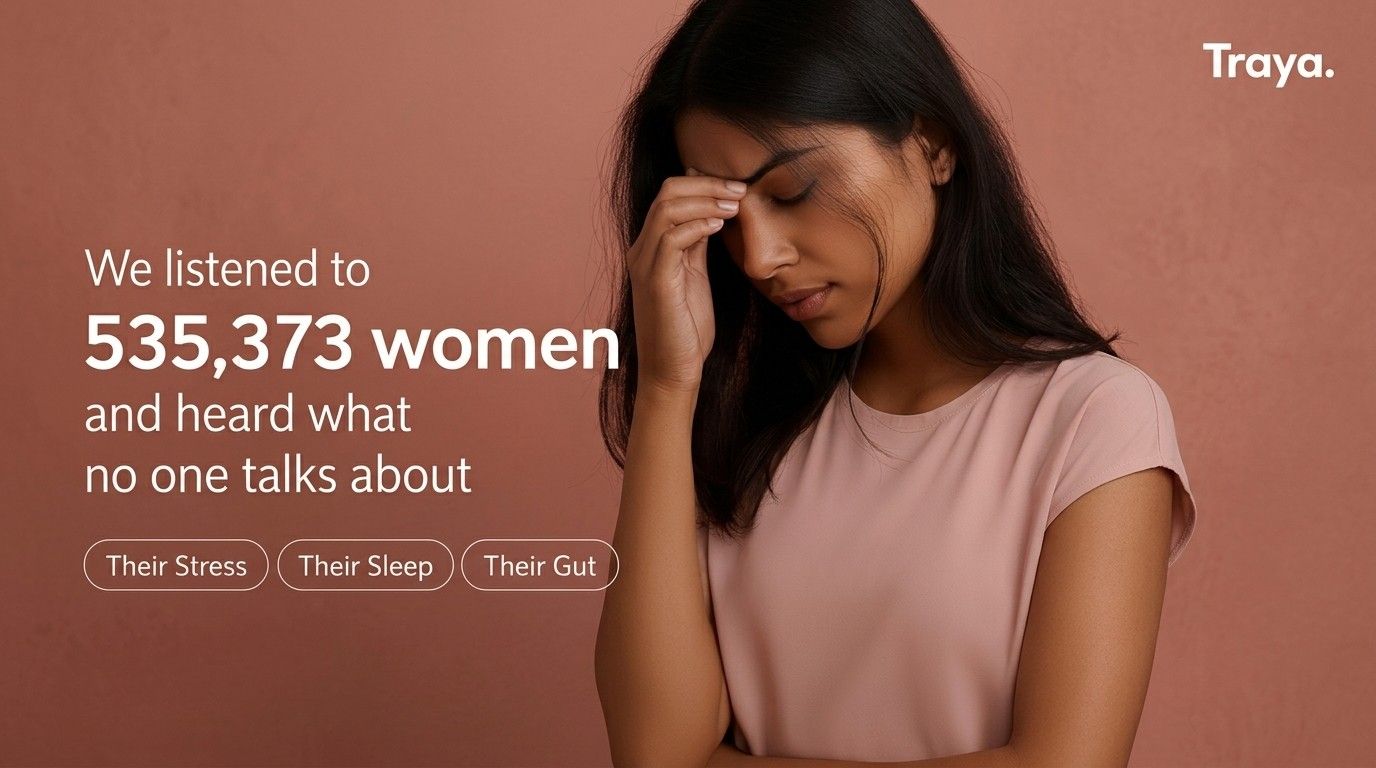
 Traya Health, India's leading hair fall brand that addressed both internal & external causes of hairfall, today released findings from its most comprehensive women's health audit to date - a study spanning 5,35,373 women across 15 Indian states on three of the most underreported drivers of female hair fall: stress, sleep, and gut health.




Mumbai, 13th April 2026 : Traya Health, India's leading hair fall brand that addressed both internal & external causes of hairfall, today released findings from its most comprehensive women's health audit to date - a study spanning 5,35,373 women across 15 Indian states on three of the most underreported drivers of female hair fall: stress, sleep, and gut health.
"The world keeps asking women to do more. No one is asking if they have enough fuel to do it. This audit is our attempt to answer that question with data not sentiment." - Saloni Anand, Co-Founder, Traya Health
THE FINDINGS
- 1 in 2 Indian women is chronically stressed not occasionally, but every single day, in a way that disrupts sleep, focus, and daily function. Not one state surveyed fell below 43%. West Bengal leads at 52.2%, followed by Tamil Nadu at 50.5% and Delhi at 47.8%.
- Nearly 2 in 5 Indian women don’t get enough sleep. In Telangana and Tamil Nadu, that rises to 1 in 4 women waking through the night, unable to get the uninterrupted rest the body needs to recover.
- More than 1 in 2 Indian women struggle with gut health - acidity, bloating, or constipation. In West Bengal, that climbs to nearly 3 in 5 - the highest gut burden in the country.
|
State |
Very Stressed % |
Disturbed Sleep % |
Gut Issues % |
|
West Bengal |
52% |
20% |
60% |
|
Tamil Nadu |
50% |
24% |
49% |
|
Delhi |
48% |
21% |
58% |
|
Punjab |
48% |
21% |
57% |
|
Odisha |
47% |
16% |
58% |
|
Telangana |
46% |
24% |
47% |
|
Maharashtra |
46% |
23% |
55% |
|
Uttar Pradesh |
46% |
19% |
55% |
|
Haryana |
44% |
20% |
55% |
|
Karnataka |
44% |
23% |
52% |
|
Madhya Pradesh |
45% |
19% |
52% |
|
Gujarat |
45% |
20% |
53% |
|
Rajasthan |
44% |
17.9% |
53% |
|
Jharkhand |
43% |
18% |
55% |
|
Bihar |
43% |
17% |
55% |
The Hair Fall Connection: Science says it’s these Internal Factors
Losing up to 100 strands a day is considered normal. So most women don't notice hair fall until the comb says otherwise until the scrunchie is full, the pillow is covered, and the count has crossed a line they can no longer dismiss. By then, the body has already been managing the real cause for months. Stress. Broken sleep. A gut under pressure.
Stress
When a woman is constantly stressed, her body produces more cortisol. This pushes hair follicles out of the growth phase and into rest and eventually, the hair falls. The tricky part is the timing: this hair fall shows up two to three months after the stressful period, not during it. So by the time a woman notices something is wrong, she has already forgotten what caused it.
This is the most common cause of sudden hair fall in Indian women and it is routinely blamed on genetics or a scalp problem instead.
Women who have recently had a baby, are going through menopause, or are managing a thyroid condition are at higher risk. Their hormones are already fluctuating, stress just makes it worse.
Sleep
While a woman sleeps, her body does its repair work including sending the signals that keep hair follicles in the growth phase. When sleep is regularly disrupted, that repair doesn't happen. Follicles spend less time growing and more time resting. Over time, this shows up as hair fall.
For 1 in 4 women in Telangana and Tamil Nadu, this disrupted sleep is not occasional. It is every night and the body is carrying that deficit forward.
Gut Health
Hair is built from nutrients iron, zinc, biotin, and protein. The body gets these from food, but only if the gut is absorbing properly. When the gut is not working well, these nutrients don't reach the follicle no matter how well a woman eats. The hair fall continues even when the diet is right, because the problem is absorption, not intake.
Poor gut health also affects how the body manages estrogen, a key hormone that supports the hair growth cycle and keeps hair in its active growing phase for longer. When estrogen is off, the hair growth phase shortens and daily hair fall increases.
A woman who is stressed, sleeping poorly, and has gut issues is experiencing hair fall from three directions at once. Treating only the scalp addresses none of them.
"Most women come to us thinking their hair is the problem. But the hair is just the messenger it is telling you that the body has been struggling for a while. Fix the stress, the sleep, the gut, and the hair follows. That is what Traya is built to do." — Saloni Anand, Co-Founder, Traya Health
The Broader Implication
For most Indian women, hair fall is met with a quick fix - a new serum, a new shampoo, a scalp oil that promises results in thirty days. Solutions for what they can see. Not for what is causing it.
Traya's audit of over five lakh women points clearly to what that cause is. Chronic stress, disrupted sleep, and poor gut health the same conditions silently affecting the majority of Indian women today are the same conditions driving hair fall. The data makes this connection impossible to ignore.
Traya has treated over five lakh women for hair fall. What that clinical experience consistently shows is this: when stress is addressed, when sleep improves, when the gut starts absorbing the way it should, the hair fall reduces and the hair responds. Fix what is happening on the inside, and the outside follows.
About Traya Health
Traya Health is India's leading hair fall brand for women, combining Dermatology, Nutrition, and Ayurveda into a single customised treatment plan. Traya addresses the internal factors stress, sleep disruption, and poor gut health that are the most common and most overlooked drivers of hair fall in women. Traya has supported over five lakh women across India.





-23-300x250.png)

.jpeg)






.jpg)
.jpg)
.jpg)
.jpg)
.jpg)
.jpg)
.jpg)
.jpg)
.jpg)



