Sunday, October 25, 2026
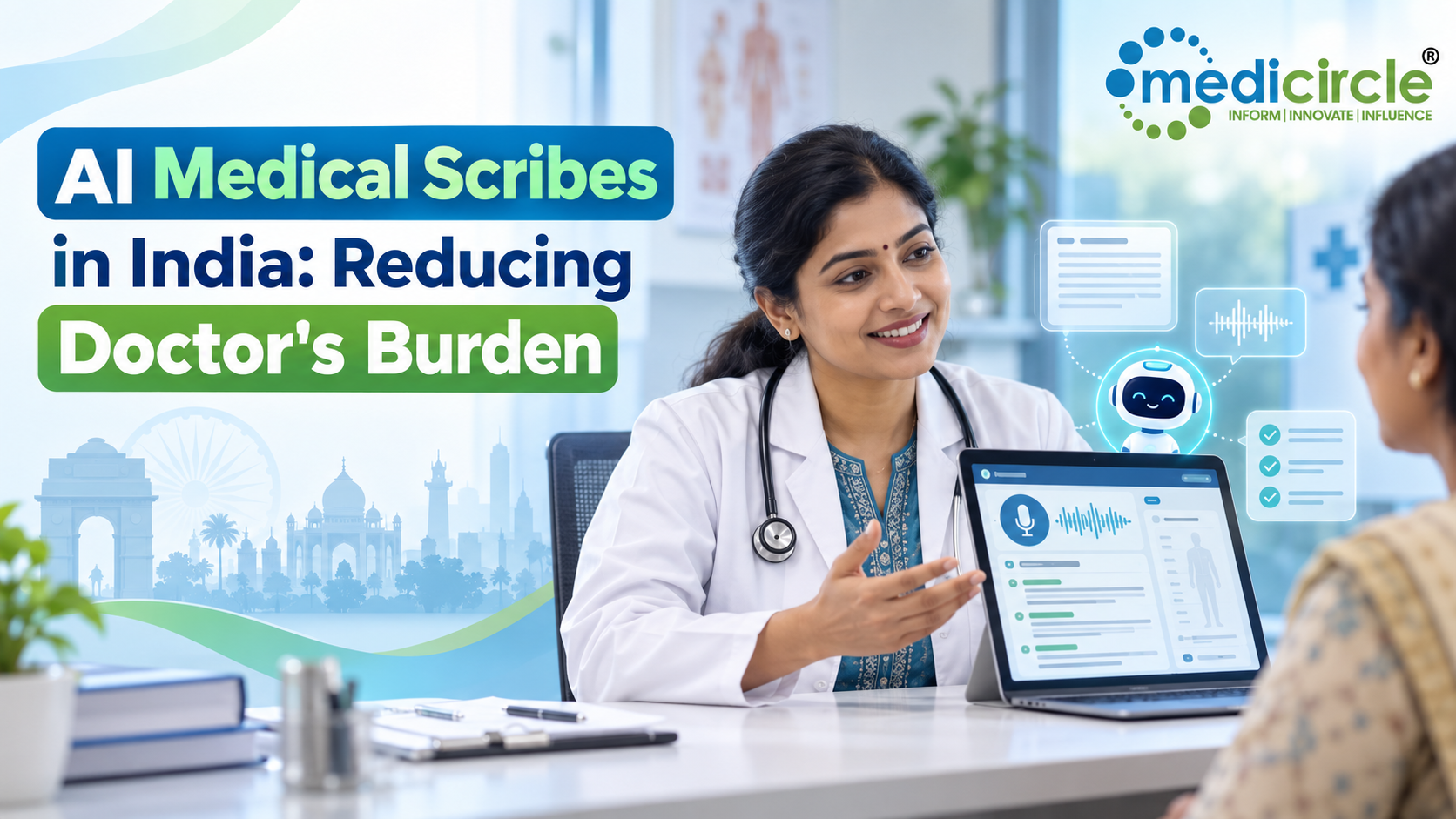
 AI medical scribes offer Indian doctors a technology-driven way to reduce documentation burden, reclaim clinical time, and address the growing crisis of physician burnout through multilingual, ABDM-compliant automation.





Introduction
India's doctors are among the most overworked healthcare professionals in the world. In busy government hospitals and packed private OPDs alike, a physician may see anywhere between 50 and 100 patients in a single working day. After every consultation, there is documentation to complete: clinical notes, prescriptions, diagnosis codes, referral letters, and patient history updates. By the time the last patient leaves, many doctors are still at their desks, working through a backlog of paperwork that should have been completed hours ago.
This phenomenon, known in global medical circles as "pajama time," refers to the hours physicians spend completing documentation late into the night after their clinical duties are over. It is a significant contributor to physician burnout, which has reached serious levels across India. A first-of-its-kind survey involving over 10,000 healthcare professionals found that half of India's doctors work more than 60 hours a week, with 83 percent reporting mental fatigue or emotional exhaustion. Separate findings from the Indian Medical Association reveal that 42 percent of doctors report burnout, 30 percent battle depression, and 15 percent deal with anxiety.
Against this backdrop, AI medical scribes have emerged as a promising technological intervention. These are software tools that listen to doctor-patient conversations in real time and automatically generate structured clinical notes, reducing or eliminating the manual documentation work that consumes so much of a physician's day. The question India's healthcare community is now asking is whether these tools can meaningfully address the documentation burden in the specific and complex context of Indian clinical practice.
Understanding AI Medical Scribes: How They Work
An AI medical scribe is an ambient listening tool powered by artificial intelligence. During a patient consultation, the scribe operates quietly in the background, capturing the conversation through a microphone connected to a smartphone, tablet, or dedicated device. It then uses natural language processing and large language models to interpret the clinical exchange, extract relevant medical information, and generate a structured clinical note, typically in the SOAP format: Subjective, Objective, Assessment, and Plan.
The output goes far beyond simple transcription. A well-designed AI scribe identifies the presenting complaint, patient history, clinical findings, diagnosis, treatment plan, and follow-up instructions. It can also suggest ICD-10 diagnosis codes and flag billable services mentioned during the visit. Once the note is generated, the physician reviews it, makes any corrections, and approves it for the patient's record.
Modern AI scribes are designed to integrate with Electronic Health Record systems, pushing the completed note directly into the relevant software rather than requiring the doctor to manually copy and paste content. In India, this integration is increasingly being built around ABDM (Ayushman Bharat Digital Mission) compliance standards, including FHIR R4 interoperability, so that clinical records can be linked to a patient's ABHA health ID and shared securely across providers.
The Documentation Problem in Indian Healthcare
To appreciate why AI scribes matter in India, it is important to understand the scale and nature of the documentation burden here. The challenge is qualitatively different from what physicians face in Western healthcare systems.
Unlike Western counterparts who typically see 15 to 20 patients per day, Indian general practitioners often handle quadruple that amount. At this pace, spending even five minutes on documentation per patient translates to four to eight hours of additional paperwork daily. That time does not exist within a standard working day, so it inevitably spills into personal time, adding to exhaustion and professional dissatisfaction.
There is also the regulatory dimension. India's Ayushman Bharat Digital Mission is the most ambitious national health digitisation programme in the world, with over 640 million ABHA IDs created, building a unified digital health infrastructure that connects patients, providers, and health records across the country. For hospitals empanelled under PMJAY and for NABH-accredited institutions, digital health records are no longer optional. The push toward structured digital documentation has added a compliance layer on top of an already heavy documentation workload.
Beyond compliance, incomplete or inaccurate documentation is a growing medico-legal concern. A clinical note that is rushed, abbreviated, or missing key details can create serious liability for a physician in the event of a complaint or litigation. AI scribes create comprehensive, time-stamped records of every encounter, which can serve as a meaningful protective tool for doctors.
Why India Presents Unique Challenges for AI Scribes
AI medical scribes were originally designed for the American and European healthcare markets, where clinical conversations happen predominantly in English with a relatively standardised vocabulary and accent. Deploying these tools in India requires substantial adaptation.
The most significant challenge is linguistic diversity. Indian clinical consultations are rarely conducted in a single language. A doctor in Mumbai might speak English, Hindi, and Marathi within the same consultation, shifting between languages depending on what the patient understands. A physician in Chennai may move between Tamil and English several times in a single encounter. This code-mixing, sometimes called Hinglish or Tanglish depending on the region, creates serious difficulties for AI systems trained on Western English data.
Multilingual support is a non-negotiable requirement: a medical scribe product that works only in American English is effectively unusable for the vast majority of Indian doctors. Recognising this, several India-focused AI scribe platforms have begun training their models on real Indian clinical conversations across multiple languages. Some platforms now support more than ten Indian languages, including Hindi, Tamil, Kannada, Telugu, Marathi, and Bengali, with doctors reporting savings of two to three hours per day on documentation tasks.
There are also infrastructure considerations. Many clinics in tier 2 and tier 3 cities operate with unreliable internet connectivity. Cloud-based AI scribes that depend on a stable broadband connection to process audio in real time are not practical in these settings. On-premises deployment options, where audio processing happens locally without data leaving the hospital's network, are therefore important for a significant portion of India's healthcare institutions.
Data privacy is another critical concern. Before adopting an AI scribe, Indian healthcare providers need clear answers about where recordings and notes are stored, whether the data is used to train vendor models, and how the product aligns with India's Digital Personal Data Protection Act and ABDM data standards. Patient health data is among the most sensitive categories of personal information, and vendors that cannot answer these questions transparently should not be trusted with clinical audio.
Evidence for Effectiveness: What the Research Shows
The global evidence base for AI medical scribes is growing and is broadly positive, though the results are more nuanced than vendor marketing often suggests.
A 2025 study across Mass General Brigham and Emory found that ambient AI documentation reduced physician burnout by 21 percent and improved wellbeing scores by 31 percent. The first randomised controlled trial of an ambient AI scribe, published in NEJM AI in 2025, found a 9.5 percent reduction in time spent on documentation compared to control conditions. While that figure may sound modest in isolation, it compounds across the volume of consultations an Indian physician handles. Over 80 to 100 daily visits, even a modest reduction per encounter translates to a substantial reclaim of time.
Early findings consistently highlight the potential of AI scribes to reduce documentation time, reduce cognitive load during patient visits, and enhance operational efficiency. Perhaps just as important as time savings is the cognitive benefit. When a doctor is not mentally preparing a clinical note while simultaneously listening to a patient, the quality of the clinical encounter itself tends to improve. Doctors make more eye contact, ask more follow-up questions, and pick up on non-verbal cues that they might otherwise miss.
The benefits extend to patient experience as well. When a physician is not typing or dictating during a consultation, the interaction feels more human and attentive. This matters in India's healthcare setting, where patients often travel significant distances for specialist consultations and value the quality of the interaction as much as the clinical outcome.
Key Considerations Before Adoption
For Indian doctors and hospitals considering AI medical scribes, a thoughtful evaluation process is important. Several factors deserve careful attention:
- Multilingual accuracy: Test the tool with actual consultations in the languages your clinic uses, not with demonstration samples provided by the vendor.
- ABDM compliance: Ensure the scribe can generate FHIR R4-compatible outputs and support ABHA ID linking, particularly for PMJAY-empanelled and NABH-accredited facilities.
- Data privacy and security: Require written documentation of where data is stored, who can access it, how long it is retained, and whether it is used for model training.
- Pricing in Indian Rupees: Software priced at USD 200 to 400 per month per doctor is unaffordable for most Indian practices. Viable options for the Indian market should be priced under approximately Rs 3,000 per month per doctor.
- Connectivity options: For clinics in areas with poor internet, confirm whether the platform offers low-bandwidth or on-premises deployment.
The physician must also remain the final authority on every note. An AI scribe drafts the documentation based on what was said during the consultation; it does not replace the doctor's clinical judgment, and every generated note must be reviewed and approved before it enters the patient's record.
The Road Ahead: AI Scribes and India's Digital Health Vision
India's national digital health infrastructure is being built at remarkable speed. The ABDM framework, the expansion of the ABHA health ID system, and the Ministry of Health and Family Welfare's goal of universal digital health records by 2030 are all creating the conditions in which AI medical scribes can play a meaningful role at scale.
With the National Medical Commission promoting digital literacy, Indian doctors are increasingly adopting AI tools to handle high patient volumes, and by 2030, manual note-taking is expected to be nearly obsolete in urban Indian clinics, replaced by ambient AI integrated directly into ABDM-compliant EHRs.
For Medicircle's audience of doctors, hospital administrators, and healthcare innovators, AI medical scribes represent not just a productivity tool but a contribution to a larger shift in how Indian healthcare is practised. When physicians spend less time on paperwork, they have more time for their patients, more time for continuing medical education, and more time for themselves. In a profession where burnout has reached crisis proportions, any technology that genuinely restores time and reduces cognitive load deserves serious attention.
The adoption of AI scribes should be seen as part of a broader institutional commitment to physician wellbeing, not as a standalone technology purchase. Hospitals that invest in tools to protect their doctors' time are also investing in the quality of care their patients receive.
Conclusion
AI medical scribes hold genuine promise for addressing one of the most pressing and persistent challenges in Indian healthcare: the crushing documentation burden carried by physicians. The technology is no longer experimental. It is being used in clinical settings globally, and a growing number of India-focused solutions are being designed specifically to handle the linguistic complexity, infrastructure constraints, and regulatory requirements of the Indian market.
The path to meaningful adoption in India will require vendors to build products that truly understand the diversity of Indian clinical conversations, comply with ABDM and data protection requirements, and are priced within reach of solo practitioners and small clinics as well as large hospitals. It will also require healthcare institutions to evaluate these tools rigorously and implement them with appropriate physician training and oversight.
For India's doctors, who serve an enormous and growing population while managing one of the most demanding patient loads in the world, AI medical scribes represent a meaningful opportunity to reclaim time, reduce burnout, and refocus their energy on the work that matters most: caring for patients.
Frequently Asked Questions
Q1: What is an AI medical scribe and how does it work for Indian doctors?
An AI medical scribe is a software tool that listens to a doctor-patient consultation in real time and automatically generates a structured clinical note, typically in SOAP format. For Indian doctors, the most important feature is multilingual capability, as most consultations involve a mix of English, Hindi, and regional languages. The doctor reviews and approves the generated note before it is saved to the patient's record.
Q2: Are AI medical scribes compliant with India's ABDM and data protection regulations?
Compliance varies by vendor. Doctors should confirm that any AI scribe they adopt supports FHIR R4 interoperability for ABDM integration, is compatible with ABHA ID linking, and aligns with India's Digital Personal Data Protection Act. Reputable vendors will provide clear written documentation on data storage, access controls, and retention policies.
Q3: How much time can an AI medical scribe save an Indian doctor per day?
Time savings depend on patient volume and the complexity of each consultation. Global studies suggest reductions of roughly 9 to 70 percent in documentation time per encounter. For Indian doctors seeing 50 to 100 patients daily, even conservative savings per patient can translate to two to three hours reclaimed each day.
Q4: Can AI medical scribes handle Hindi and other Indian regional languages?
Some can, and this is one of the most critical evaluation criteria for Indian practices. Scribes trained primarily on Western English data struggle significantly with Hinglish code-mixing, regional accents, and multi-speaker consultations involving patients and their family members. Before adopting any scribe, doctors should pilot the tool with real consultations in the languages their clinic actually uses.
Q5: Does an AI medical scribe replace the doctor's clinical judgment?
No. An AI scribe drafts documentation based on the recorded conversation; it does not make clinical decisions. The physician always reviews, edits, and approves every note before it enters the patient record. The scribe is a documentation assistant, not a clinical decision-making system.
Resources
- Ayushman Bharat Digital Mission (ABDM): Official framework for India's national digital health infrastructure and ABHA health ID system
- National Medical Commission (NMC): Regulatory body for medical education and practice standards in India
- Indian Medical Association (IMA): National professional body for physicians in India, source of physician wellbeing research
- Ministry of Health and Family Welfare (MoHFW): India's central government body for health policy, including the digital health records 2030 target
- NEJM AI (2025): Publisher of the first randomised controlled trial on ambient AI scribe effectiveness in reducing documentation time
Interlinking Keywords:
AI in Indian healthcare, physician burnout India, ABDM digital health, clinical documentation tools, EHR integration India, digital health records
Medical Disclaimer:
The information in this article is intended for general awareness and educational purposes only. It does not constitute medical advice, clinical guidance, or a recommendation to adopt any specific technology product. Healthcare professionals and institutions should conduct independent due diligence before implementing any AI-based clinical tool. For clinical concerns or patient care decisions, always consult a qualified medical professional.
Last reviewed by:
Dr. Manthan Tripathi, Editorial and Medical Advisory Team, Medicircle.in on 7, September 2026




-23-300x250.png)

.jpeg)


.jpg)
.jpg)
.jpg)
.jpg)
.jpg)
.jpg)
.jpg)
.jpg)
.jpg)