 Friday, November 13, 2026
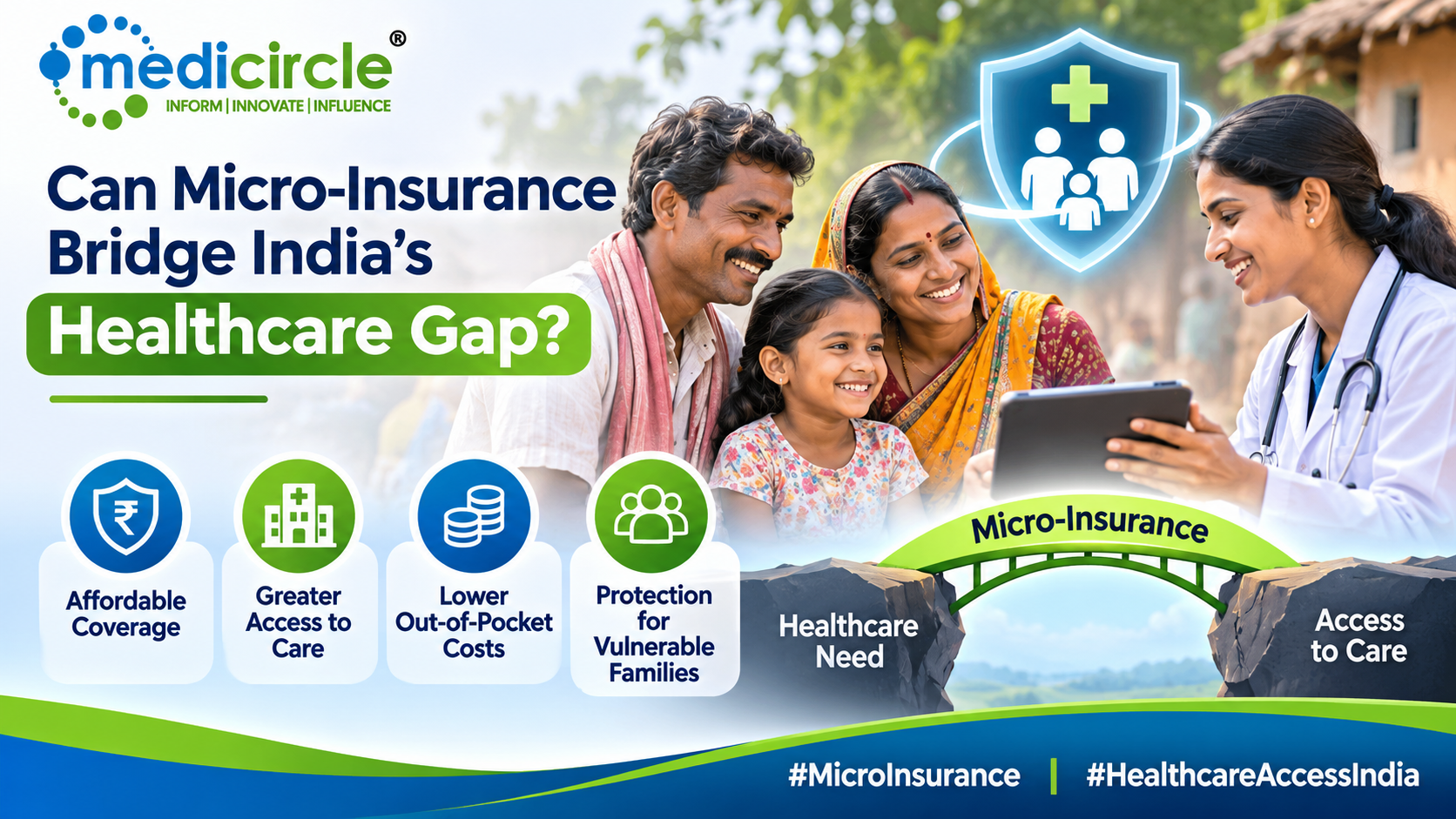
 Micro-insurance offers a scalable, affordable path to closing India's healthcare protection gap by complementing public schemes and extending coverage to millions of uninsured low-income households.





Introduction
India is home to one of the largest uninsured populations in the world. Despite notable progress through government health programmes and an expanding private insurance sector, a significant portion of the country's population remains financially exposed when illness strikes. The consequences are severe. Medical costs push millions of Indian families into poverty every year, with out-of-pocket health expenditure continuing to account for a disproportionately large share of household spending.
The healthcare protection gap in India is not simply a statistical concern. It represents real families making impossible choices between seeking medical care and meeting basic daily needs. For daily wage earners, informal sector workers, rural agricultural communities, and migrant labourers, conventional health insurance remains largely out of reach, either because of unaffordable premiums, complex documentation requirements, or limited awareness.
Micro-insurance has emerged in this context as a potential bridge. Designed specifically for low-income and financially vulnerable populations, micro-insurance offers scaled-down coverage at premiums that are genuinely affordable. The question being examined across India's healthcare finance landscape today is straightforward but consequential: Can micro-insurance actually close the healthcare protection gap, or does it remain a well-intentioned but structurally insufficient solution?
Understanding India's Healthcare Protection Gap
Before evaluating micro-insurance as a solution, it is important to understand the scale and nature of the problem it is meant to address.
India's out-of-pocket health expenditure has historically been among the highest in the world as a proportion of total health spending. According to data from the National Health Accounts of India, out-of-pocket payments have accounted for well over 50 percent of total health expenditure in recent years, though this figure has been gradually declining with the expansion of public programmes. However, the absolute burden on households remains substantial, particularly in lower-income quintiles.
Ayushman Bharat, launched in 2018 under the Pradhan Mantri Jan Arogya Yojana (PM-JAY), has been a landmark intervention. It provides health coverage of up to five lakh rupees per family per year for secondary and tertiary hospitalisation to economically vulnerable families. The programme has extended coverage to hundreds of millions of beneficiaries, making it one of the largest government-funded health schemes in the world.
Yet, significant gaps remain. PM-JAY does not cover outpatient consultations, diagnostic tests, or primary care visits, which form the bulk of routine healthcare interactions for most households. Additionally, there are millions of individuals who fall just above the economic threshold for PM-JAY eligibility but still cannot afford private health insurance. This "missing middle" is a critical policy challenge. It is precisely within this space that micro-insurance is being proposed as a viable and scalable option.
What Micro-Insurance Is and How It Works
Micro-insurance refers to insurance products designed specifically for low-income individuals and families. The defining characteristics are:
- Low premium amounts, often collected weekly, monthly, or seasonally to align with irregular income patterns
- Simple product design with minimal documentation requirements
- Straightforward claim processes that do not require extensive paperwork or financial literacy
- Distribution through community channels, self-help groups, microfinance institutions, cooperative societies, and mobile platforms
In the context of healthcare, micro-insurance products may cover hospitalisation, specific critical illnesses, maternity care, accident-related medical expenses, or a combination of these depending on the product design.
The Insurance Regulatory and Development Authority of India (IRDAI) introduced micro-insurance regulations in 2005 and has updated them over the years to encourage the development and distribution of these products. Under IRDAI's framework, micro-insurance policies must be low-cost, simple in structure, and accessible to populations that conventional insurance channels typically do not reach.
Micro-insurance in India has been distributed through a range of channels, including microfinance institutions such as SEWA (Self Employed Women's Association), cooperative banks, non-governmental organisations, and increasingly through digital platforms and mobile-based insurtech companies. These distribution models are significant because they leverage existing trust networks within communities, which helps overcome the scepticism that many low-income households hold toward formal financial products.
The Role of Technology and Insurtech in Scaling Micro-Insurance
The growth of digital infrastructure in India has created new possibilities for micro-insurance that did not exist a decade ago. The expansion of mobile internet access, the Jan Dhan-Aadhaar-Mobile (JAM) trinity, and the development of the Account Aggregator framework under the Ayushman Bharat Digital Mission (ABDM) have collectively created a foundation on which affordable, digital-first insurance products can be built and distributed at scale.
Insurtech companies operating in India have begun to design micro-insurance products that are:
- Fully digital in onboarding and claim submission
- Linked to Aadhaar-based identity verification for simplified Know Your Customer (KYC) compliance
- Priced dynamically based on health risk data and community-level actuarial data
- Available through mobile payment platforms like UPI-based apps, making premium collection seamless
Platforms targeting gig workers, domestic workers, and informal sector employees have begun bundling health micro-insurance with other workplace benefits, recognising that group-based models often achieve better coverage density and lower unit costs than individually sold policies.
ABDM's Health ID and the connected health data ecosystem also open the possibility of building micro-insurance products that are linked to preventive care behaviours, thereby aligning financial incentives with public health goals. This intersection of digital health infrastructure and insurance innovation represents a genuinely exciting opportunity for the Indian healthcare system.
Challenges That Limit Micro-Insurance's Potential
Despite the promise, micro-insurance in India faces structural and operational challenges that cannot be overlooked.
Awareness remains persistently low among the target population. A large proportion of the households that would benefit most from micro-insurance either do not know such products exist or do not understand how insurance works. Financial literacy programmes at the community level have had limited reach, and marketing for micro-insurance products rarely reaches rural and peri-urban households through trusted channels.
Claim settlement is another significant concern. For insurance to be meaningful, the promise of payment at the time of need must be reliably fulfilled. In the micro-insurance segment, there have been documented instances of claim delays, opaque rejection criteria, and processes that are too complex for the intended beneficiaries to navigate without assistance. These experiences, once shared within communities, can rapidly erode trust and discourage uptake.
Premium sustainability is a related challenge. While micro-insurance premiums are designed to be affordable, they still represent a commitment from households with limited and irregular incomes. When a household faces a financial shock, insurance premiums are often among the first expenses to be discontinued. High lapse rates undermine the pool size that micro-insurance products need to remain financially viable.
The adverse selection problem also presents actuarial difficulties. If healthier individuals opt out of micro-insurance while sicker individuals remain enrolled, premium costs for the pool rise, which further drives away healthier members in a self-reinforcing cycle. Product design and community-based enrolment strategies need to actively counteract this dynamic.
Finally, there is the question of coverage adequacy. Even well-designed micro-insurance products cover only a portion of potential healthcare costs. A single hospitalisation for a serious illness can far exceed the coverage limit of most micro-insurance policies. This means that while micro-insurance can protect against moderate financial shocks, it may not be sufficient for catastrophic health events.
How Micro-Insurance Can Complement Public Health Schemes
The most productive framing for micro-insurance in the Indian context is not as a replacement for government schemes but as a complement to them. PM-JAY and state-level health insurance programmes cover the highest-cost hospitalisation events for the most economically vulnerable. Micro-insurance can fill the coverage gaps that remain:
- Outpatient care, diagnostics, and routine consultations that PM-JAY does not cover
- Households in the missing middle who are above PM-JAY eligibility thresholds but cannot afford conventional insurance
- Preventive care incentives that can reduce long-term disease burden
- Coverage for communities such as gig workers and informal sector employees who fall outside traditional employer-sponsored benefit structures
NITI Aayog and several public health researchers have highlighted the potential of a layered coverage architecture in which public schemes, micro-insurance, and community health funds work in concert. This approach acknowledges that no single mechanism can address the full complexity of India's healthcare protection gap.
State governments in Kerala, Tamil Nadu, and Telangana have experimented with community health financing models that share characteristics with micro-insurance, with varying degrees of success. These experiences provide valuable lessons for designing more effective and contextually appropriate micro-insurance frameworks at the national level.
Prevention and Long-Term Viability of Micro-Insurance Models
For micro-insurance to be a durable part of India's healthcare financing architecture, several enabling conditions must be in place.
Stronger regulatory oversight from IRDAI is needed to ensure product standardisation, transparent claim processes, and consumer protection for micro-insurance policyholders. Clear grievance redressal mechanisms accessible to low-literacy users will be essential.
Public-private partnerships can accelerate distribution and reduce administrative costs. When state health agencies, district health offices, and community health workers are engaged as micro-insurance facilitators, the trust and reach of the product improves substantially.
Linking micro-insurance to preventive care behaviours, through reduced premiums or enhanced benefits for individuals who complete recommended screenings or vaccinations, creates a virtuous cycle between financial protection and population health outcomes. This model is consistent with the preventive health emphasis embedded within India's National Health Policy.
Finally, long-term actuarial data collection on micro-insurance claimant populations will be critical. Without robust data, insurers cannot price products sustainably, and without sustainable pricing, the products cannot survive in the market. Investment in health data infrastructure under ABDM creates the opportunity to build this evidence base systematically.
Frequently Asked Questions
Q1: What is micro-insurance in healthcare?
Micro-insurance in healthcare refers to low-premium health insurance products designed specifically for low-income individuals and families. These products offer modest coverage amounts, require minimal documentation, and are distributed through community channels, mobile platforms, and microfinance institutions to reach populations excluded from conventional insurance markets.
Q2: How does micro-insurance differ from regular health insurance in India?
Micro-insurance differs from regular health insurance primarily in premium affordability, product simplicity, and target population. Regular health insurance is designed for middle and higher-income households with stable incomes and formal employment. Micro-insurance is built for informal sector workers, daily wage earners, and rural households, with flexible premium collection aligned to irregular income cycles and simplified claim processes.
Q3: Is micro-insurance regulated in India?
Yes. The Insurance Regulatory and Development Authority of India (IRDAI) governs micro-insurance products through specific regulations first introduced in 2005. These regulations define product eligibility, premium limits, distribution norms, and consumer protection requirements to ensure micro-insurance products genuinely serve low-income populations rather than operating as substandard policies in disguise.
Q4: Can micro-insurance work alongside Ayushman Bharat (PM-JAY)?
Micro-insurance and Ayushman Bharat serve complementary roles. PM-JAY covers high-cost hospitalisation for the most economically vulnerable families. Micro-insurance can extend coverage to outpatient care, diagnostics, and primary health services that PM-JAY does not include. It can also serve the missing middle: households above PM-JAY eligibility thresholds but unable to afford conventional private insurance.
Q5: What are the main challenges facing micro-insurance growth in India?
The main challenges include persistent low awareness among target populations, claim settlement delays and complexity, high lapse rates due to irregular incomes, adverse selection dynamics, limited distribution reach in remote rural areas, and coverage amounts that may be insufficient for catastrophic health events. Addressing these challenges requires coordinated efforts from insurers, regulators, government agencies, and civil society organisations.
Resources
- Insurance Regulatory and Development Authority of India (IRDAI): Official regulatory body governing micro-insurance norms, product guidelines, and consumer protection frameworks in India.
- National Health Authority, Government of India: Administers Ayushman Bharat PM-JAY and provides data on health coverage, beneficiary enrolment, and claim settlement across states.
- World Health Organization (WHO) India Country Office: Publishes research and policy briefs on health financing, universal health coverage progress, and out-of-pocket expenditure trends in India.
- NITI Aayog Health Reports: Provides policy analysis on healthcare financing gaps, the missing middle problem, and recommendations for layered health coverage architectures in India.
- National Health Accounts Technical Secretariat, Ministry of Health and Family Welfare: Publishes National Health Accounts estimates covering out-of-pocket expenditure data and trends across Indian states.
Interlinking Keywords
Micro-insurance India, healthcare protection gap, out-of-pocket health expenditure India, Ayushman Bharat PM-JAY coverage gaps, health insurance for informal workers India, IRDAI micro-insurance regulations, affordable health insurance rural India, healthcare financing India, ABDM digital health infrastructure, missing middle health insurance India
Last reviewed by:
Dr. Manthan Tripathi, Medicircle Editorial and Medical Advisory Team on 12, November 2026.
Disclaimer
This article is intended for general health awareness and informational purposes only. It does not constitute medical advice, financial advice, or insurance guidance. Readers are advised to consult a qualified healthcare professional for personal medical decisions and a licensed insurance advisor for guidance on health insurance products. Medicircle does not endorse any specific insurance product, insurer, or financial service mentioned or implied in this article. All statistics and policy references are based on publicly available information and are subject to change.





-23-300x250.png)