Sunday, October 25, 2026
 Indian healthcare is evolving as patients seek digital convenience, transparent pricing, and collaborative partnerships. By integrating AI with deep empathy, doctors can meet the sophisticated demands of modern wellness.




The Changing Face of Healthcare
For a long period, the medical landscape in India followed a philosophy where the doctor made every decision. Patients usually took a back seat and followed prescriptions without many questions. This behavior was fueled by a traditional sense of authority. As we navigate through 2026, that old dynamic is fading away. Today, a new generation of healthcare seekers has emerged. These individuals are digitally connected and highly curious. They are unwilling to settle for a passive role in their own wellbeing.
This shift is a total overhaul of the healthcare experience. People are no longer only looking for a cure. They are looking for a genuine partnership. For medical professionals and healthcare platforms like Medicircle.in, staying relevant means moving beyond the stethoscope. It requires meeting high-tech and high-touch expectations simultaneously.
Evolving Patient Partnerships
The days of walking into a clinic with zero knowledge are largely over. Most people now arrive for their appointments after they have consulted the internet about their symptoms. While online research can sometimes cause unnecessary anxiety, it also creates a more engaged patient.
People today do not just want a pill. They want a thorough conversation. They are looking for doctors who act as collaborators. They appreciate specialists who take the time to explain a diagnosis. Patients want to discuss various treatment paths and weigh the pros and cons of different medications. The goal has shifted from simply treating an ailment to co-managing a long-term health journey.
Digital Wellness Approaches
In an era where we order groceries and book cabs with a single tap, it is natural that we expect the same convenience from our doctors. For the urban Indian, a seamless digital experience is now the gold standard.
Seamless Online Access
Whether it is scheduling a quick consultation via WhatsApp or receiving a digital prescription on a smartphone, convenience is essential. Accessing lab results through a cloud-based portal has become a standard requirement for many families. Recent data from March 2026 shows that over 43.52 crore Ayushman Cards have been created, reflecting a massive shift toward digital health documentation.
Telehealth Integration
Telehealth has moved from being a backup plan to a daily necessity. Especially in congested cities like Mumbai or Delhi, patients prefer virtual follow-ups for routine matters. This allows them to save physical visits for when hands-on care is truly required. By March 2026, over 41.93 crore teleconsultations have been recorded, proving that the digital bridge is now a permanent fixture in Indian medicine.
Precision and Prevention
The approach where one size fits all is quickly becoming obsolete. Indian audiences are increasingly seeking personalized care that considers their specific lifestyle, genetics, and environment.
Tailored Health Plans
Modern care might involve diet plans based on specific metabolic markers. It also includes health checks designed around individual risk factors rather than age alone.
Proactive Wellness Focus
There is a shift from fixing the sick to keeping the healthy well through mental health support and lifestyle coaching. Doctors are now expected to be partners in wellness rather than just providers of medicine.
|
Feature |
Traditional Approach |
Modern Expectation |
|
Primary Focus |
Reactive Treatment |
Proactive Prevention |
|
Communication |
One Way Directive |
Two Way Collaboration |
|
Accessibility |
Physical Visits Only |
Hybrid Digital Access |
|
Data Storage |
Paper Based Records |
Digital Health IDs |
Transparency and Trust
In previous decades, the financial and technical aspects of healthcare were often shrouded in mystery. In 2026, transparency has become the primary currency of trust. Patients expect clear and upfront information about the costs of surgery. They want to know the success rates of specific interventions. They even check the peer reviews of the doctors treating them.
Trust is no longer automatic. It is built through open communication. A practitioner who is honest about the complexities of a case is more likely to win loyalty. This is much better than remaining distant or vague about the potential risks of a procedure.
Technology as Support
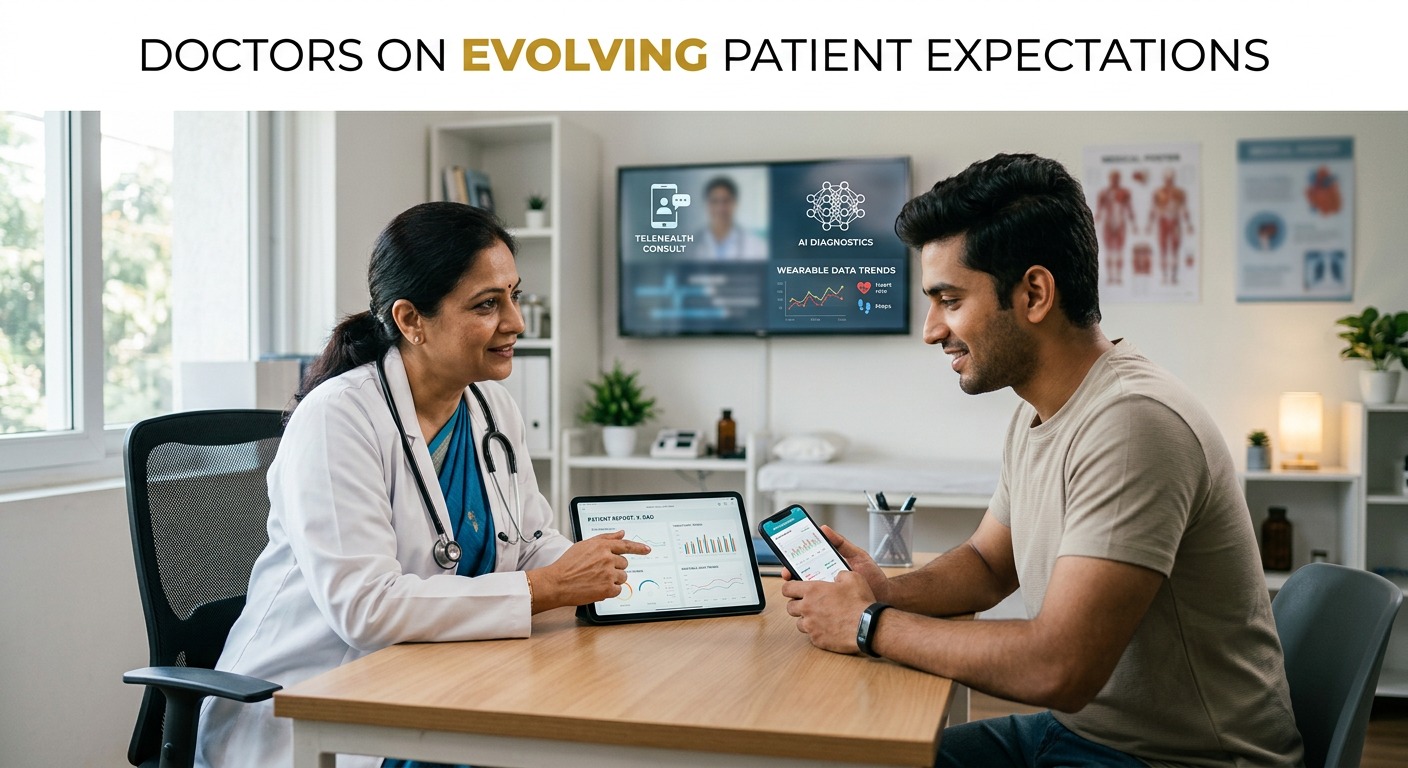
Artificial Intelligence and wearable technology are now deeply integrated into the Indian healthcare experience. Patients are beginning to appreciate the use of AI-driven diagnostics for better accuracy. Whether it is a smartwatch tracking heart rate or AI assisting in early cancer detection, technology is seen as an essential partner.
However, there is a catch. As much as we love the efficiency of machines, the human touch has never been more valuable. The true expectation is that technology should handle the paperwork. This leaves the doctor with more quality time to actually listen to the human being sitting across from them.
Power of Empathy
Despite the surge in high-tech gadgets and digital portals, the core of medicine remains deeply personal. In a fast-paced and high-stress world, a doctor who offers a compassionate ear stands out. This professional validates the emotional struggle of the patient.
Indian patients are looking for more than just clinical excellence. They are looking for empathy. They want to be treated as people with lives and families. They are not just another case on a busy afternoon schedule.
Common Health Queries
- How can I better prepare for my next doctor visit? Research your symptoms through credible sources like Medicircle.in. Write down specific questions regarding your diagnosis and lifestyle adjustments.
- Are teleconsultations as effective as physical visits? For follow-ups and mental health support, teleconsultations are highly effective. However, new symptoms or physical injuries still require a physical exam.
- Why is personalized medicine becoming popular in India? Everyone reacts differently to treatments. Personalized medicine uses your specific data to ensure the most effective and safest results possible.
Future of Care
The changing expectations of Indian patients are a sign of a healthier and more empowered society. As we move forward, the most successful healthcare providers will be those who combine clinical mastery with digital convenience. By embracing this evolution, the medical community can build a future where healthcare is not just advanced but truly human-centric.





-23-300x250.png)

.jpeg)


.jpg)
.jpg)
.jpg)
.jpg)
.jpg)
.jpg)
.jpg)
.jpg)
.jpg)