Monday, November 16, 2026
 Beyond clinical care, Dr Agarwals Eye Hospital plans to conduct school-based awareness campaigns and workshops for parents, children, ophthalmologists, and optometrists across Chandigarh and Punjab, reinforcing community-level understanding of myopia prevention.





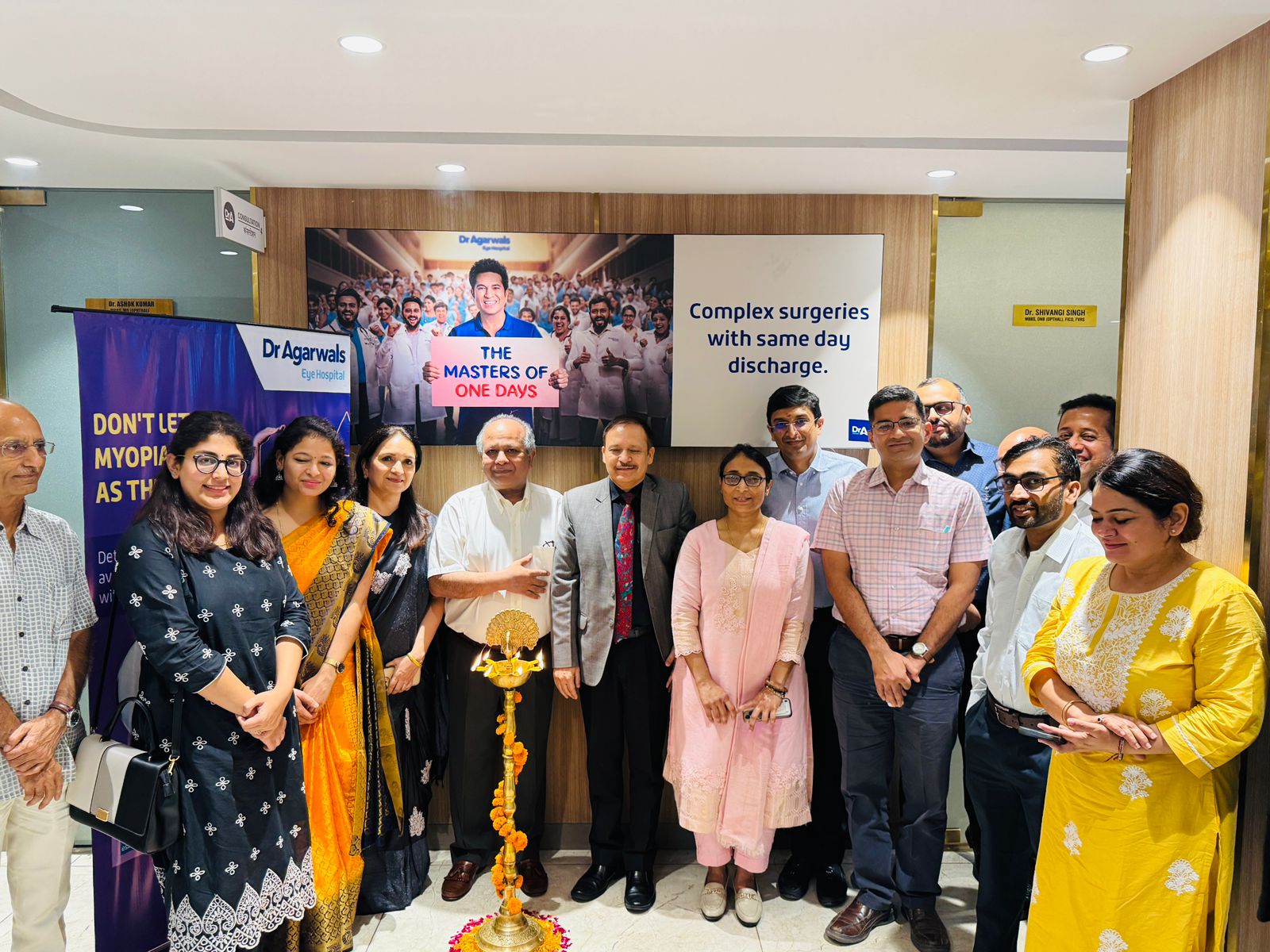
Chandigarh, October 6, 2025: Dr Agarwals Eye Hospital, one of India’s largest networks of eye care facilities, has launched a specialized Myopia Clinic in Chandigarh to address the alarming rise of near-sightedness among children and young adults. The launch event was done under the aegis of Chandigarh Ophthalmic Society and was graced by doctors from the hospital and was followed by an awareness workshop highlighting early signs of myopia, lifestyle risk factors, and preventive strategies for parents and educators.
The clinic offers a holistic approach to managing childhood myopia, including early detection, counselling, education, and regular follow-up care. Equipped with advanced diagnostic technology and a specialised team of paediatric ophthalmologists and optometrists, it provides personalised treatment plans tailored to each child’s needs. It also offers a comprehensive range of myopia-control options from eye drops and specialised glasses to soft contact lenses and orthokeratology (Ortho-K) lenses to effectively manage the condition and minimize potential complications.
Dr. Rajiv Mirchia, Head Clinical Services – Mirchia’s Laser Eye Center, a unit of Dr Agarwals Eye Hosptial said, “The launch of our Myopia Clinic in Chandigarh is a significant step towards addressing the growing burden of myopia in Punjab and North India. With childhood cases rising at an alarming pace, our aim is to provide comprehensive care that not only corrects vision but also helps slow the progression of the condition. Through this centre, we want to empower families with awareness, timely intervention, and access to the latest treatment options.”
Dr. Anin Sethi Senior Pediatric Ophthalmologist said, “Myopia, or near-sightedness, is rising rapidly worldwide, with countries such as China, South Korea, Japan, Singapore, and Taiwan already seeing epidemic levels, affecting up to 95% of teenagers and young adults. By 2050, nearly half of the global population could be myopic. In India, prevalence among urban children aged 5–15 has increased from 4.44% in 1999 to 21.15% in 2019 and is projected to reach 48% by 2050. In Punjab, a 2007 study reported nearly 10% of schoolchildren in urban areas were myopic. Growing academic pressure, reduced outdoor time, and increased screen usage are contributing to higher rates across North India.
“Myopia isn’t just about wearing glasses, if left unchecked, it can lead to serious eye diseases like retinal detachment, glaucoma, and macular degeneration,” said Dr. Parveen Sen Senior Retina Consultant. “Children between 6–9 years are at the highest risk, with up to 50% potentially progressing to high myopia in adulthood. A second peak often occurs between 12–16 years due to academic demands, and post-COVID, we are seeing a surge even in early childhood. Early detection and timely management are crucial to protect children’s vision for the long term.”
Dr. Akshya P Senior Pediatric Ophthalmologist added, “Myopia is influenced by both genetics and lifestyle. Children with one myopic parent have a 30% chance of developing myopia, and with both parents affected, the risk rises to 50%. Increased screen time, prolonged close-up activities, and reduced outdoor play contribute significantly. Encouraging outdoor activity in daylight, reading in well-lit areas, maintaining proper reading distance, and following simple practices like the 20-20-20 rule can help slow its progression.”
Beyond clinical care, Dr Agarwals Eye Hospital plans to conduct school-based awareness campaigns and workshops for parents, children, ophthalmologists, and optometrists across Chandigarh and Punjab, reinforcing community-level understanding of myopia prevention.
The hospital’s long-term vision is to make myopia management a public health priority. With rising prevalence and increasing severity, the clinic aims to serve as a regional hub for early detection, intervention, and long-term control of childhood myopia.





-23-300x250.png)