Tuesday, October 27, 2026
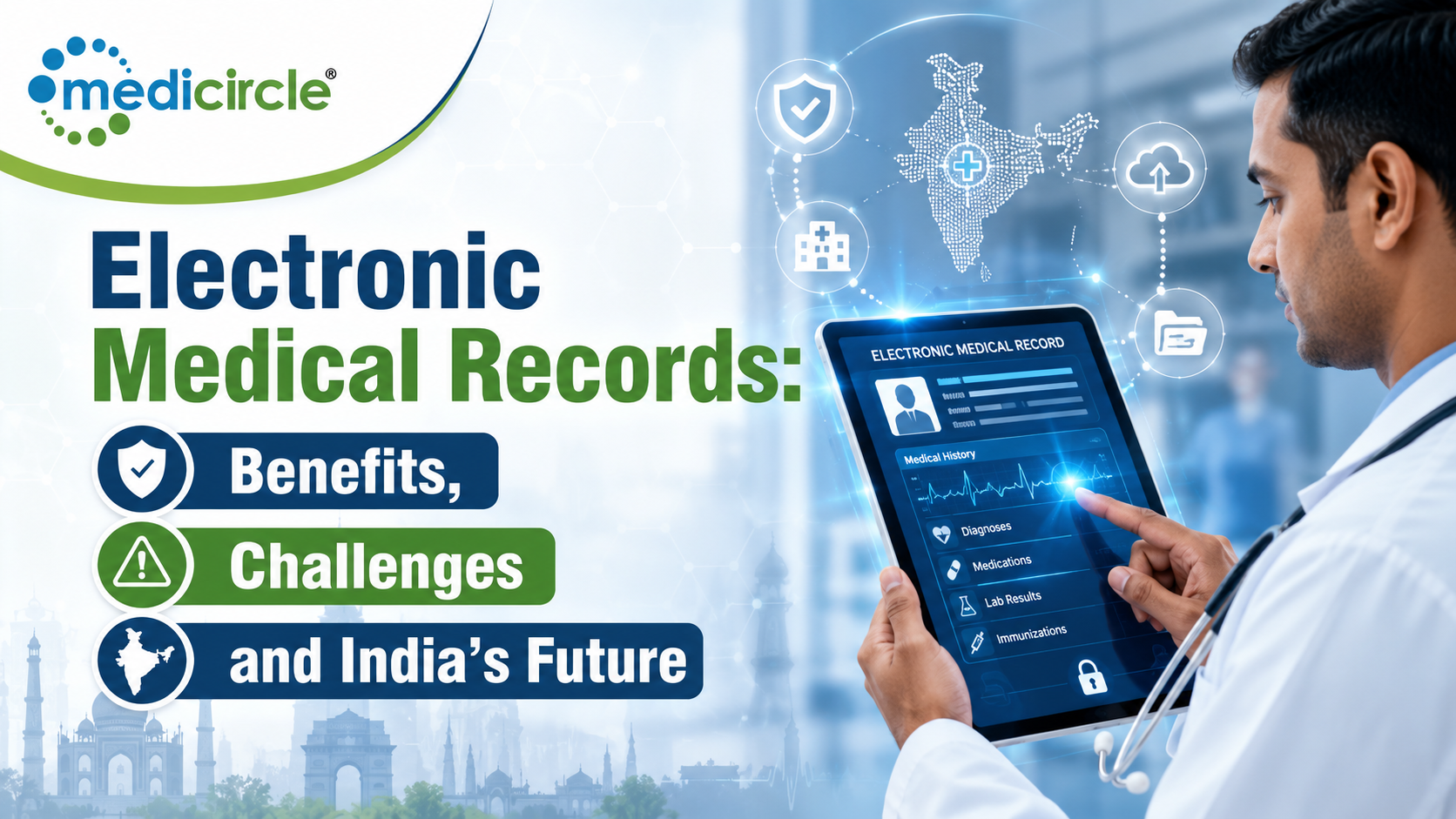
 Electronic Medical Records digitise patient health information within healthcare facilities, improving clinical accuracy, reducing errors, and enabling India's national digital health vision through ABDM.





Introduction
India's healthcare system is undergoing one of the most significant shifts in its history. With over 1.4 billion people, thousands of hospitals, lakhs of clinics, and a rapidly growing network of primary health centres, the need to manage patient information accurately and efficiently has never been more urgent. At the centre of this transformation is a technology that is quietly reshaping how doctors, hospitals, and patients interact: the Electronic Medical Record, more commonly known as the EMR.
Electronic Medical Records are digital repositories of a patient's health information within a single healthcare facility. They are designed to replace the traditional paper-based chart system that has defined clinical practice for over a century. While the concept sounds simple, the implications are profound. An EMR does not just digitise a file; it changes the entire process of how medical information is created, stored, retrieved, and used to deliver care.
For India, where healthcare access is unevenly distributed across urban and rural geographies, and where a significant number of patients move between government and private providers, the adoption of Electronic Medical Records represents both a massive opportunity and a complex challenge. Understanding what EMRs are, how they work, and what their adoption means for Indian healthcare is essential for doctors, hospital administrators, healthtech companies, and patients alike.
Understanding What Electronic Medical Records Are
An Electronic Medical Record is a digital version of a patient's paper chart, maintained within a single healthcare organisation such as a hospital, clinic, or medical practice. At its most fundamental level, an EMR captures the health and treatment history of an individual patient as it is recorded by clinicians and staff authorised within that organisation.
A well-designed EMR system typically contains:
- Medical history, including past diagnoses and surgeries
- Current and past medications and allergy information
- Laboratory test results and diagnostic imaging reports
- Vaccination and immunisation records
- Vital signs and clinical observations recorded over time
- Treatment plans and clinical notes made by doctors and nurses
The defining characteristic of an EMR, as opposed to a paper chart, is that this information can be created, updated, and accessed in real time by multiple authorised users within the facility. A doctor in the outpatient department, a nurse in the ward, and a pharmacist in the dispensary can all access the same patient record simultaneously, reducing the delays and errors that often arise from fragmented paper-based communication.
The Difference Between EMR and EHROne of the most common points of confusion in healthcare technology discussions is the distinction between an Electronic Medical Record and an Electronic Health Record (EHR). In India, the two terms are frequently used interchangeably, but they are not identical.
An EMR is fundamentally contained within a single organisation. When a patient moves from one hospital to another, the EMR does not automatically follow. The patient's records stay within the system where they were created, which means the receiving facility may have no visibility into the patient's prior medical history unless the information is physically transferred or verbally communicated.
An EHR, by contrast, is designed for portability and interoperability. It is intended to follow the patient across different healthcare settings, including general practitioners, specialists, diagnostic laboratories, pharmacies, and hospitals, giving every provider a complete and current picture of the patient's health. The EHR is the broader, patient-centric model that national digital health missions are working toward.
India's Ayushman Bharat Digital Mission (ABDM), launched by the Ministry of Health and Family Welfare, is actively working toward building a national EHR infrastructure. The ABHA (Ayushman Bharat Health Account) number, a unique health identifier for every Indian citizen, is the foundation on which this interoperable health record ecosystem is being built. EMR adoption within individual facilities is the essential first step toward achieving that larger vision.
The Evolution of Medical Records and India's Digital Health Journey
Medical records have existed in some form for thousands of years. The tradition of documenting patient histories can be traced to ancient physicians, and formal institutional records became standard practice in European teaching hospitals during the nineteenth century. The modern structured medical record, organising patient data in a standardised format, emerged in the twentieth century.
The first recognised EMR system was developed in 1972 by the Regenstreif Institute in the United States, marking the beginning of a shift from paper to digital. However, widespread adoption remained slow globally for several decades, primarily due to high costs, lack of infrastructure, and resistance to changing entrenched workflows.
In India, the adoption of EMRs has historically been limited to large private hospital chains and a few well-resourced government medical institutions. Smaller nursing homes, standalone clinics, and district hospitals continue to operate on paper records, which creates significant gaps in data continuity and patient safety.
The Government of India has been progressively working to change this through a series of policy-level initiatives. The National Health Policy 2017 explicitly recognised health information technology as a priority area. The National Digital Health Blueprint, followed by the launch of ABDM in 2021, formalised the government's commitment to building a robust digital health ecosystem. The Ministry of Health and Family Welfare has published Electronic Health Record Standards for India, providing a framework for EMR systems to achieve interoperability.
Major Indian healthcare institutions have been instrumental in demonstrating that locally developed EMRs can be both comprehensive and clinically effective. The eyeSmart EMR developed collaboratively by the LV Prasad Eye Institute and Tata Consultancy Services is one widely cited example, a system built by clinicians for clinicians, which today supports patient care, administration, and research across an entire care network.
Key Benefits of Electronic Medical Records in Clinical Practice
The case for EMR adoption rests on a wide body of evidence demonstrating improvements across multiple dimensions of healthcare delivery. For Indian healthcare stakeholders, the benefits are particularly significant given the scale of the population being served and the pressure on clinical resources.
Accuracy and Reduction of Medication ErrorsOne of the most immediate and measurable benefits of EMR systems is the reduction in medication errors. Paper-based prescriptions have long been associated with misinterpretation due to illegible handwriting, a problem that can lead to serious adverse drug events. Digital prescriptions embedded within an EMR system eliminate this source of error entirely. Additionally, most EMR platforms include drug interaction alerts and allergy checks that prompt clinicians before a potentially harmful medication is prescribed.
Faster Access to Complete Clinical InformationIn a busy outpatient department or emergency setting, the speed at which a clinician can access a patient's prior medical history can directly affect the quality of care. With an EMR, a doctor can pull up a patient's complete record including past diagnoses, test results, and current medications within seconds. This is particularly valuable in Indian tertiary care settings where a single doctor may see sixty to eighty patients in a single session.
Support for Clinical Decision-MakingModern EMR systems are increasingly integrated with clinical decision support tools. These tools can alert a clinician to a missed vaccination, flag an abnormal laboratory result, suggest relevant clinical guidelines for a diagnosed condition, or prompt a follow-up appointment. In a resource-constrained environment, this kind of embedded guidance can serve as a meaningful safety net.
Operational Efficiency and Billing AccuracyFrom a hospital management perspective, EMRs significantly improve administrative efficiency. Billing codes, insurance claims, and discharge summaries that previously required manual effort across multiple departments can be generated or populated directly from the patient's clinical record. This reduces errors, minimises revenue leakage, and speeds up reimbursement processes, all of which are important considerations for hospitals participating in government insurance schemes like Ayushman Bharat Pradhan Mantri Jan Arogya Yojana (AB-PMJAY).
Data for Research and Public Health PlanningAggregated, anonymised data from EMR systems offers immense value for epidemiological research and health system planning. India's disease burden, including rising rates of non-communicable diseases such as diabetes, hypertension, and cardiovascular conditions, requires robust data to guide policy and resource allocation. EMR-generated data, when properly managed and shared through national registries, can help the Indian Council of Medical Research (ICMR) and other bodies understand disease patterns at the population level with far greater precision than what is currently possible.
Recognising the Challenges and Limitations
While the benefits of EMRs are well-documented, the challenges associated with adoption and implementation are equally real. For Indian healthcare, these challenges are shaped by the country's unique geography, workforce dynamics, and infrastructure landscape.
The financial barrier remains perhaps the most significant constraint for smaller facilities. Setting up a functional EMR system involves not just software licensing but also hardware investment, network connectivity, training, and ongoing technical support. For a small-town nursing home or a district hospital in a Tier 3 city, the upfront cost can be prohibitive.
The burden on clinical staff is another concern that deserves serious attention. Research from international settings has shown that physicians can spend a substantial portion of their working day entering data into EMR systems rather than engaging directly with patients. This can erode the quality of the doctor-patient relationship, which remains the most fundamental element of good healthcare. Indian healthcare leaders and EMR vendors must work together to ensure that systems are designed to support clinical workflows rather than complicate them.
Data security and patient privacy represent a third major area of concern. As EMR systems become more connected and as health data becomes more valuable, the risk of unauthorised access, data breaches, and misuse of sensitive patient information increases. India's Digital Personal Data Protection Act, 2023 has begun to establish a legal framework for data protection, but healthcare-specific guidelines around patient data confidentiality need to be more robustly implemented across all facility types.
Rural connectivity remains a structural barrier for EMR deployment outside urban centres. Without reliable internet connectivity and consistent electricity supply, cloud-based EMR systems cannot function dependably in many parts of rural India. Hybrid solutions that allow offline data entry with synchronisation when connectivity is restored are being explored, but scalable implementation at the block and primary health centre level remains a work in progress.
EMR Adoption in India: The Current Landscape and the Road Ahead
India's EMR adoption rate, while growing, remains uneven. Large private hospital chains and corporate hospitals in Tier 1 cities have largely made the transition to digital records. Government medical colleges in several states have implemented EMR systems as part of centrally sponsored health technology programmes. However, a significant proportion of the country's estimated 70,000 small and medium hospitals, 8.6 lakh registered medical practitioners, and thousands of community health centres continue to operate on paper.
The ABDM is the most important policy lever currently driving EMR adoption at scale. Through the ABDM ecosystem, healthcare facilities are being enrolled as Health Facility Registries, and providers are encouraged to link their EMR or practice management software with ABDM's open digital health infrastructure. The goal is to ensure that a patient's health records, wherever they are created, can eventually be accessed by any authorised provider the patient chooses to share them with, through a consent-based framework.
Several Indian healthtech companies and hospital management software providers are developing ABDM-compliant EMR systems tailored to the specific needs of different facility types, from large multi-specialty hospitals to solo practitioner clinics. The availability of affordable, cloud-based, mobile-accessible EMR platforms is improving, and this is gradually lowering the barrier to adoption for smaller providers.
For the vision of a truly interoperable national health record system to become reality, India will need a coordinated effort involving government policy, healthcare provider leadership, technology innovation, training, and sustained investment. Platforms like Medicircle play an important role in this ecosystem by bringing authoritative information about healthcare technology to doctors, hospital administrators, and health policymakers, helping the healthcare community make better-informed decisions about digital adoption.
Prevention of Data Loss and Continuity of Care
One aspect of EMRs that is often underappreciated is their role in protecting against the loss of critical patient information. Paper records are vulnerable to physical damage from fire, flooding, or simple deterioration over time. In the aftermath of natural disasters, which India experiences with disturbing frequency in multiple regions, the loss of patient records can have severe consequences for individuals managing chronic conditions or undergoing long-term treatment.
Digital records, when properly backed up and stored in secure environments, provide a level of permanence and resilience that paper simply cannot match. For a patient with diabetes who visits different facilities across a lifetime, or for a cancer patient receiving treatment across multiple specialists, the ability to maintain a continuous and accessible record is not just a matter of convenience; it can be a matter of survival.
Conclusion
Electronic Medical Records represent far more than a technological upgrade to healthcare administration. They are a foundational infrastructure for a better, safer, and more equitable healthcare system. In India, where the healthcare burden is vast, the geography is diverse, and the need for efficient resource utilisation is acute, the shift to digital health records carries particular urgency and promise.
The journey from fragmented paper records to an integrated national digital health ecosystem is neither simple nor swift. It requires sustained investment, thoughtful system design, training of healthcare professionals, strong data protection frameworks, and genuine collaboration between government, industry, and the medical community. However, the direction is clear and the momentum is building.
For Indian hospitals, clinics, and health systems considering or implementing EMR adoption, the most important insight is this: the technology is a means, not an end. A well-implemented EMR should enhance the quality of care delivered to patients, not detract from the human experience of medicine. The goal is always to place better information in the hands of the clinician at the moment it is most needed, so that every patient receives the right care, at the right time, in the right setting.
Frequently Asked Questions
Q1: What is an Electronic Medical Record (EMR)?
An Electronic Medical Record (EMR) is a digital version of a patient's paper chart maintained within a single healthcare facility. It contains the patient's medical history, diagnoses, medications, treatment plans, laboratory results, and immunisation records, all accessible in real time by authorised clinicians.
Q2: What is the difference between EMR and EHR?
An EMR is confined to a single healthcare organisation and does not typically travel with the patient. An Electronic Health Record (EHR) is broader and designed to be shared across multiple providers, specialists, and care settings, enabling more coordinated and continuous patient care.
Q3: Is EMR implementation mandatory for hospitals in India?
The Government of India, through the Ayushman Bharat Digital Mission (ABDM), has set Electronic Health Record Standards for India and is actively encouraging all healthcare providers to adopt EMR and EHR systems. While universal mandatory compliance is still being phased in, NABH-accredited hospitals are increasingly required to demonstrate digital health record adoption.
Q4: What are the main benefits of Electronic Medical Records?
The main benefits include improved accuracy of patient information, faster access to medical history, reduction in medication errors, better clinical decision-making, streamlined billing and administrative workflows, and the ability to use aggregated data for population health research and public health planning.
Q5: What are the biggest challenges in EMR adoption in India?
Key challenges in India include high implementation costs for smaller clinics, limited digital literacy among some healthcare providers, inconsistent internet connectivity in rural areas, concerns about patient data privacy, resistance to workflow changes, and the lack of interoperability between different EMR systems across states.
Resources
- Ayushman Bharat Digital Mission (ABDM): Official portal for India's national digital health ecosystem, including health ID registration, Health Facility Registry, and EMR/EHR standards
- Ministry of Health and Family Welfare, Government of India: Policy documents, the Electronic Health Record Standards for India, and National Health Policy guidelines
- Indian Council of Medical Research (ICMR): Research publications on digital health, disease burden data, and evidence-based healthcare guidelines
- National Health Authority (NHA): Governance and operational framework for AB-PMJAY and ABDM, including provider onboarding information
- National Accreditation Board for Hospitals and Healthcare Providers (NABH): Standards for hospital accreditation, including health information management requirements
Interlinking Keywords
Ayushman Bharat Digital Mission, ABHA health ID, electronic health records India, digital health transformation, hospital management system, clinical decision support, patient data privacy India, NABH accreditation, healthcare digitisation, telemedicine in India
Last medically reviewed by:
Editorial Medical Team, Medicircle on 30 July 2026
Medical Disclaimer:
The information provided in this article is intended for general awareness and educational purposes only. It does not constitute medical advice, clinical guidance, or a substitute for consultation with a qualified healthcare professional. Readers are advised to consult their treating physician or a certified healthcare provider for any health-related decisions. Medicircle does not endorse any specific EMR product, software vendor, or technology platform mentioned in the context of this article.





-23-300x250.png)

.jpeg)






.jpg)
.jpg)
.jpg)
.jpg)
.jpg)
.jpg)
.jpg)
.jpg)
.jpg)