
Healthcare or Wealthcare: When One Hospital Visit Can Topple an Indian Household

▴ Healthcare or Wealthcare
We talk of a developed India, a digital India, a growing India but the measure of progress lies in whether the moment an illness touches a family, it does so with care, security, and justice not with a debt burden that could last a lifetime.

Hello! If you're looking for high-quality genericmedications, fast delivery and excellent customer service, ourstore is the right choice for you. With over 20 years of onlineexperience, we guarantee safe, effective products that are alwaysin stock. Delivery within 48 hours, free shipping from $200, and 100% money-back guarantee if your order doesn't arrive on time.

👉 Order now at BestCheapPills and discover exclusive discounts for registeredcustomers!
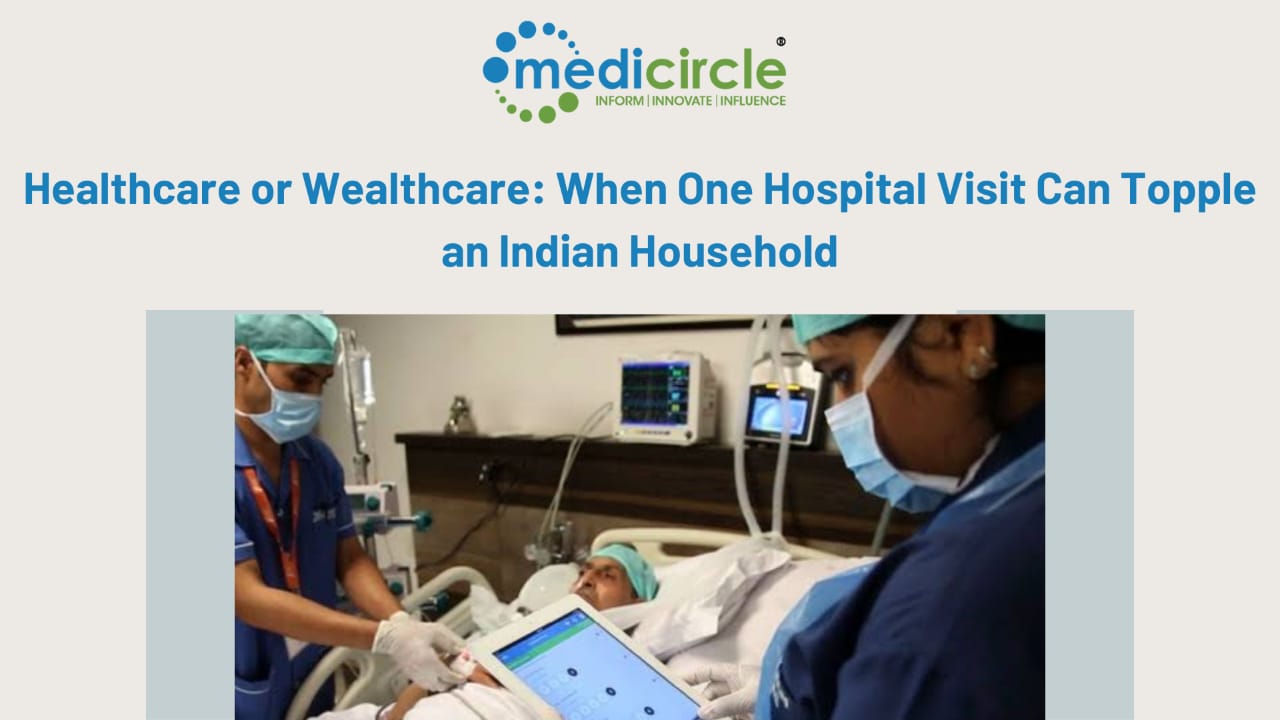
In India, where public health spending barely touches 2 percent of GDP, the burden of healthcare falls on personal wallets. Health insurance remains sparse, fragmented, and often inadequate. Medical inflation races ahead at 14 percent annually, dwarfing the modest wage growth. What this means in real terms is brutal: hospitals and clinics, once havens of healing, have transformed into financial chokeholds.

COVID-19 exposed this truth starkly, revealing that health crises can become debt traps overnight. Yet even beyond the pandemic, the cost of surgeries, diagnostics, and hospital stays routinely sweeps away decades of savings.

Data shows that over 60 percent of health expenditure in India is paid out of pocket, one of the highest rates among major economies. Despite policy initiatives that pushed this figure down from around 60 percent in 2014 to under 40 percent in 2024, a Republican majority of households still feel the heat of direct medical spending.

Chronic disease magnifies the crisis. Patients with diabetes, hypertension, or cardiovascular conditions in Punjab, for instance, face catastrophic health expenditure, costs that spiral into thousands of rupees for consultations, medications, diagnosis, and hospital stays. For those with multiple ailments, direct outpatient costs climb to ₹950 and inpatient treatment can scale as high as ₹60,000 in private facilities. Diagnostics? ₹10,800 on average. These are real figures, representing real people like taxi drivers, shop owners and farmers trying to survive under mounting health expenses.

A single cancer diagnosis weighs heaviest of all. In Kolkata, health experts report that families spend an average ₹3.3 lakh annually on cancer treatment. The fallout is devastating: treatment discontinuation, education dropped, families forced to choose between medicine and meals. Cancer treatment is not a one-time cost; it is a relentless financial bleed.

Even mental health care adds to the devastation. In 2023, families with members facing mental illness spent ₹2,115 per month on average i.e. 18.1 percent of their monthly income. That’s more than one in six rupees gone. Hospitalization for psychiatric or neurological treatment averages ₹26,843 in government hospitals, and a staggering ₹41,239 in private ones.

What happens to families facing these numbers? Nearly half of urban families in India borrow money to fund hospitalization. Across the country, up to 32.5 percent of households experience catastrophic health spending, pushing them into poverty. Each year, India sees an estimated 39 million people driven below the poverty line due to medical costs. Some studies call this a “medical poverty trap”. Once healthcare destabilizes family finances, the descent into deprivation becomes tough to reverse.

And it’s not just low-income families facing collapse. Even middle-class households find themselves in crisis. One surgical bill, one expensive drug regimen, and life savings vanish. Among those with health insurance, many discover the coverage is empty rhetoric, policies laden with exclusions or claim denials, failing to prevent financial ruin.

Experts and activists often argue that preventive care, early detection, and expanding insurance schemes like Ayushman Bharat PM-JAY are part of the solution. Ayushman Bharat covers ₹5 lakh per family annually for secondary and tertiary care and is increasingly tapping into previously unreached populations. In Kerala, the Karunya scheme covers ₹5 lakh per family for serious ailments; in Maharashtra, the Jan Arogya scheme spends on 2.11 crore families with coverage up to ₹1.5 lakh yearly. These programs are steps forward, but they still reach only a fraction of those at risk. Outpatient costs, diagnostics, medications, and indirect expenses often fall outside coverage.

While these government schemes help some, their impact is limited without stronger infrastructure. Public hospitals remain underfunded and overwhelmed; many lack the capacity to treat non-communicable diseases effectively. Healthcare remains uneven i.e. better in metros, patchy in smaller towns, nearly invisible in rural districts.

In this story between need and affordability, the phrase “healthcare or wealthcare” takes form. Access to health has become a function of assets rather than equity. When a family must choose between sending children to school or saving for treatment, they are being asked to calculate hope in rupees.

So, what can be done? The solution must be multi-layered. First, healthcare must become decently funded and not a political afterthought. Public spending must rise from 2 percent of GDP to at least 4–5 percent to create robust primary care networks and affordable hospitals. Second, insurance must be both accessible and effective, not just a card with zero utility. Premiums must match ability to pay; claims must be honored without wrangling. Third, governments and NGOs must push preventive programs like regular screenings, lifestyle coaching and awareness campaigns to tame non-communicable diseases before they become crises.

Meanwhile, communities should create emergency health funds, join micro-credit schemes for medical needs, and support public interest litigations for effective healthcare access. The media must tell stories of families who survived and those devastated by medical costs to mobilize empathy, urgency, and policy attention.

In the end, healthcare is not meant to be a game of financial roulette. A medical emergency should not have the power to erase savings, cripple livelihoods, or dismantle futures. We talk of a developed India, a digital India, a growing India but the measure of progress lies in whether the moment an illness touches a family, it does so with care, security, and justice not with a debt burden that could last a lifetime.


Tags : #HealthVsWealth #HealthcareCrisis #HealthInflation #HealthcareForAll #RightToHealth #AyushmanBharat #HealthEquity #ProtectFamilies #HealthIsARight #AffordableCare #smitakumar #medicircle

Related Stories

Loading Please wait...

-Advertisements-


Trending Now

Breast Cancer Early Warning Signs: What Every Woman in India Needs to KnowJuly 16, 2026
HbA1c Test Explained: What It Measures, Normal Range, and Why It Matters for IndiansJuly 16, 2026
Not Just Weight Loss: How Bariatric Surgery Improves Diabetes, PCOS, and Thyroid-Related Health ChallengesJuly 15, 2026
Leiutis Pharmaceuticals announces CDSCO approval for Global-First Synthetic CBD Therapy for Mild to Moderate Anxiety DisordersJuly 15, 2026
Dr Agarwals Institute of Optometry and SASTRA University Jointly Launch Optometry ProgrammeJuly 15, 2026
SIMS Hospital Treats Spinal Compression in 84-Year-Old with Pacemaker Through Single-Incision Endoscopic SurgeryJuly 15, 2026
Apollo Hospitals Secunderabad Successfully Treats Achalasia Cardia Patients with Advanced POEM ProcedureJuly 15, 2026
Happiest Health Announces Entry into Healthcare Publishing BusinessJuly 15, 2026
Indian Stroke Association Expands ‘Save the Brain’ Campaign with Stroke 360° Scientific Conference in SalemJuly 15, 2026
Milann Successfully Overcomes a Hidden Fertility Barrier: Chronic Endometritis Diagnosed and Treated, Leading to Successful IVF PregnancyJuly 15, 2026
Forus Health Launches FH eyepal, a Connected Digital Eye Clinic Designed to Expand Access to Comprehensive Eye CareJuly 15, 2026
Adult ADHD Diagnostics: Why Evaluations Are Rising Later in LifeJuly 15, 2026
Healthcare Apps Changing Patient Care: How Digital Health Tools Are Reshaping India's Healthcare LandscapeJuly 15, 2026
How Stress Affects Physical Health: Understanding the Body's Response and What You Can Do About ItJuly 15, 2026
Pediatric Immunity: Realities of Seasonal Vaccines & DevelopmentJuly 14, 2026
Hormonal Imbalances in Women: PCOS and Perimenopause July 14, 2026
Erectile Dysfunction and Overall Health: Why It Is a Signal, Not Just a SymptomJuly 14, 2026
PCOS and Fertility Connection: What Every Woman Trying to Conceive Should KnowJuly 14, 2026
Prostate Health for Indian Men: Screening, Symptoms, and CareJuly 13, 2026
Polycystic Kidney Disease: Symptoms, Diagnosis, and ManagementJuly 13, 2026


















