Tuesday, October 27, 2026
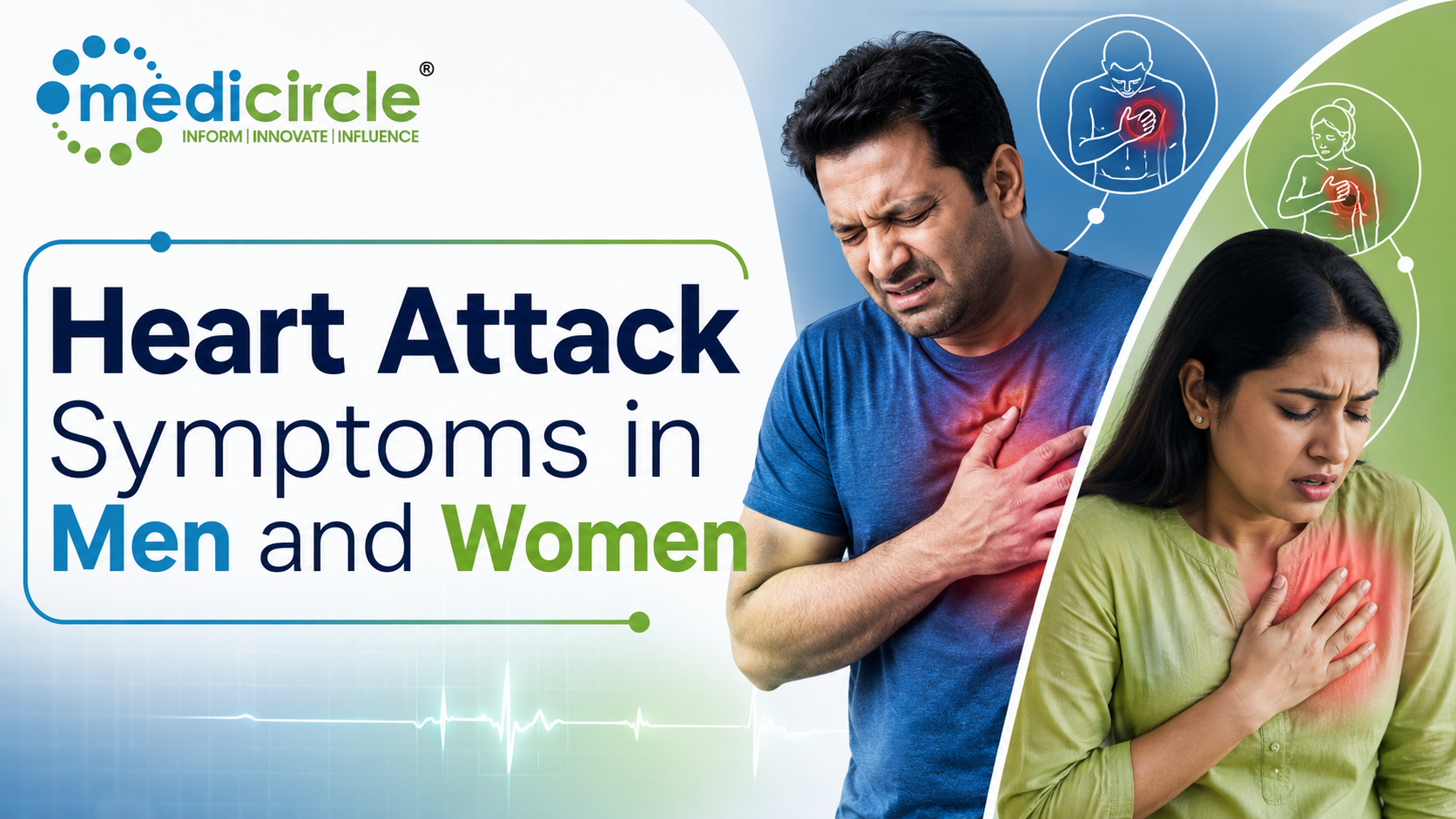
 Heart attack symptoms differ between men and women. Recognising chest pain, fatigue, nausea, and atypical warning signs early, especially in Indians, enables faster treatment and improved survival outcomes.





Introduction
Heart disease is the leading cause of death in India, and heart attacks, or myocardial infarctions, sit at the centre of this crisis. According to data from the Indian Council of Medical Research (ICMR), cardiovascular disease accounts for over a quarter of all deaths in the country, and the burden is growing steadily younger. Indians are experiencing heart attacks nearly a decade earlier than their Western counterparts, with a significant proportion of cases now occurring in individuals under the age of 50.
What makes this situation more alarming is not just the rising numbers, but the widespread lack of awareness about what a heart attack actually feels like, especially when symptoms differ significantly between men and women. Many Indians, particularly women, dismiss the early warning signals as acidity, exhaustion, or anxiety, losing precious time that could mean the difference between life and death.
Understanding heart attack symptoms is not a matter of medical curiosity. It is a survival skill that every family in India needs. Medicircle brings this conversation to the forefront, with the belief that credible health awareness saves lives.
Understanding What Happens During a Heart Attack
The heart is a muscle, and like every muscle in the body, it needs a constant supply of oxygen-rich blood to function. This blood is delivered through a network of coronary arteries. A heart attack occurs when one or more of these arteries become severely narrowed or completely blocked, cutting off blood flow to a portion of the heart muscle.
The most common cause of this blockage is atherosclerosis, a process in which fatty deposits called plaques gradually build up on the inner walls of the coronary arteries over years or decades. When a plaque ruptures suddenly, the body's clotting mechanism responds by forming a blood clot at the site of the rupture. If that clot is large enough to block blood flow entirely, the heart muscle begins to die within minutes.
Time is the most critical factor in any heart attack. Medical science describes this as the "golden hour," referring to the first 60 minutes after a heart attack begins. Every minute that passes without restoration of blood flow means more heart muscle is lost. This is why recognising symptoms early and acting immediately is not just helpful; it is lifesaving.
In India, the challenge is compounded by delayed presentation to hospitals, often because symptoms are misread, transportation is difficult, or patients hesitate to seek care for fear of overreacting. Awareness campaigns and platforms like Medicircle play an important role in closing this awareness gap, particularly in Tier 2 and Tier 3 cities where access to cardiac specialists is limited.
Primary Causes and Risk Factors in the Indian Context
Several risk factors accelerate the development of coronary artery disease and increase the likelihood of a heart attack. India carries a particularly heavy burden of several of these factors.
Hypertension, or high blood pressure, affects an estimated 207 million Indians and remains largely uncontrolled in a majority of those diagnosed. Unmanaged high blood pressure silently damages arterial walls over time, making them more vulnerable to plaque accumulation.
Diabetes is another major contributor. India is home to the second largest diabetic population in the world, and individuals with diabetes face a significantly higher risk of coronary artery disease due to the harmful effect of chronically elevated blood sugar on blood vessels.
Tobacco use in various forms, including cigarettes, bidis, and smokeless tobacco, is deeply prevalent across Indian demographics. Tobacco compounds damage the inner lining of arteries, accelerate atherosclerosis, and dramatically increase heart attack risk. Importantly, research indicates that women who smoke face a disproportionately higher risk of heart attack compared to men who smoke equivalent amounts.
Additional Indian-specific risk factors include:
- A diet high in refined carbohydrates, trans fats, and excessive salt, common in both urban and rural diets
- Physical inactivity, worsened by increasingly sedentary occupations and urban lifestyles
- Psychological stress from high-pressure work environments, financial strain, and social responsibilities
- A genetic predisposition, as South Asians as an ethnic group carry a higher baseline risk of coronary artery disease, regardless of lifestyle
- Central obesity, where fat accumulates around the abdomen, which is particularly common among Indians even at lower body weights
For women specifically, additional risk factors include polycystic ovary syndrome (PCOS), which is increasingly common among young Indian women, premature menopause, a history of pregnancy complications such as gestational hypertension or gestational diabetes, and conditions like rheumatoid arthritis or lupus, which are more prevalent in women.
Recognising the Symptoms: Men Versus Women
This is where awareness can truly save lives. Heart attack symptoms are not uniform. They vary by individual, by age, by the presence of diabetes or other conditions, and significantly by sex.
Symptoms Commonly Seen in MenMen more often experience what is described as the "classic" presentation of a heart attack. The most common and prominent symptom is chest pain or discomfort, often described as a heavy pressure, a crushing sensation, or a tight squeezing feeling in the centre of the chest. This discomfort typically lasts for more than a few minutes, or may ease briefly and return.
The pain frequently radiates outward from the chest to other areas, most commonly:
- The left arm or both arms
- The jaw or teeth
- The neck and throat
- The upper back or shoulder blades
- The upper abdomen, sometimes mistaken for severe indigestion
Men may also experience cold sweats, dizziness, shortness of breath, and a sudden sense of overwhelming fatigue. Some men describe a feeling of impending doom, an unexplained anxiety that something is very wrong.
Men are also more likely to have a silent or unrecognised heart attack, where damage to the heart occurs with minimal or no noticeable symptoms. These are often only discovered later through routine ECG tests.
Symptoms Commonly Seen in WomenWomen's symptoms deserve particular attention because they are far more likely to be atypical, meaning they do not fit the textbook image of a heart attack. Research published in the journal Cureus, reviewing 74 international studies, found that women present more frequently with nausea, vomiting, extreme and unusual fatigue, shortness of breath, dizziness, and upper back or jaw discomfort rather than the dramatic chest clutching that popular culture has made familiar.
Crucially, many women experience prodromal symptoms, which are warning signs that appear in the days, weeks, or even months before the actual heart attack event. The most commonly reported among women include:
- Unusual and persistent fatigue not explained by activity level or stress
- Sleep disturbances, waking frequently or inability to sleep soundly
- Anxiety or a vague feeling that something is wrong
- Shortness of breath during activities that previously caused no difficulty
- Discomfort in the arms, jaw, upper back, or neck
Because these symptoms do not immediately suggest a cardiac event, many women attribute them to menopause, stress, anaemia, or digestive issues. Doctors too, in some cases, are less likely to immediately suspect a cardiac cause in a woman presenting with nausea and fatigue compared to a man presenting with chest pain.
Women also tend to present to the emergency department later than men after symptoms begin, which directly affects treatment outcomes. Every hour of delay reduces the effectiveness of intervention.
This gender gap in symptom awareness is a critical public health issue in India. Women often deprioritise their own health, placing family responsibilities above their own well-being. Creating awareness about female-specific heart attack symptoms is therefore not just medical education. It is also a social imperative.
When the Presentation is SilentA silent heart attack is one in which the person experiences little or no symptoms, and the event goes unrecognised at the time it occurs. This type of heart attack is estimated to account for nearly 20 to 40 percent of all heart attacks in the general population. Men have a higher absolute rate of silent heart attacks, but a larger proportion of unrecognised heart attacks occur in women. People with diabetes are at particularly high risk for silent myocardial infarction because nerve damage from diabetes can blunt the perception of pain.
Diagnosis and Medical Evaluation
When a person arrives at a hospital with symptoms suggestive of a heart attack, diagnosis must happen rapidly. Two primary tests form the cornerstone of initial evaluation.
The electrocardiogram, or ECG, records the electrical activity of the heart and can show characteristic changes that indicate heart muscle damage. It also helps distinguish between a complete arterial blockage (STEMI) and a partial blockage (NSTEMI), which determines the urgency and type of treatment required.
The troponin blood test measures the level of cardiac troponin, a protein released into the bloodstream when heart muscle cells are damaged. Elevated troponin levels confirm that a heart attack has occurred and help assess the extent of the damage.
Additional investigations may include an echocardiogram to assess heart function, a coronary angiogram to visualise the arteries directly, and CT or MRI scans of the heart in selected cases.
In India, the challenge of timely diagnosis is significant. Many hospitals in smaller cities lack round-the-clock catheterisation facilities. The government's Ayushman Bharat scheme covers cardiac procedures for eligible patients, and the Pradhan Mantri Jan Arogya Yojana (PM-JAY) has improved financial access to cardiac care for economically vulnerable populations. However, geographic and infrastructure gaps remain, making public awareness the first and most accessible line of defence.
Treatment Options and Management Strategies
The goal of heart attack treatment is to restore blood flow to the affected heart muscle as quickly as possible and to minimise permanent damage.
The primary intervention for a confirmed heart attack, particularly a STEMI, is percutaneous coronary intervention (PCI), commonly known as angioplasty with stenting. A thin catheter is threaded through an artery to the site of the blockage, where a balloon is inflated to open the artery, and a small mesh tube (stent) is placed to keep it open. This procedure is most effective when performed within 90 minutes of symptom onset, a benchmark known as door-to-balloon time.
When PCI is not immediately available, which is a common situation in parts of rural and semi-urban India, fibrinolytic therapy (clot-dissolving medication) can be administered to break up the blockage. While less effective than PCI, it is a critical bridge when timely intervention is not possible.
Coronary artery bypass grafting (CABG), a surgical procedure, is recommended for patients with multiple severe blockages not suitable for PCI.
Following the acute procedure, several medications are prescribed as long-term management:
- Dual antiplatelet therapy (typically aspirin combined with another agent) to prevent future clotting
- Beta-blockers to protect the heart muscle and regulate heart rate
- Statins to stabilise plaque and lower cholesterol
- ACE inhibitors or ARBs to manage blood pressure and support heart recovery
Cardiac rehabilitation, a structured programme combining supervised exercise, dietary counselling, and psychological support, plays a vital role in recovery and in reducing the risk of a second event. Adherence to rehabilitation significantly improves survival outcomes.
Prevention and Proactive Heart Health Measures
The most powerful tool against heart attacks is prevention. Many of the major risk factors are modifiable, meaning they can be controlled through lifestyle choices and medical management.
- Dietary changes make a measurable difference. Reducing intake of refined carbohydrates, fried foods, processed snacks, and excessive salt, while increasing consumption of vegetables, legumes, whole grains, nuts, and healthy fats, directly benefits cardiovascular health. The traditional Indian diet, when balanced and minimally processed, can be genuinely heart-protective, though modern eating habits have drifted significantly from this ideal.
- Physical activity is essential. A minimum of 150 minutes of moderate-intensity aerobic exercise per week, such as brisk walking, cycling, or swimming, reduces cardiovascular risk substantially. Even breaking up prolonged sitting with short walks every hour helps.
- Tobacco cessation is the single most impactful intervention for smokers. The risk of a heart attack begins to decline within 24 hours of quitting and continues to fall significantly over the following years.
- Regular health screenings are particularly important for Indians, given the earlier age of onset of cardiovascular disease. Blood pressure, blood sugar, and cholesterol levels should be checked routinely from the age of 30, or earlier in individuals with a family history of heart disease.
- Stress management through yoga, mindfulness, adequate sleep, and social connection also contributes to heart health in ways that are measurable at a physiological level.
Women approaching or past menopause should have a frank conversation with their physicians about cardiovascular risk assessment, as the protective effect of oestrogen on the heart diminishes post-menopause, increasing susceptibility to coronary disease.
Medicircle encourages Indians across age groups to treat heart health as a priority, not an afterthought. The healthcare ecosystem in India is evolving rapidly, and platforms that bring expert knowledge directly to readers are playing an increasingly meaningful role in shifting how people understand and respond to their own health.
Frequently Asked Questions
Q1: What are the early warning signs of a heart attack in women?
Women often experience unusual fatigue, sleep disturbances, nausea, shortness of breath, and jaw or back pain in the days or weeks before a heart attack. These prodromal symptoms are frequently mistaken for stress or digestive problems, which can delay timely care.
Q2: Can a heart attack happen without chest pain?
Yes. A silent or atypical heart attack can occur without classic chest pain. This is more common in women, older adults, and people with diabetes. Symptoms may include fatigue, nausea, breathlessness, or discomfort in the jaw, neck, or back.
Q3: What is the difference between a heart attack and cardiac arrest?
A heart attack is a circulatory problem where blood supply to the heart is blocked. Cardiac arrest is an electrical problem where the heart suddenly stops beating. A heart attack can trigger cardiac arrest, but the two are distinct medical emergencies requiring different immediate responses.
Q4: Why are heart attacks increasing among young Indians?
Sedentary lifestyles, high-stress work environments, poor dietary habits, rising rates of diabetes and hypertension, tobacco use, and a genetic predisposition to coronary artery disease are contributing to an increase in heart attacks among Indians under 45.
Q5: What should one do immediately if a heart attack is suspected?
Call emergency services immediately. Do not drive to the hospital alone. If aspirin has been prescribed and is available, chew it as directed while waiting for help. Keep the person calm and still. If the person becomes unconscious and stops breathing, begin CPR if trained to do so.





-23-300x250.png)

.jpeg)





.jpg)
.jpg)
.jpg)
.jpg)
.jpg)
.jpg)
.jpg)
.jpg)
.jpg)