Tuesday, October 27, 2026
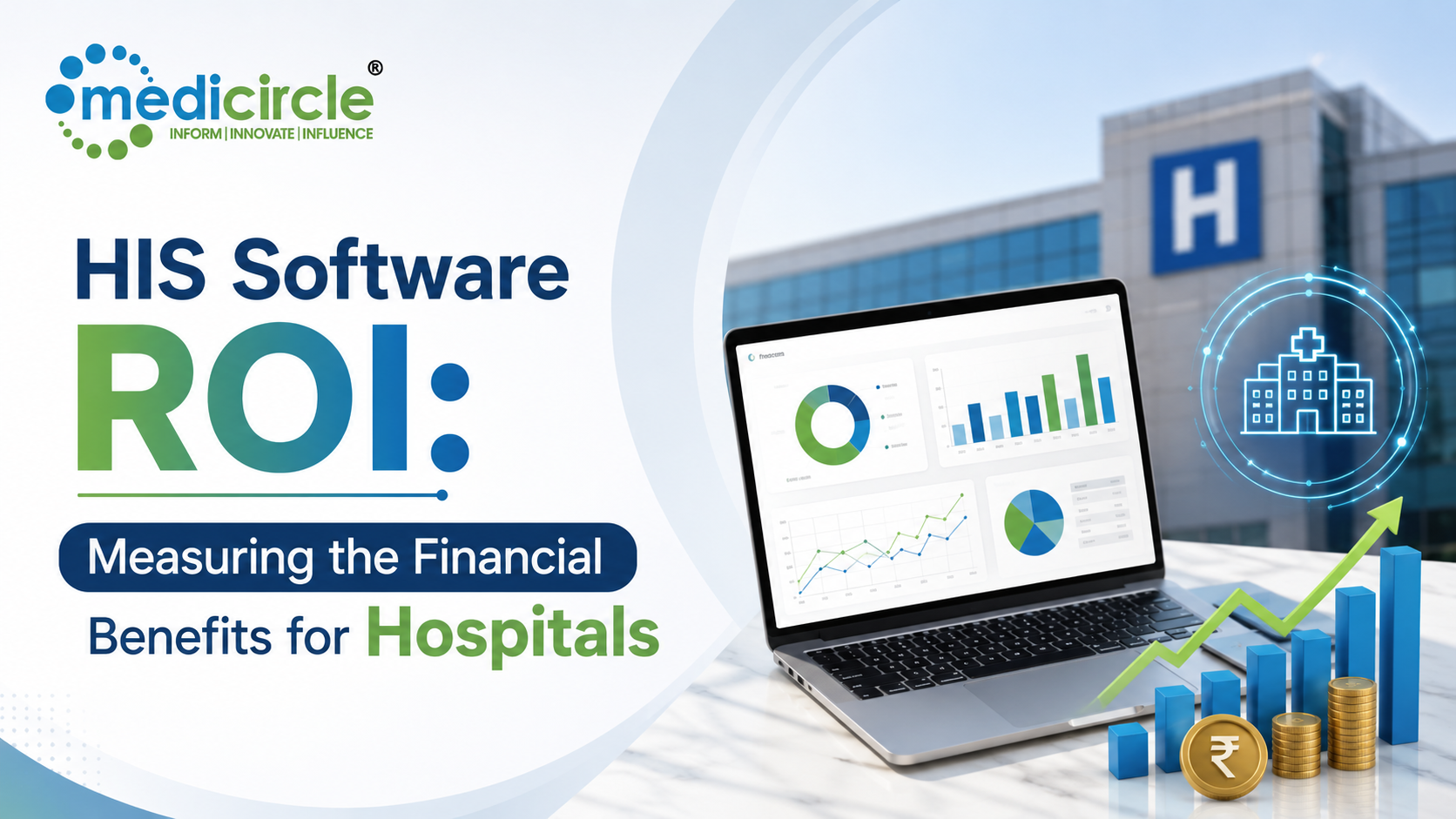
 The cost structure of Hospital Information Systems (HIS/HMIS) in India has transformed significantly over the years. Traditional deployments required substantial upfront investments in hardware, software licenses, and IT infrastructure, making adoption expensive for many healthcare providers. Today, cloud-based and subscription-driven models have made HIS solutions more affordable, scalable, and accessible for hospitals of all sizes.




Cost of Hospital Information System Software in India
The financial landscape for deploying a Hospital Information System (HIS)—also known as a Hospital Management Information System (HMIS)—has shifted drastically in India. Historically, hospitals had to budget for heavy, upfront capital expenses to install local servers, buy lifetime licenses, and hire in-house IT maintenance teams.
In 2026, the rapid expansion of secure cloud architectures has democratized health tech. Today, quotes in the Indian healthcare market vary widely—ranging from basic outpatient module packages at ₹1,500 per month to custom enterprise hospital ERP platforms crossing ₹50 Lakhs. Navigating this massive price gap requires understanding different pricing models, scaling software costs to your specific bed capacity, and identifying hidden vendor charges before final sign-off.
1. The Four Primary Pricing Models in India
How a vendor structures their pricing determines your long-term cash flow profile. Indian software providers generally utilize one of four pricing models:
- Cloud Subscription (Per Bed / Month): This has become a standard model for inpatient facilities. The monthly subscription fee scales automatically based on your total licensed bed capacity, typically ranging between ₹150 to ₹500 per bed, per month.
- Cloud Subscription (Per Active User / Month): Best suited for day-care surgical units or high-volume outpatient clinics. You pay a fixed monthly fee multiplied strictly by the number of active login accounts generated for your doctors, nurses, and billing staff (typically ₹500 to ₹2,000 per user, per month).
- Modular / À La Carte Platform Fee: Vendors charge a baseline fee for core components (like basic registration and OPD billing) and charge separate, independent subscription rates for advanced expansions (such as ICU charting, Blood Bank tracking, or specialized Operation Theater scheduling modules).
- Perpetual / Custom On-Premise License: Highly preferred by legacy corporate hospital groups or government teaching institutions that possess existing local server rooms. You pay a heavy, upfront capital development or license fee combined with a mandatory annual maintenance contract (AMC) fee to handle upgrades.
2. Average Cost Breakdown by Hospital Bed Capacity
Software cost scales directly with your facility's operational complexity. The table below outlines the realistic market estimates for cloud-based HIS subscriptions versus custom/on-premise deployments across different hospital sizes in India.
|
Hospital Category & Scale |
Essential Module Requirements |
Average Cloud Subscription Cost (SaaS) |
One-Time On-Premise / Custom Cost |
|---|---|---|---|
|
Small Clinic / Nursing Home (1 to 15 Beds) |
Doctor Scheduling, OPD Billing, Basic EHR, Local Pharmacy Billing |
₹1,500 to ₹4,500 per month |
₹50,000 to ₹2,00,000 (One-time setup) |
|
Mid-Sized Multi-Specialty (15 to 50 Beds) |
Full OPD/IPD Logistics, Visual Bed Board, Basic LIS/RIS, TPA Panels, GST Invoicing |
₹10,000 to ₹22,000 per month |
₹3,00,000 to ₹8,00,000 (One-time license) |
|
Large Corporate Hospitals (50 to 150 Beds) |
Advanced Multi-Ward ERP, Operation Theater, Intensive Care Unit, Asset Management, Real-Time Analytics |
₹25,000 to ₹75,000 per month |
₹8,00,000 to ₹25,00,000 (Enterprise build) |
|
Enterprise Chains & Teaching Units (150+ Beds) |
Multi-Location Database Syncing, Custom API Integrations, Dedicated Server Gateways |
Custom Enterprise Quotes (Often ₹1 Lakh+ monthly) |
₹25,00,000 to ₹70,000,000+ (Full source code ownership) |
3. The 5-Year Total Cost of Ownership (TCO) Analysis
When calculating your software budget, looking exclusively at the Year 1 base license fee is a major strategic trap. A true evaluation requires a 5-year Total Cost of Ownership analysis, contrasting legacy on-premise infrastructure overheads with modern cloud SaaS models.
[ LEGACY ON-PREMISE 5-YEAR DRAINS ] ◄───► [ MODERN CLOUD SAAS 5-YEAR MAP ]
┌────────────────────────────────────┐ ┌────────────────────────────────────┐
│ • Upfront License: ₹5,00,000 │ │ • Upfront License: ₹0 │
│ • Server Hardware: ₹4,00,000 │ │ • Server Hardware: ₹0 │
│ • 20% Annual AMC: ₹5,00,000 │ │ • 20% Annual AMC: ₹0 │
│ • Local IT Staff: ₹12,00,000 │ │ • Local IT Staff: ₹0 │
│ • Server AC/Power: ₹3,00,000 │ │ • All-In Subscription:~₹4,50,000 │
└────────────────────────────────────┘ └────────────────────────────────────┘
TOTAL ESTIMATED COST: ~₹29,00,000 TOTAL ESTIMATED COST: ~₹4,50,000
4. Unmasking the "Hidden Charges" Trap
Many budget software providers in India quote an incredibly low baseline entry price to secure a signed contract, only to implement hidden extras later in the deployment process. Always review your vendor agreement to check for these hidden costs:
- The Annual Maintenance Contract (AMC): For perpetual or offline setups, verify whether the AMC is mandatory. Standard market rates range from 15% to 25% of the initial license value every year to keep support active.
- Structured Legacy Data Migration Fees: Moving old, messy patient records, historic ICD diagnostics, and inventory ledgers into a clean new database demands technical engineering hours, which are frequently quoted as an extra fee ranging between ₹10,000 to ₹2,00,000.
- The Communication Gateway Surcharge: Automated patient reminders sound excellent until you realize you might be billed separately. Automated WhatsApp or SMS alerts often cost an additional ₹0.15 to ₹0.50 per message, adding thousands to monthly operational costs.
- ABDM Integration and Patch Upgrades: Aligning your hospital with India's Ayushman Bharat Digital Mission (ABDM) requires your software to generate ABHA IDs and link records across the national health grid natively. Ensure your vendor does not charge compliance update fees to keep these features active.
Actionable Strategy: Securing Your Investment Metrics
- Demand a Written Out-of-Pocket Cap on Upgrades: Before finalizing your software purchase, protect your cash flow. Secure a binding level-agreement (SLA) stating that all statutory taxation updates (such as changing GST tiers) and mandatory national digital health mission compliance patches will be delivered entirely free of cost.
- Execute a Departmental Role-Based Access Audit: Ensure the software’s user interface can be partitioned seamlessly based on employment functions. A floor nurse should only see medication charts, a pharmacist must stay locked into inventory tracking, and a front-desk billing assistant must hold absolute zero visibility into private pathology notes, protecting data safety.
- Test Vendor Support Response Metrics Before You Buy: A software crash in an emergency ward or a broken connection during a peak discharge window requires immediate troubleshooting. Prioritize vendors that deliver structured, local on-site onboarding training and back their platforms with guaranteed, 24/7 technical call support.
Frequently Asked Questions (FAQs)
Q1. What is the average starting cost of a basic hospital software license in India?For basic, entry-level outpatient department (OPD) management and digital medical documentation, standalone software packages start around ₹1,500 to ₹3,500 per month on cloud subscriptions. However, these entry-level tiers rarely include advanced inpatient (IPD) ward logistics, blood bank tracking, or real-time visual bed boards needed by full-scale multi-specialty hospitals.
Q2. Why is cloud-native hospital software considered cheaper than offline setups in India?An offline, on-premise installation demands a heavy upfront capital expenditure to purchase physical servers, build secure power backups, construct an air-conditioned server room, and hire full-time IT professionals to handle upgrades and system crashes. A cloud operating model removes this infrastructure overhead completely, running via any secure web browser on standard laptops or tablets for a predictable subscription fee.
Q3. How do software vendors calculate "Per Bed" pricing models?Under a per-bed pricing infrastructure, the subscription rate scales directly with your facility's physical capacity. For example, if a provider charges an average rate of ₹200 per bed per month, a 30-bed nursing home will pay a stable baseline fee of ₹6,000 per month, completely independent of how many individual doctors or nurses use the software screens across different shifts.
Q4. Does the Government of India provide free hospital management software?Yes. The National Health Authority (NHA) provides the e-Hospital platform and NIC-driven health management information frameworks for public institutions and government medical colleges. However, private corporate hospitals and rapidly growing multi-specialty hubs typically utilize private cloud platforms (like NuvertOS, KareXpert, or MocDoc) to access advanced commercial TPA insurance panels, multi-layered inventory setups, and customized physician templates.
Q5. What exactly does an ABDM-compliant HIS do, and does it cost extra?An ABDM-compliant platform integrates directly with India's national digital health grid. It enables your reception desk to natively scan and generate Ayushman Bharat Health Accounts (ABHA IDs), process digital health consent loops, and link electronic prescriptions safely. While premier cloud providers bundle this feature natively into their base subscription, legacy tools may charge separate integration fees.
Q6. Can a hospital change its software vendor without losing historical patient data?Yes, but it requires a structured data migration protocol. Before terminating a contract with your current provider, ensure you can export your entire database into standardized, clean file formats (like Excel or CSV scripts). Your new HIS vendor will then use data-mapping tools to import those historic lifecycles, demographic logs, and diagnostic files into the new dashboard framework.
Q7. What are the standard GST rates applicable to hospital software in India?In accordance with Indian tax mandates, purchasing software licenses or paying recurring cloud SaaS subscriptions attracts a standard 18% Goods and Services Tax (GST) under the Information Technology services sector. Ensure your official vendor quotes explicitly state whether their final figures are inclusive or exclusive of this 18% tax footprint.
Q8. Do hospital information systems charge separate fees for pathology and radiology modules?It depends entirely on the vendor's product architecture. Comprehensive, unified cloud systems provide a fully integrated stack covering OPD, IPD, Laboratory Information Systems (LIS), and Pharmacy out of the box. Conversely, modular, legacy software developers often charge separate add-on fees ranging from ₹25,000 to ₹3,00,000 to unlock independent lab machine analyzer or PACS imaging integrations.
Q9. Why do some vendors charge additional fees for "Speech-to-Rx" or doctor apps?Specialized features like automated medical voice dictation (Speech-to-Rx) require integration with advanced natural language processing (NLP) algorithms to convert spoken words into structured digital charts accurately. Because these tools require high-end computational power and separate technical tuning, vendors frequently price them as premium add-ons outside their standard package.
Q10. What is a realistic onboarding and deployment budget for a 50-bed Indian hospital?For a standard 50-bed multi-specialty hospital choosing a modern cloud-native HIS, the upfront setup, data mapping, and staff onboarding fees generally range between ₹25,000 to ₹1,00,000 as a one-time charge. The ongoing operational cost will settle into a predictable subscription ranging from ₹15,000 to ₹30,000 per month, providing an exceptional return on investment by closing billing gaps and reducing discharge times.





-23-300x250.png)

.jpeg)

.jpg)
.jpg)
.jpg)
.jpg)
.jpg)
.jpg)
.jpg)
.jpg)
.jpg)