Tuesday, October 27, 2026
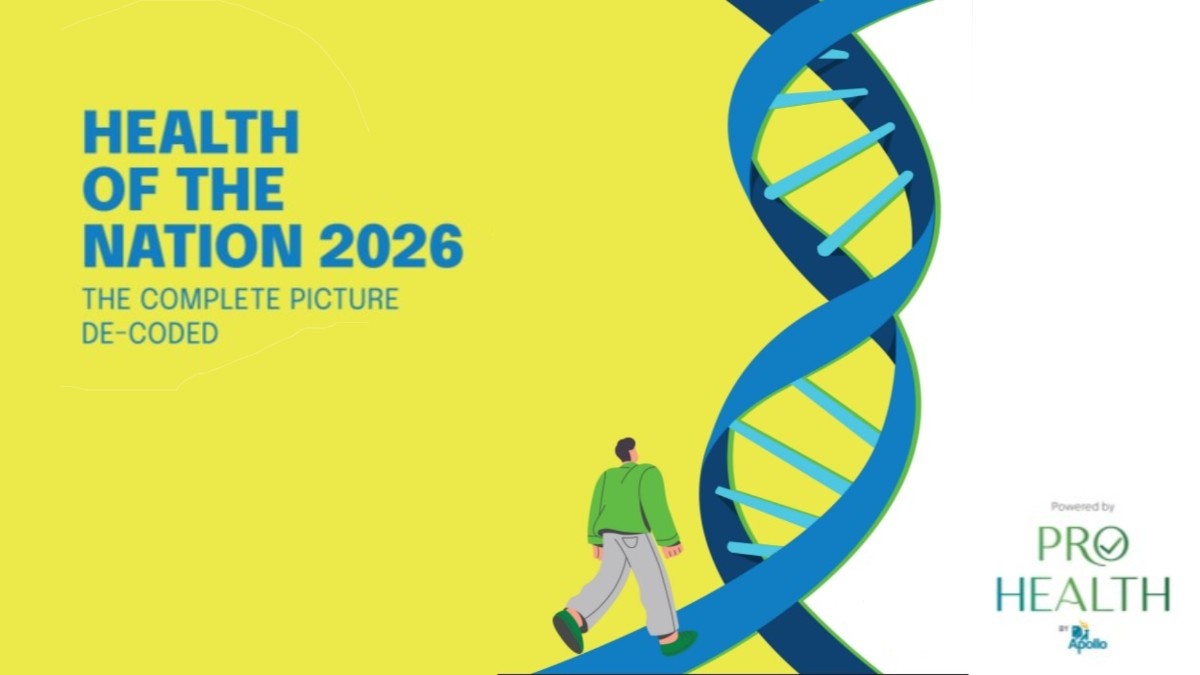
 India’s most common health risks are arriving earlier and staying hidden longer, according to the sixth edition of Apollo Hospitals’ Health of the Nation 2026 (HoN 2026) report, released today on World Health Day.




National, April 7, 2026: India’s most common health risks are arriving earlier and staying hidden longer, according to the sixth edition of Apollo Hospitals’ Health of the Nation 2026 (HoN 2026) report, released today on World Health Day. Based on over three million preventive health assessments conducted across the Apollo ecosystem in 2025, the report makes a compelling case for proactive healthcare, an approach that goes beyond preventing disease to help individuals optimise their health and become the best version of themselves.
India's health landscape is evolving, with two in three young adults already at risk for NCDs. In working populations, nearly half have prediabetes or diabetes, and 8 in 10 are overweight, presenting clear opportunities for lifestyle-driven improvement. Gender-specific insights present distinct risks, such as anaemia and early onset of breast cancer. High levels of Vitamin D and B12 deficiencies, along with declining fitness gaps, further highlight the scale of silent health risks. Because risks differ by age, gender, and lifestyle, looking at the whole person, not just isolated symptoms, is the key to meaningful, lasting health transformation.
Dr. Prathap C. Reddy, Founder Chairman, Apollo Hospitals, said: “The true strength of a nation depends on the well-being of its people. For too long, health checks were viewed as routine blood tests and vitalsmerely a reactive response driven by fear. Today, we are signalling a significant change. Genuine health is personal, proactive, and highly precise. Since no two lives are the same, our approach to prevention must be as individual as the people we serve. We are pushing the boundaries of science - from gut microbiome health to advanced long-term risk patterns - because a comprehensive health check is the ultimate act of self-stewardship.”
Health risks are already present in young and working populations, even before symptoms appear
- 1 in 5 people under 30 in our data were prediabetic. At this stage, it is still reversible - among those who intervened, 28% reversed to normal. Among those over 50, only 7% did.
- More than half were obese, and more than half had abnormal cholesterol.
- Nearly 7 in 10 were deficient in Vitamin D, and close to half had low Vitamin B12
- Nearly two-thirds of under-30s assessed had poor flexibility, strength, or balance. Poor physical function is linked to stiffer arteries, higher risk of falls, and shorter lifespan — and it declines long before you feel it
- Early screening by Apollo Shine Foundation across 20,164 students (aged 17–25) found that two in three had at least one underlying health risk
- In working populations (average age 38):
- 8 in 10 were overweight
- Nearly half had prediabetes or diabetes
- 1 in 4 had high blood pressure
These findings indicate that risk factors are already present across younger and working populations, often before they are clinically recognised.
Dr. Preetha Reddy, Executive Vice Chairperson, Apollo Hospitals, said, Every woman’s well-being is a force multiplier that strengthens families, communities, and the economy. Estimates suggest that closing the women’s health gap could add up to $1 trillion annually to the global economy by 2040. Yet, our data shows that women in India continue to carry a significant health burden that often goes undetected.
At Apollo, we see women’s health as both a national priority and a shared responsibility. It begins with rethinking care through a more personalised lens, one that is aligned to a woman’s biology, life stage, and risk profile. Self-care is not a privilege; it is power and it fuels a healthier, stronger, and more prosperous India.”
Health risk varies across populations, while screening is detecting disease without symptoms
- Women show distinct risk patterns, including anaemia and increasing central obesity with age
- The mean age of breast cancer detection through routine mammography, based on Apollo data, was 51 nearly a decade earlier than in Western populations. In India, breast cancer arrives sooner. So should screening.
- Among women over 40 screened, 1 in 359 had breast cancer, all asymptomatic
This underscores that health risk is not uniform and that structured screening can identify conditions early.
Some conditions require imaging and advanced diagnostics for early detection
- Among individuals with fatty liver confirmed through ultrasound, 74% had normal liver enzyme levels
- Among asymptomatic individuals who underwent coronary calcium scoring, 45% showed early atherosclerosis.
- Healthier people had more diverse gut bacteria. As conditions like diabetes, obesity, and high cholesterol build up, gut diversity dropped by about 9% in those with multiple issues. Your gut flags metabolic problems before they surface.
These findings highlight that routine blood tests alone may not capture certain underlying conditions.
Dr. Sangita Reddy, Joint Managing Director, Apollo Hospitals, said, “Healthy longevity is not a matter of chance, it requires early, continuous action. The right health check at the right time can detect heart disease and cancer at Stage 1, when they are most treatable.
The future of healthcare lies in predicting disease through population data, geographic insights, and the role of lifestyle and epigenetics. Apollo ProHealth combines predictive risk assessment, advanced diagnostics, and physician-led evaluation, personalised to age, gender, and risk profile.
India must move beyond symptom-led care to a predictive, continuous, and personalised approach. Don’t postpone your health, schedule a checkup today."
The report highlights a consistent pattern across the data: health risks are being identified earlier, often without symptoms, and across multiple dimensions. It also shows that follow-up and continuity of care are associated with improved outcomes. 56% with high blood pressure and 34% with diabetes improved after following recommended care. A health check finds the problem - action is what fixes it.
The report's insights are drawn from de-identified electronic medical records, structured clinical evaluations, AI-driven risk stratification, and follow-up data across Apollo's hospitals, clinics, diagnostics labs, and wellness centres





-23-300x250.png)

.jpeg)






.jpg)
.jpg)
.jpg)
.jpg)
.jpg)
.jpg)
.jpg)
.jpg)
.jpg)