Sunday, October 25, 2026
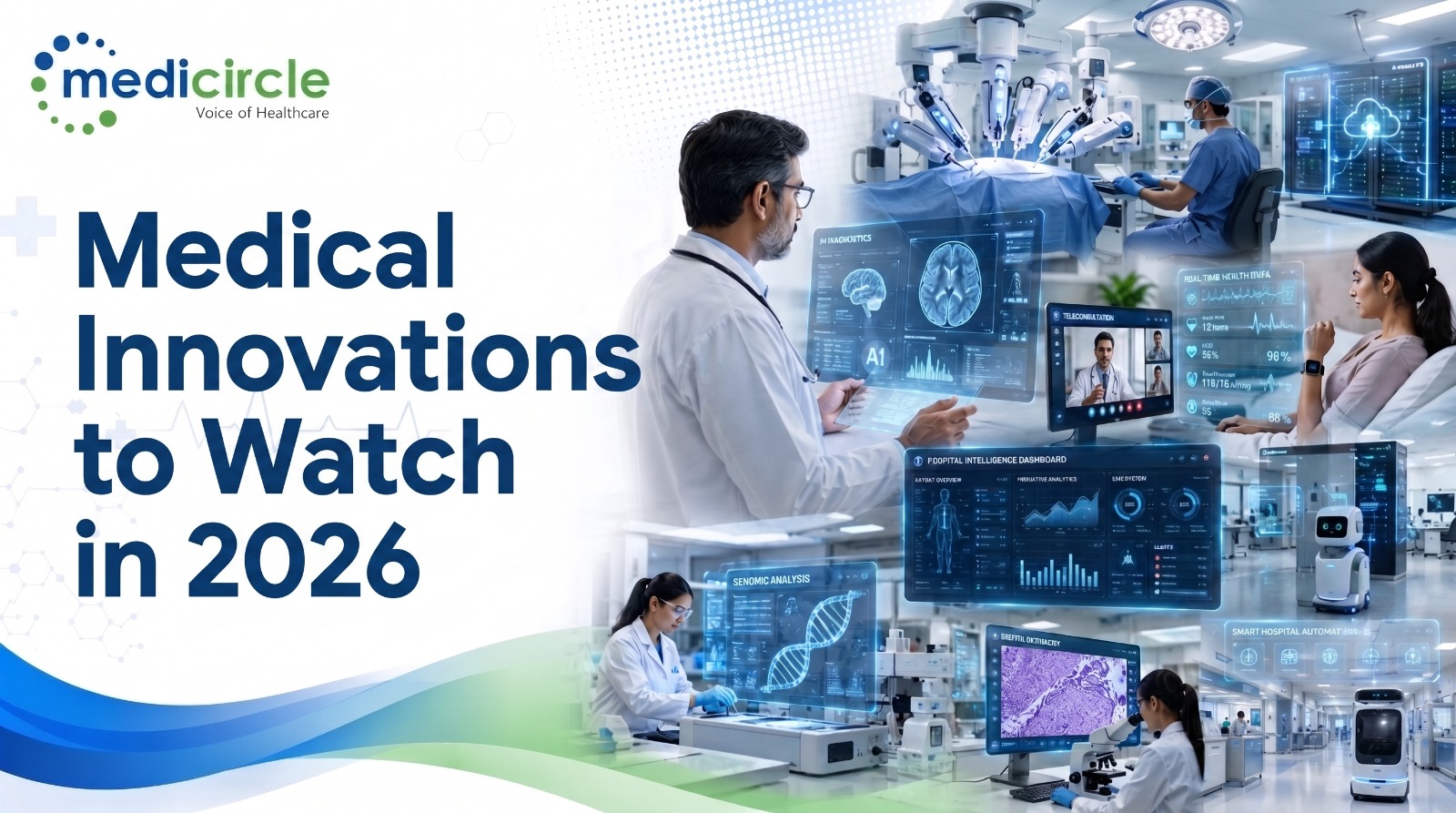
 An overview of medical innovations to watch in 2026, covering AI diagnostics, gene therapy, robotics, and India's digital health infrastructure, and their evolving impact on patient access and care.





Introduction
Healthcare is changing faster than at almost any point in recent memory. Artificial intelligence is helping doctors read scans with greater precision, gene therapies are moving from experimental trials to real clinical use, and digital health records are replacing stacks of paper files carried from one hospital to another. For India, a country balancing world class metro hospitals with healthcare gaps in smaller towns and rural areas, these shifts carry particular weight.
The Indian healthcare sector is expanding rapidly, with medtech alone projected to grow into a market worth tens of billions of dollars by the end of the decade. Government programmes such as the Ayushman Bharat Digital Mission, along with rising private investment in health technology, are accelerating this transformation. Understanding which medical innovations matter most in 2026, and how they are likely to affect patients, doctors, and hospitals across India, helps readers separate genuine progress from passing trends. This article looks at the developments most worth following this year, with context specific to Indian healthcare delivery.
Understanding the Shift From Reactive to Predictive Healthcare
For decades, healthcare in India and globally has largely operated on a reactive model. Patients visit a doctor once symptoms appear, tests are conducted, and treatment follows. The innovations gaining ground in 2026 are steadily moving that model toward something more predictive and preventive.
This shift relies on three connected developments: better data collection through digital health records, artificial intelligence capable of analysing that data at scale, and wearable or remote monitoring devices that track health indicators continuously rather than during occasional check-ups. Together, these tools are allowing healthcare providers to identify risks earlier, sometimes before a patient notices any symptoms at all.
In India, this transition is still uneven. Less than 15 percent of patients managing chronic diseases currently use digital health tools consistently, held back by device costs, limited digital literacy, and language barriers. Even so, the direction of travel is clear, and 2026 marks the year several of these tools are expected to move from early adoption toward more mainstream use in India's metro and Tier 2 cities.
Artificial Intelligence in Diagnostics and Clinical Decision Support
Artificial intelligence has moved well beyond experimental use in radiology departments. AI-assisted tools are now helping clinicians detect abnormalities in scans, flag irregular patterns in lab reports, and support faster, more informed decisions during patient consultations. Rather than replacing the clinician, AI functions as a second set of eyes, particularly useful in high-volume settings where reviewing every scan manually within a reasonable time is difficult.
India has been identified as one of the Asia Pacific region's most AI-ready healthcare markets, with rising use of generative AI tools and growing demand for coordinated, technology-enabled care. Hospitals in metro cities are already piloting AI-assisted radiology and pathology tools, and this is expected to expand into Tier 2 cities as costs decline and cloud-based diagnostic platforms become more accessible.
Predictive analytics is another meaningful application. By analysing large volumes of patient data, healthcare providers can identify patients at higher risk of complications from conditions such as diabetes or cardiovascular disease before those complications become severe. This is particularly relevant in India, where the burden of non-communicable diseases continues to rise alongside an ageing population.
It is worth noting that AI tools are decision support systems, not diagnostic replacements. Clinical judgement, patient history, and physical examination remain central to how doctors in India use these technologies responsibly.
Gene Therapy and Personalised Medicine
Personalised medicine, once discussed mainly as a future possibility, is now entering early clinical use. Advances in gene-editing technologies are allowing researchers to design treatments tailored to a patient's specific genetic profile rather than relying on a single approach for everyone with a given condition.
This has direct relevance for India, which carries a significant burden of genetic and rare diseases, alongside a large population affected by cancers and metabolic conditions where treatment response varies widely between individuals. Genetic testing is increasingly being used to predict how a patient will respond to particular medications, allowing doctors to prescribe with greater precision and potentially reduce adverse reactions.
India is also positioning itself as a serious player in the biologics and biosimilars space. Government-backed initiatives aim to expand India's role in biopharmaceutical manufacturing and innovation over the coming decades, which could eventually make advanced genetic and biologic therapies more affordable and accessible domestically rather than requiring patients to seek treatment abroad.
Precision oncology is a particularly active area. Blood-based tests that help match cancer patients to the most suitable therapy based on genetic markers are gaining regulatory approval internationally, and Indian hospitals are gradually adopting similar diagnostic approaches, particularly in tertiary cancer care centres.
Robotics and Advanced Surgical Technology
Robotic-assisted surgery is no longer confined to a handful of flagship hospitals. Surgical robots are increasingly used to support procedures requiring high precision, such as urological, gynaecological, and certain cardiac surgeries, offering benefits like smaller incisions, reduced blood loss, and often faster recovery times for patients.
Beyond the operating theatre, hospitals are also exploring robotic support for logistics, such as transporting medication and equipment between departments, which helps ease pressure on nursing and support staff, an area where many Indian hospitals continue to face workforce shortages.
India's medical device sector has also been building indigenous manufacturing capacity, partly to reduce dependence on imported technology and partly to make advanced tools more affordable for hospitals outside the largest metro centres. This includes progress in areas like cardiovascular stents, where domestic manufacturers are increasingly competing on both price and clinical outcomes rather than price alone.
Digital Health Infrastructure and the Growth of Telemedicine
Perhaps the most significant and distinctly Indian development in recent years has been the expansion of the Ayushman Bharat Digital Mission, or ABDM. This national digital health initiative gives citizens a unique digital health identity, known as ABHA, allowing medical records to be securely linked and shared across hospitals, laboratories, and pharmacies with patient consent.
The scale of adoption has been substantial. ABHA accounts have grown from around 14.7 crore in 2021 to more than 90 crore by mid 2026, alongside over 104 crore linked health records, making it one of the largest digital health identity systems in the world. This infrastructure is intended to reduce duplication of tests, prevent loss of medical records, and improve continuity of care as patients move between different hospitals and cities.
Telemedicine continues to mature alongside this infrastructure. What began as a stopgap solution during the COVID-19 pandemic has evolved into a more permanent part of how many Indians access care, particularly for follow-up consultations, chronic disease management, and access to specialists in cities where such expertise may not be locally available. Blended care models are also emerging, combining home-based infusions, app-based support, and periodic in-person visits, which is proving especially useful for patients managing long-term conditions without needing to travel repeatedly to a hospital.
Despite this progress, adoption is not uniform. Usage of ABHA IDs still lags behind account creation in many regions, and gaps in digital literacy, privacy awareness, and infrastructure remain more pronounced outside major cities. Bridging this gap will likely determine how evenly these innovations benefit patients across India's smaller towns and rural areas over the next few years.
Portable and Point-of-Care Diagnostic Devices
Not every innovation worth watching in 2026 involves complex software or large hospital systems. Portable diagnostic devices are quietly transforming how quickly patients receive answers, particularly in areas without easy access to a full-scale laboratory.
Handheld ultrasound devices that connect to a smartphone, for instance, are reducing dependence on bulky, expensive equipment and extensive radiology training. Microfluidic testing technologies now allow multiple diagnostic tests to be run from a single small blood sample, speeding up diagnosis considerably compared to traditional laboratory workflows.
For India, where a significant portion of the population still lives at a distance from advanced diagnostic facilities, this category of innovation may ultimately have as much real-world impact as more headline-grabbing technologies like AI or gene therapy. Point-of-care testing brings the diagnostic capability closer to the patient rather than requiring the patient to travel to the capability.
What This Means for Patients, Doctors, and Hospitals
For patients, these innovations point toward care that is more predictive, more personalised, and increasingly accessible outside traditional hospital settings. Earlier detection of disease, fewer repeated tests due to better record sharing, and more convenient follow-up options through telemedicine are among the most immediate practical benefits.
For doctors, the tools discussed here are best understood as support systems rather than replacements for clinical expertise. AI can flag a possible abnormality, but interpreting that finding within the full context of a patient's history and presentation remains a distinctly human responsibility. Doctors who become comfortable integrating these tools into their practice, while maintaining strong clinical judgement, are likely to be well positioned as India's healthcare system continues to modernise.
For hospitals and healthcare brands, the coming years will likely reward organisations that invest not just in acquiring new technology, but in training staff, educating patients, and building trust around how these tools are used. Technology alone does not improve healthcare outcomes. It is the thoughtful, responsible integration of technology into everyday clinical practice that makes the difference, a principle platforms like Medicircle aim to support by helping healthcare voices explain these innovations clearly to the people who will ultimately use them.
Conclusion
The medical innovations shaping 2026 are not distant, futuristic concepts. Many are already present in Indian hospitals, government digital health platforms, and diagnostic labs today, even if their reach is not yet even across the country. Artificial intelligence is supporting faster and more accurate diagnoses, gene therapy is moving toward real clinical application, robotics is improving surgical precision, and India's digital health infrastructure is beginning to connect a historically fragmented system.
What matters most in the year ahead is not simply the arrival of new technology, but how responsibly and equitably it reaches patients across India's cities, towns, and villages. As these tools mature, the healthcare providers, hospitals, and platforms that focus on education, trust, and accessibility alongside innovation will likely shape the most meaningful outcomes for Indian patients.
Frequently Asked Questions
Q1: What are the biggest medical innovations to watch in 2026?
The biggest medical innovations to watch in 2026 include artificial intelligence in diagnostics, personalised gene therapies, robotic-assisted surgery, portable diagnostic devices, and expanding digital health infrastructure such as the Ayushman Bharat Digital Mission in India.
Q2: How is India adopting new medical technology in 2026?
India is adopting new medical technology through government initiatives like ABDM, expanded Ayushman Bharat coverage, growing healthtech investment, indigenous medical device manufacturing, and increasing use of AI-assisted diagnostics in hospitals across metro and Tier 2 cities.
Q3: Is artificial intelligence replacing doctors in India?
No, artificial intelligence is not replacing doctors in India. It is being used as a support tool to help clinicians interpret scans, manage patient data, and make faster decisions, while the final diagnosis and treatment decisions remain with qualified medical professionals.
Q4: What is the Ayushman Bharat Digital Mission and why does it matter?
The Ayushman Bharat Digital Mission is India's national digital health initiative that gives citizens a unique digital health identity called ABHA, enabling secure, consent-based sharing of medical records across hospitals, labs, and pharmacies to reduce fragmentation in care.
Q5: Are these medical innovations accessible to patients in smaller Indian cities?
Access is improving but remains uneven. While metro hospitals are early adopters of AI diagnostics and robotic surgery, Tier 2 and Tier 3 cities are gradually gaining access through telemedicine, portable diagnostic devices, and government digital health programmes, though infrastructure and digital literacy gaps still exist.
Resources
- Ministry of Health and Family Welfare, Government of India: Official updates on national health policy and digital health initiatives.
- National Health Authority (Ayushman Bharat Digital Mission): Official data and framework for India's digital health ecosystem, including ABHA adoption figures.
- World Health Organisation (WHO): Global reports and guidance on digital health, precision medicine, and emerging medical technologies.
- Indian Council of Medical Research (ICMR): Research publications and guidelines relevant to clinical innovation and public health in India.
- Press Information Bureau, Government of India: Official press releases on healthcare policy and digital health milestones.
Interlinking Keywords
AI in healthcare India, digital health records India, telemedicine India, gene therapy India, robotic surgery India, ABDM ABHA health ID, healthcare innovation trends, precision medicine India, point-of-care diagnostics, Ayushman Bharat healthcare access
Last medically reviewed by:
Medicircle Editorial and Medical Advisory Team on July 9, 2026
Medical Disclaimer:
This article is intended for general informational and educational purposes only and does not constitute medical advice. It should not be used to diagnose or treat any health condition. Readers should always consult a qualified healthcare professional regarding any medical concerns, treatment options, or before making decisions related to their health.





-23-300x250.png)

.jpeg)


.jpg)
.jpg)
.jpg)
.jpg)
.jpg)
.jpg)
.jpg)
.jpg)
.jpg)