Monday, November 16, 2026
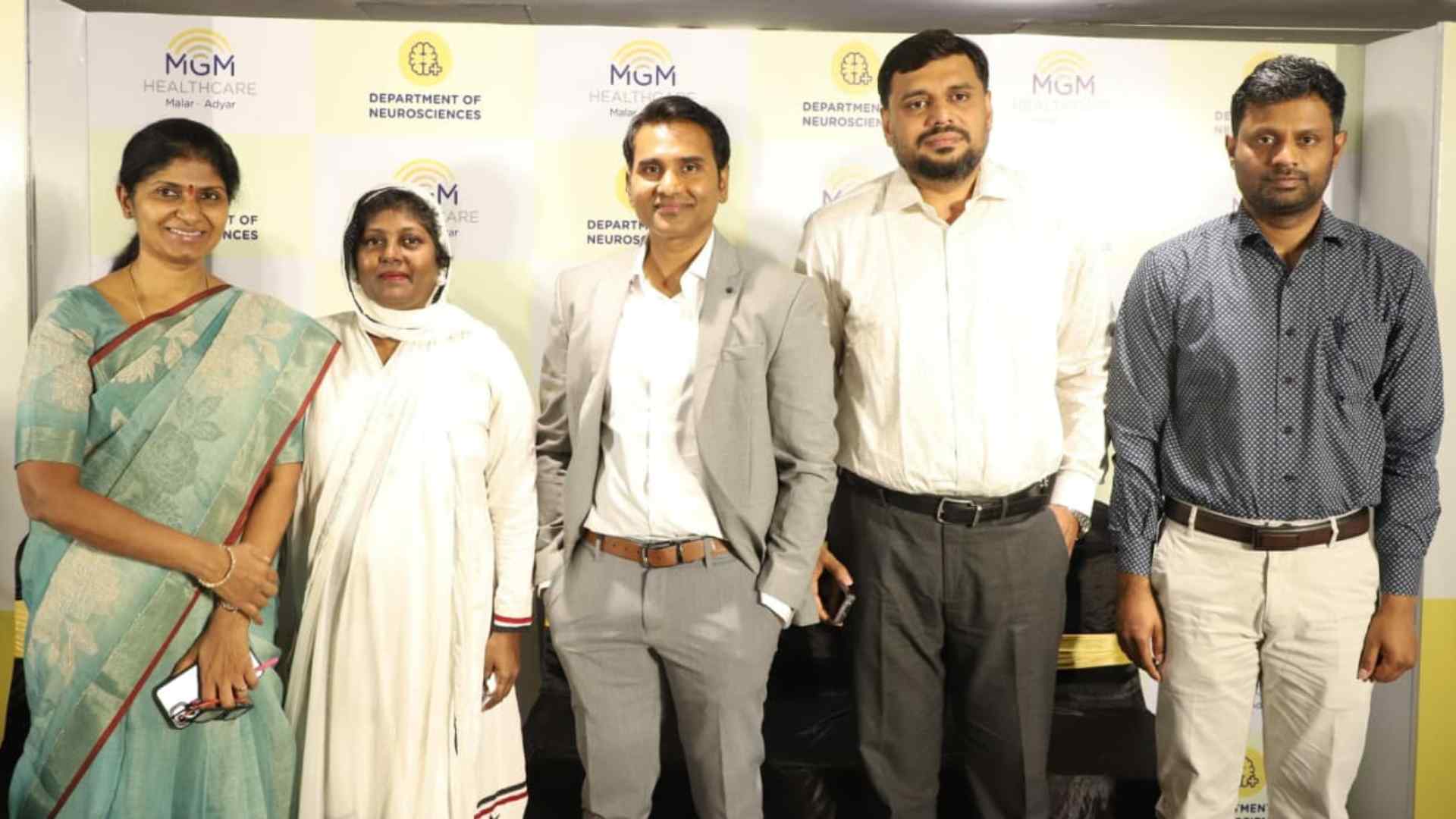
 In a remarkable feat of modern neurosurgery and interventional neurology, a multidisciplinary team at MGM Healthcare Malar, Adyar, successfully removed a massive 890-gram brain tumour, one of the largest ever reported in clinical practice worldwide.





Chennai, August 18, 2026: In a remarkable feat of modern neurosurgery and interventional neurology, a multidisciplinary team at MGM Healthcare Malar, Adyar, successfully removed a massive 890-gram brain tumour, one of the largest ever reported in clinical practice worldwide. The doctors first significantly reduced the tumour’s blood supply through preoperative embolisation before removing it in a complex open brain surgery.
The patient had been experiencing progressive neurological symptoms, including persistent headaches, weakness and difficulty performing routine activities. Detailed brain imaging revealed an enormous meningioma, a tumour that arises from the meninges, the protective layers of tissue surrounding the brain and spinal cord.
The tumour required a meticulous craniotomy, an open brain surgical procedure in which a section of the skull is temporarily removed to provide access to the brain and enable removal of the tumour. Before this specialised surgery, however, doctors performed embolisation, an advanced, minimally invasive neurointerventional technique in which the major blood vessels supplying the tumour were selectively blocked to significantly reduce its blood supply. The procedure helped minimise the risk of excessive bleeding during the subsequent surgery and provided the neurosurgical team with better visualisation, enabling safer and more precise tumour removal.
The embolisation was performed by senior Interventional Neurologists Dr. Karthikeyan S, Dr. Sai Prashanth P.R while Senior Consultant Neurosurgeon Dr. Aqib Saliya performed the craniotomy. The successful management of the case required seamless collaboration among the multidisciplinary team, including neurointerventional specialists, neurosurgeons, neuroanaesthesiologists, and intensive care specialists.
In his comments, Dr. Karthikeyan said, “Such large tumours in the brain are extremely rare, with only a few similar cases reported worldwide. The complete removal of such a large tumour was possible because of careful planning and seamless coordination among the multidisciplinary team. Preoperative embolisation significantly reduced the tumour’s blood supply, allowing us to approach the surgery with greater safety and precision. People generally perceive brain tumour surgery as a highly debilitating and exhausting procedure. However, with modern neurosurgical and neurointerventional techniques, this is no longer necessarily the case.”
Mr. Venugopal Bhat, Chief Operating Officer & Vice President – Group Strategic Initiatives, MGM Healthcare Malar, Adyar, said, “The successful management of such a large and highly vascular brain tumour was made possible through meticulous preoperative planning and seamless collaboration among the multidisciplinary team. This case also highlights how advances in neurosurgery and interventional neurology are expanding the possibilities for treating complex brain tumours.”





-23-300x250.png)