Tuesday, October 27, 2026
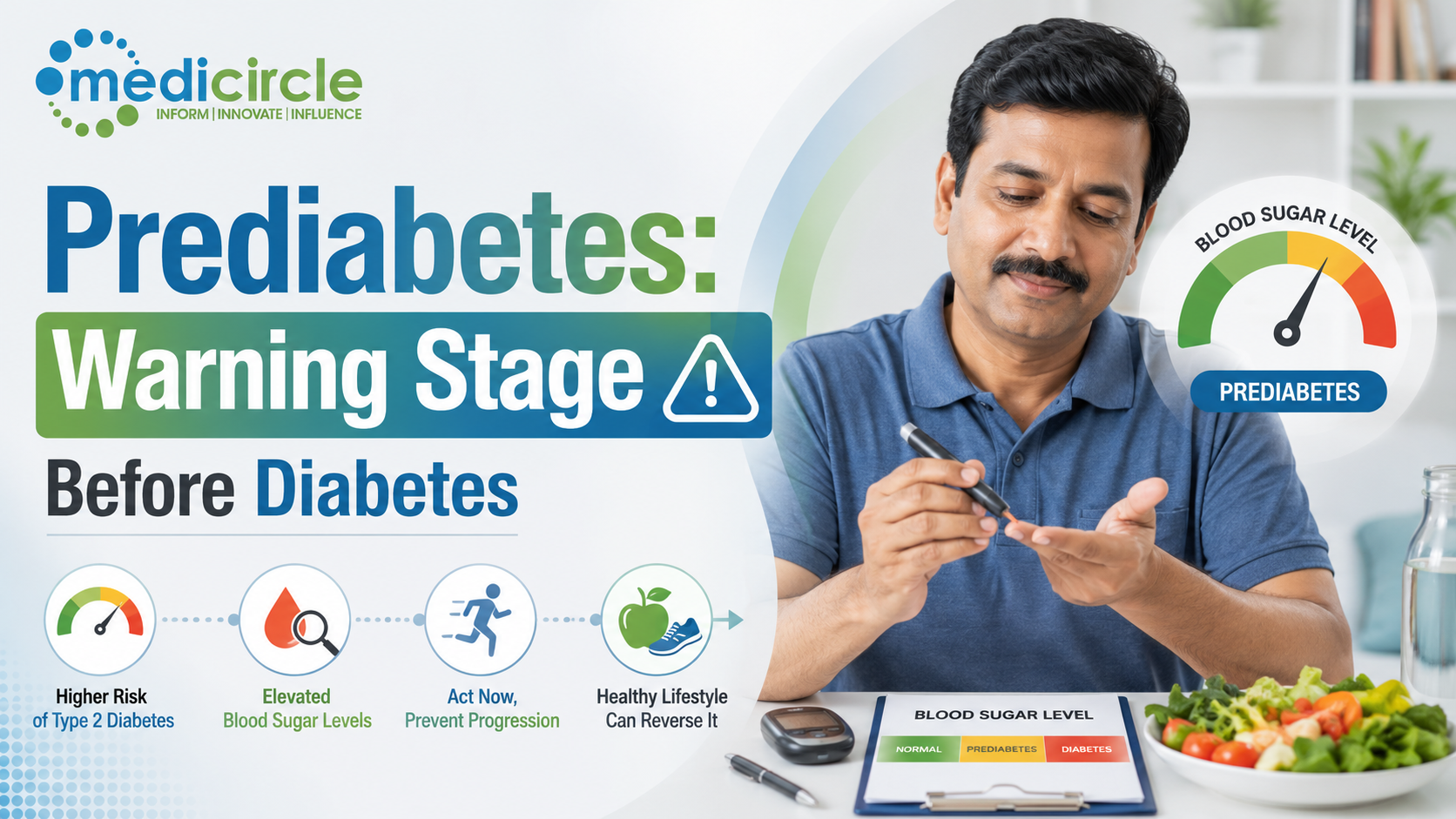
 Prediabetes is a reversible metabolic warning stage before type 2 diabetes, particularly urgent in India. Early screening, lifestyle modification, and timely medical guidance can prevent progression and protect long-term health.





Introduction
Every year, millions of Indians silently cross a metabolic threshold that their bodies are sending as an unmistakable warning. That threshold is prediabetes, a condition where blood glucose levels are elevated beyond normal but have not yet reached the diagnostic criteria for type 2 diabetes. For most people, it produces no pain, no dramatic symptoms, and no obvious disruption to daily life. Yet beneath the surface, this condition is quietly altering blood vessels, straining the pancreas, and increasing the risk of heart disease, kidney damage, and stroke.
India carries one of the heaviest burdens of diabetes in the world. The Indian Council of Medical Research (ICMR) and the Madras Diabetes Research Foundation have consistently reported that a significant proportion of Indian adults are either diabetic or prediabetic, with vast numbers unaware of their condition. What makes the Indian context particularly urgent is that Indians tend to develop metabolic dysfunction at lower body weight and younger ages compared to Western populations. A person in India with a BMI of 23 kg per square metre may already be at significant metabolic risk.
Prediabetes is not a life sentence. It is, in fact, one of the most powerful opportunities in modern medicine, a window of time during which the right choices can prevent or significantly delay the onset of type 2 diabetes and its complications. Understanding this condition thoroughly is the first and most important step.
Understanding Prediabetes: What It Means and Why It Matters
Prediabetes occurs when the body's ability to regulate blood glucose becomes impaired. Under healthy conditions, the pancreas produces insulin, a hormone that acts as a key, allowing glucose from food to enter cells and be used as energy. When this system works efficiently, blood glucose levels remain stable within a defined normal range.
In prediabetes, this regulation begins to break down. Either the pancreas does not produce enough insulin, or the body's cells begin to resist its effects, a phenomenon known as insulin resistance. As a result, glucose accumulates in the bloodstream rather than entering the cells where it is needed.
The precise thresholds that define prediabetes are well established. A fasting blood glucose of 100 to 125 mg/dL, a two-hour glucose reading of 140 to 199 mg/dL during an oral glucose tolerance test (OGTT), or a glycated haemoglobin (HbA1c) level of 5.7 to 6.4 percent all indicate the prediabetic range. Values above these thresholds confirm diabetes, while values below are considered normal.
Importantly, a landmark study published in 2025 in the journal Diabetes Care by researchers at The University of Texas at San Antonio identified a stage called "pre-prediabetes", a condition in which individuals with apparently normal glucose tolerance already showed severe insulin resistance, early beta cell dysfunction, and measurable cardiovascular changes. This finding underscores a growing understanding in the medical community: metabolic damage begins long before conventional diagnostic thresholds are met.
In the Indian context, prediabetes carries an additional layer of urgency because of the "thin-fat Indian" phenotype, a term used to describe Indians who may appear lean by Western BMI standards but carry higher proportions of visceral fat, which is a known driver of insulin resistance. This means the danger of prediabetes in India is often underestimated and underdiagnosed.
Primary Causes and Risk Factors
The underlying cause of prediabetes is the progressive failure of insulin sensitivity in the body's cells, particularly in muscle, liver, and fat tissue. However, a combination of genetic, lifestyle, and environmental factors determines who develops this condition and how quickly it progresses.
Genetic predisposition plays a meaningful role. Individuals with a parent or sibling diagnosed with type 2 diabetes carry a significantly higher risk of developing prediabetes themselves. Indian families with a history of diabetes on either parental side should treat this as a strong signal for early screening.
Excess body weight, particularly abdominal or visceral obesity, is one of the strongest modifiable risk factors. Fat accumulation around the abdomen is closely linked to insulin resistance because visceral fat releases inflammatory signals that interfere with insulin signalling pathways. For Indians specifically, the risk threshold for abdominal obesity is set lower than for Western populations; a waist circumference above 90 cm in men and above 80 cm in women is considered a risk indicator by Indian health guidelines.
Physical inactivity compounds this risk significantly. Sedentary behaviour reduces the ability of muscle tissue to absorb glucose effectively. With the rapid urbanisation of Indian cities, desk-bound jobs, long commutes, and screen-dependent leisure have sharply reduced the average Indian's daily physical activity compared to previous generations.
Dietary patterns high in refined carbohydrates, white rice, maida-based foods, sugar-sweetened beverages, and processed snacks contribute to blood glucose spikes that over time stress the pancreas and promote insulin resistance. Traditional Indian diets, when imbalanced toward these foods and away from fibre, pulses, and vegetables, significantly accelerate this risk.
Several other risk factors are clinically recognised and deserve particular attention:
- Women with polycystic ovary syndrome (PCOS) carry a heightened risk due to underlying hormonal and metabolic dysregulation.
- A history of gestational diabetes, diabetes that develops during pregnancy, puts both the mother and child at elevated long-term risk.
- Obstructive sleep apnea, a condition linked with obesity, disrupts hormonal rhythms and promotes insulin resistance.
- Hypertension, low HDL cholesterol, and high triglycerides, particularly when occurring together, constitute metabolic syndrome, a cluster of conditions that collectively amplify the risk of both prediabetes and cardiovascular disease.
- Tobacco use has been linked to increased insulin resistance and should be considered a contributing risk factor.
Recognising the Symptoms
One of the most challenging aspects of prediabetes is that it typically produces no symptoms whatsoever. The vast majority of individuals with prediabetes feel entirely normal, continue their daily routines without disruption, and have no reason to suspect that their blood glucose regulation is already compromised.
This absence of symptoms is precisely what makes prediabetes so dangerous in the Indian healthcare context, where routine health check-ups are still not a consistent habit across all population groups, particularly in semi-urban and rural areas.
In a minority of cases, certain physical signs may offer indirect clues. Acanthosis nigricans, a condition characterised by darkened, thickened, velvety patches of skin appearing on the neck, armpits, or groin, can be an indicator of insulin resistance. Some individuals may notice persistent fatigue, mild blurring of vision, or wounds and cuts that take longer than expected to heal. However, these signs are neither specific nor reliable enough for self-diagnosis.
The critical point is this: if prediabetes eventually progresses to type 2 diabetes without being caught, the body would then begin to show the more recognisable symptoms of diabetes: increased thirst, frequent urination, unexplained weight changes, tingling or numbness in the hands and feet, and recurrent infections. By that point, however, a valuable window of preventive opportunity has already passed.
The only truly reliable method of detecting prediabetes is through a blood test, making screening an essential tool rather than an optional precaution.
Diagnosis and Medical Evaluation
The diagnosis of prediabetes is made through specific blood-based investigations. No single test is uniformly superior, and doctors may recommend one or more of the following based on individual risk profiles.
The Fasting Plasma Glucose (FPG) Test requires the individual to fast for at least eight hours before blood is drawn. A reading between 100 and 125 mg/dL confirms prediabetes.
The Oral Glucose Tolerance Test (OGTT) is conducted over two hours. The individual consumes a standardised glucose solution, and blood glucose is measured two hours later. A reading between 140 and 199 mg/dL at the two-hour mark indicates prediabetes. This test is considered particularly sensitive for detecting early metabolic dysfunction, and emerging research suggests that the one-hour glucose value during an OGTT may be an even more powerful predictor of future diabetes progression than the two-hour reading.
The HbA1c Test provides an average picture of blood glucose levels over the previous two to three months by measuring the percentage of haemoglobin that has glucose attached to it. An HbA1c between 5.7 and 6.4 percent indicates prediabetes. This test does not require fasting and is widely used for routine screening.
In India, screening is recommended from the age of 30 for individuals with any identifiable risk factor. For those without risk factors, screening from the age of 45 is advised. Given India's specific metabolic vulnerability, healthcare experts increasingly advocate for screening at BMI thresholds of 23 kg per square metre or above, rather than the Western threshold of 25.
If one test returns a result in the prediabetic range, most guidelines recommend confirming it with a second test before proceeding with a management plan.
Treatment Options and Management Strategies
The most powerful and evidence-supported treatment for prediabetes is lifestyle modification. This is not a vague recommendation; it is backed by robust clinical evidence, including the landmark Diabetes Prevention Program (DPP) trial, which demonstrated that structured lifestyle changes reduce the risk of progressing from prediabetes to type 2 diabetes by 58 percent. In individuals over the age of 60, this reduction rose to 71 percent.
Diet is the foundation of prediabetes management. The goal is not an extreme or restrictive eating plan but a sustained shift toward foods that promote stable blood glucose. This means prioritising whole grains such as brown rice, jowar, bajra, and ragi over refined options like white rice and maida. It means increasing the consumption of lentils, legumes, and vegetables rich in dietary fibre, which slow glucose absorption. It means reducing sugar-sweetened beverages, packaged snacks, and fried foods that cause rapid glucose spikes. Portion control, particularly of carbohydrate-dense meals, is equally important in Indian dietary practice where rice and roti often dominate the plate.
Physical activity is the second pillar. A minimum of 150 minutes of moderate-intensity aerobic exercise per week, such as brisk walking, cycling, or swimming, has been shown to significantly improve insulin sensitivity. Incorporating resistance training two to three times per week further enhances the ability of muscle tissue to absorb glucose. For Indians with busy urban schedules, even consistent 30-minute walks five days a week represent a meaningful and achievable intervention.
Weight management is tightly linked to both dietary and physical activity changes. Research consistently shows that losing just 5 to 7 percent of body weight in individuals with prediabetes significantly reduces metabolic risk. For a person weighing 80 kilograms, this means a target loss of 4 to 5.6 kilograms, a realistic and achievable goal with structured effort.
Sleep and stress management are increasingly recognised as non-negotiable components of metabolic health. Chronic sleep deprivation disrupts cortisol and insulin regulation, driving blood glucose higher. Practices such as yoga, pranayama, and mindfulness meditation, deeply embedded in Indian wellness traditions, have demonstrated measurable benefits in reducing metabolic stress.
Regarding pharmacological options, metformin remains the most widely studied and prescribed medication for prediabetes in high-risk individuals who are unable to achieve adequate glucose control through lifestyle changes alone. More recently, clinical research has highlighted the potential of pioglitazone and GLP-1 receptor agonists such as semaglutide in significantly reducing the progression from prediabetes to diabetes. However, medication decisions must always be made in consultation with a qualified physician based on the individual's complete health profile.
Prevention and Proactive Health Measures
Prevention of prediabetes and its progression to type 2 diabetes requires sustained, population-level awareness as much as individual effort. India's National Programme for Prevention and Control of Cancer, Diabetes, Cardiovascular Diseases and Stroke (NPCDCS) provides a government-supported framework for non-communicable disease prevention, including early diabetes screening at community health centres across the country.
The Ayushman Bharat Health and Wellness Centres, established under the broader Ayushman Bharat initiative, offer a point of care for metabolic screening in underserved and semi-urban populations. Individuals who qualify for coverage can access basic blood testing and preventive counselling at these centres, making early detection more accessible than ever before.
From a personal prevention standpoint, several measures stand out as particularly effective for the Indian context:
- Annual health check-ups from the age of 30 should include a fasting blood glucose or HbA1c test, especially for those with any risk factor.
- Families with a history of type 2 diabetes should treat all members, including younger adults and adolescents, as candidates for proactive monitoring.
- Traditional Indian foods such as fenugreek (methi), bitter gourd (karela), turmeric, and amla have been studied for their potential supportive role in glucose regulation. While these should never replace medical treatment, they can be incorporated as part of a balanced preventive diet under a healthcare provider's guidance.
- Reducing tobacco and alcohol consumption significantly lowers metabolic and cardiovascular risk.
- Replacing sedentary leisure habits with physical activity, whether through yoga classes, community walking groups, or simple stair use instead of elevators, creates sustainable long-term change.
Medicircle, as a trusted healthcare communication platform, plays a meaningful role in bridging the awareness gap by connecting Indian readers with credible expert voices, evidence-based health information, and the latest developments in diabetes prevention and management.
Conclusion
Prediabetes is not simply a borderline statistic on a blood report. It is the body's most important early communication, a clear signal that metabolic health is declining and that the window for meaningful action is open. For India, a country where diabetes prevalence is among the highest in the world and where millions remain undiagnosed, responding to this signal with awareness, clinical attention, and lifestyle commitment is not just medically sound; it is essential.
The evidence is unambiguous. Prediabetes is reversible. With the right dietary choices, consistent physical activity, appropriate weight management, and timely medical screening, the progression to type 2 diabetes can be significantly delayed or prevented altogether. Every individual who recognises this warning stage and acts upon it is not merely managing a condition, they are actively protecting their heart, kidneys, nerves, and long-term quality of life.
The most valuable step anyone can take today is a simple one: if you have not had your blood glucose checked recently and you carry any of the risk factors described in this article, speak with your doctor and get screened. That one decision could change the course of your health.
Frequently Asked Questions
Q1: Can prediabetes be reversed completely?
Yes, prediabetes can often be reversed through consistent lifestyle changes including a balanced diet, regular physical activity, and weight management. Research shows that losing 5 to 7 percent of body weight can reduce the risk of progressing to type 2 diabetes by up to 58 percent.
Q2: What are the early warning signs of prediabetes in Indians?
Most people with prediabetes have no symptoms. However, dark skin patches on the neck or armpits (acanthosis nigricans), persistent fatigue, blurred vision, and slow-healing cuts may serve as early indicators. Routine blood glucose screening is the most reliable method of detection.
Q3: What blood sugar level indicates prediabetes?
A fasting blood glucose of 100 to 125 mg/dL, a post-meal (2-hour OGTT) glucose of 140 to 199 mg/dL, or an HbA1c of 5.7 to 6.4 percent indicates prediabetes. Any value below these ranges is considered normal, while values above indicate type 2 diabetes.
Q4: At what age should Indians get screened for prediabetes?
Given that Indians develop insulin resistance and diabetes at lower BMI thresholds and at younger ages than Western populations, screening is recommended from age 30 onwards for those with any risk factors such as obesity, a family history of diabetes, or a sedentary lifestyle.
Q5: Is prediabetes dangerous even without diabetes symptoms?
Yes. Prediabetes can silently damage blood vessels, the heart, kidneys, and nerves even before a diabetes diagnosis is made. Research now confirms that insulin resistance and early cardiovascular changes begin well before current diagnostic thresholds for prediabetes are formally met.
Resources
- Indian Council of Medical Research (ICMR): Guidelines on Prevention and Management of Diabetes in India, including population-level screening recommendations
- World Health Organization (WHO) India Country Office: Reports on non-communicable disease burden, diabetes prevalence, and prevention strategies in South Asia
- Ministry of Health and Family Welfare, Government of India (mohfw.gov.in): National Programme for Prevention and Control of Cancer, Diabetes, Cardiovascular Diseases and Stroke (NPCDCS)
- PubMed / National Center for Biotechnology Information (pubmed.ncbi.nlm.nih.gov): Peer-reviewed clinical research on prediabetes, insulin resistance, and diabetes prevention
- Ayushman Bharat, Digital Mission and Health and Wellness Centres (abdm.gov.in): Information on community-level metabolic screening and preventive health services in India
Interlinking Keywords
type 2 diabetes prevention, insulin resistance in India, HbA1c test, blood sugar levels, diabetes risk factors, metabolic syndrome India, OGTT glucose test, diabetes prevention programme, gestational diabetes, healthy diet for blood sugar, Ayushman Bharat health check-up, ICMR diabetes guidelines
Last medically reviewed by:
Medicircle Medical Review Board on 28 July 2026
Medical Disclaimer:
The information provided in this article is intended for general awareness and educational purposes only. It does not constitute medical advice, diagnosis, or treatment. Readers are strongly advised to consult a qualified and registered medical practitioner before making any decisions regarding their health, diet, medication, or treatment. Medicircle does not endorse any specific treatment, drug, or medical product mentioned in this article. Individual health conditions vary, and only a licensed healthcare professional can provide personalised medical guidance.





-23-300x250.png)

.jpeg)






.jpg)
.jpg)
.jpg)
.jpg)
.jpg)
.jpg)
.jpg)
.jpg)
.jpg)