 Thursday, October 08, 2026
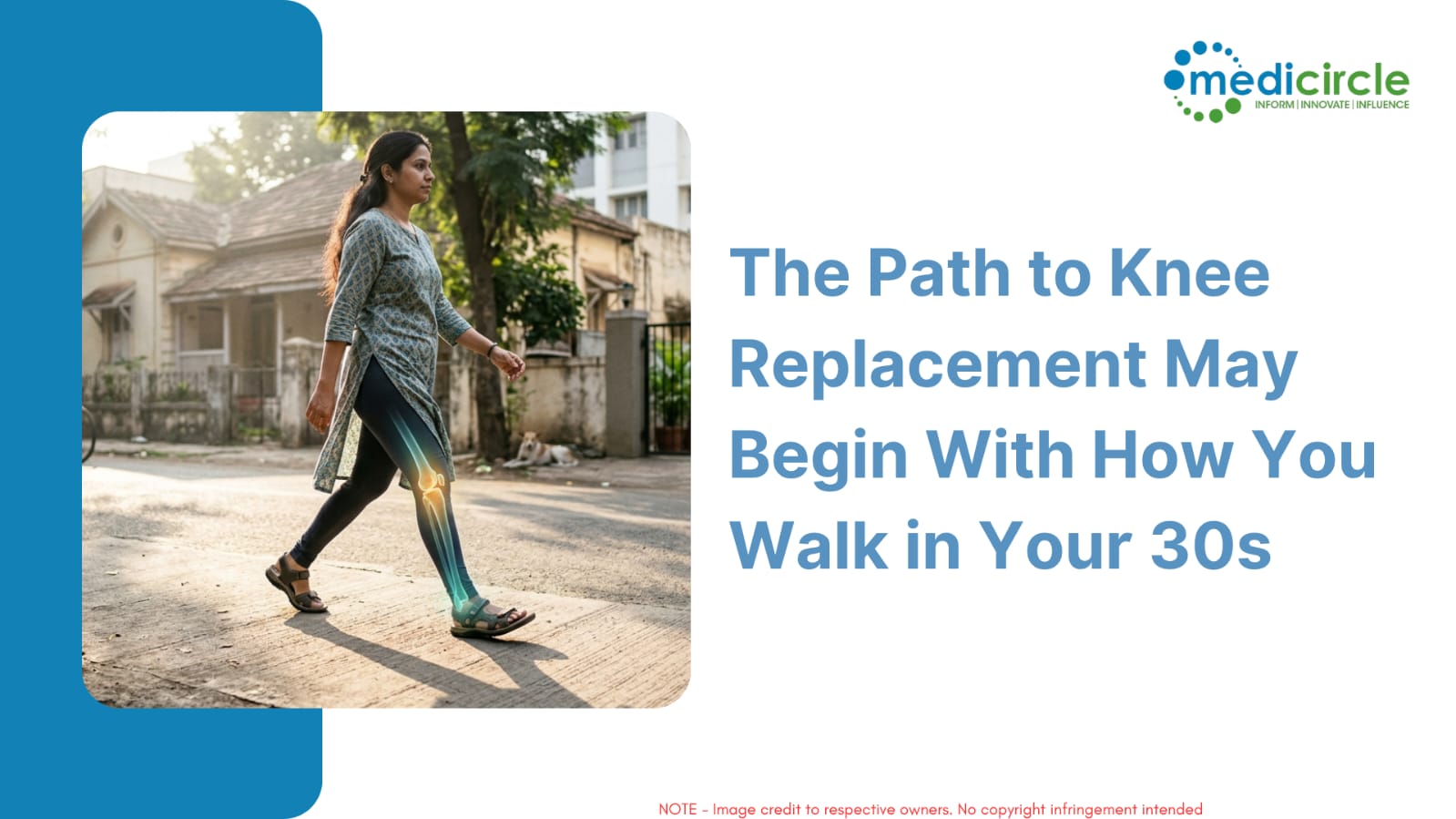
 The idea that adjusting the angle of the foot could ease pain and slow cartilage damage suggests that the mechanics of everyday motion may hold an untapped potential for protecting joint health.




Knee pain is often dismissed as an unavoidable part of ageing. For millions of people, however, it is far more than a minor inconvenience. Knee osteoarthritis has become one of the most widespread causes of chronic pain and disability across the world. It interferes with everyday movements, reduces mobility, and gradually erodes quality of life. Many patients learn to live with stiffness, swelling, and persistent discomfort while relying on painkillers or anti-inflammatory drugs for relief. Emerging research is beginning to question whether the solution to knee osteoarthritis might be far simpler than previously imagined. A growing body of scientific evidence suggests that something as basic as changing the way we walk could reduce pain and slow the damage occurring inside the knee joint.
A recent study published in The Lancet Rheumatology has drawn significant attention from clinicians and researchers studying osteoarthritis treatment. The research explored an approach known as gait retraining, a method that focuses on modifying how the foot lands during walking. According to the findings, adjusting the angle of the foot by only a few degrees may substantially reduce stress on the knee joint. Over time, this small biomechanical adjustment may ease pain and even slow the deterioration of cartilage that characterizes knee osteoarthritis.
The study was conducted through a collaboration between scientists from University of Utah, New York University, and Stanford University. The research team designed a rigorous clinical trial lasting one full year to evaluate whether modifying walking patterns could produce measurable improvements in knee osteoarthritis symptoms. What makes the trial particularly significant is that it followed the gold standard of medical research: a randomized placebo-controlled design. Such studies are rare when investigating biomechanical interventions because they require careful measurement of movement patterns and long-term follow-up.
The research was co-led by Scott Uhlrich, a specialist in biomechanics and human movement. His team has long been interested in understanding how physical forces influence joint health. The knee joint, especially its inner portion known as the medial compartment, bears the majority of the body’s weight during walking. Over time, excessive pressure in this region can wear away the cartilage that cushions the joint. As cartilage thins and breaks down, the bones begin to rub more directly against each other, leading to pain, inflammation, and progressive loss of mobility.
Scientists have known for years that reducing mechanical load on the knee could potentially slow osteoarthritis progression. Earlier studies suggested that pointing the toes slightly inward or outward while walking might redistribute pressure within the joint. However, previous experiments often applied the same walking adjustment to all participants, assuming that every knee would respond in a similar way. In reality, the biomechanics of the human body vary widely. The angle that reduces stress for one person might increase strain for another.
Recognizing this complexity, the researchers adopted a highly personalized approach. Instead of prescribing a universal walking pattern, they first analysed how each participant’s knee responded to different foot angles. Using advanced motion capture technology and pressure-sensitive treadmills, they observed how the knee joint behaved when individuals walked with their toes slightly turned inward or outward. The goal was to identify the precise angle that minimized stress on each participant’s knee.
This process required careful screening. The research team initially evaluated more than fifteen hundred volunteers in order to identify individuals whose knee stress could be reduced through foot angle adjustments. Only sixty-eight participants met the strict criteria required for the trial. These individuals were diagnosed with mild to moderate knee osteoarthritis affecting the inner side of the joint, the region most commonly damaged by the disease.
Once the participants were selected, the researchers divided them into two groups. One group received a sham intervention designed to resemble treatment but without actually changing their natural walking pattern. These participants walked with the same foot angle they normally used in everyday life. The second group adopted a customized foot angle that had been shown to reduce knee loading during the earlier assessments.
Both groups attended six training sessions over several weeks. During these sessions, participants walked on a treadmill while wearing a small device attached to the shin. The device delivered gentle vibrations that served as biofeedback, alerting participants when their foot angle deviated from the prescribed position. This feedback helped them gradually learn the new walking pattern and maintain it consistently.
After completing the supervised training phase, participants continued practicing their assigned walking style for at least twenty minutes each day. Over time, the movement became more natural, allowing them to integrate the modified gait into daily activities such as walking outdoors or moving around the house. Follow-up assessments revealed impressive accuracy, with most participants maintaining their assigned foot angle within just one degree.
At the end of the year-long study period, researchers evaluated pain levels and conducted detailed MRI scans of the knee joint. The results offered compelling evidence that biomechanical adjustments could influence the course of osteoarthritis. Participants who adopted the customized walking pattern reported significant reductions in knee pain. The level of relief observed in the study fell somewhere between the effect typically expected from an over-the-counter anti-inflammatory medication such as Ibuprofen and the relief associated with stronger prescription painkillers.
Perhaps even more striking were the changes observed in the MRI scans. Individuals who followed the gait retraining program showed slower deterioration of knee cartilage compared with those in the placebo group. Since cartilage damage lies at the heart of osteoarthritis progression, slowing this process could have long-term benefits for joint health.
For many participants, the appeal of the approach extended beyond pain reduction. Unlike medications that must be taken daily or devices that must be worn continuously, gait retraining becomes part of the body’s natural movement. One participant described the experience by saying that the new walking pattern felt like something that would remain with them for the rest of their life. Once learned, the adjustment required no pills, braces, or complicated equipment.
The potential impact of such an intervention is particularly important when considering the global burden of knee osteoarthritis. The condition is among the leading causes of disability worldwide. As populations age and obesity rates rise, the number of people living with joint degeneration continues to grow. In countries like India, knee osteoarthritis is increasingly common even among individuals in their forties and fifties, partly due to lifestyle changes, reduced physical activity, and rising rates of metabolic disease.
Patients with early-stage osteoarthritis often face a difficult gap in treatment options. Joint replacement surgery is usually recommended only when the disease becomes severe, leaving many individuals to manage pain for years before surgery becomes necessary. During this period, patients typically rely on medications, physiotherapy, and lifestyle adjustments to control symptoms. However, long-term use of painkillers can carry risks, including gastrointestinal problems, kidney strain, and cardiovascular concerns.
This gap between early diagnosis and surgical intervention has encouraged researchers to search for alternative treatments that address the mechanical forces driving joint damage. Gait retraining represents a promising candidate because it directly targets the forces acting on the knee during everyday movement. Instead of masking symptoms, it attempts to alter the physical stresses responsible for cartilage breakdown.
Despite the encouraging results, the researchers emphasize that the approach is still in its early stages of development. The technology used to analyse walking patterns in the study relies on sophisticated motion capture systems and specialized treadmills, which are expensive and typically available only in advanced research laboratories. For gait retraining to become widely accessible, simpler tools will need to be developed.
Fortunately, advances in digital health technology may offer solutions. Researchers are currently exploring ways to use smartphone cameras, wearable sensors, and smart footwear to measure walking patterns outside laboratory settings. If these tools prove reliable, physiotherapists may eventually be able to design personalized gait retraining programs in ordinary clinics.
The idea that walking style can influence joint health may sound surprising, yet it aligns with fundamental principles of biomechanics. Every step places forces on the bones, cartilage, and ligaments of the lower body. Over thousands of steps each day, even small differences in movement can accumulate into substantial mechanical stress. By slightly altering how the foot lands and how weight travels through the leg, it may be possible to redistribute pressure in a way that protects vulnerable areas of the joint.
For people in their thirties, forties, and fifties who are beginning to experience knee discomfort, such insights could be particularly valuable. Osteoarthritis often develops slowly, progressing over decades before reaching advanced stages. Intervening early through biomechanical adjustments might help delay or reduce long-term damage.
The findings from the trial published in The Lancet Rheumatology therefore raise an intriguing possibility. What if the path to better joint health does not always require new drugs or complex procedures? What if the answer lies in something as simple as learning to walk slightly differently?
Further research will be needed to confirm these results in larger populations and across different stages of osteoarthritis. Scientists will also need to determine whether the benefits observed in controlled research settings can be reproduced in everyday life. The study offers a compelling reminder that the human body is deeply influenced by movement patterns that often go unnoticed.
In the search for better treatments for knee osteoarthritis, medical science has traditionally focused on medications, injections, and surgery. The idea that adjusting the angle of the foot could ease pain and slow cartilage damage represents a shift in perspective. It suggests that the mechanics of everyday motion may hold untapped potential for protecting joint health.
As researchers continue to explore the complex relationship between movement and disease, patients and clinicians alike may begin to look at walking in a new light. Each step carries forces that shape the health of the knee joint. Learning how to guide those forces more wisely could offer a simple yet powerful tool in the long battle against osteoarthritis. In a world where chronic joint pain affects millions, the possibility that relief might begin with a subtle change in the way we walk is both surprising and profoundly hopeful.






.jpeg)








.jpg)
.jpg)
.jpg)
.jpg)
.jpg)
.jpg)


.jpg)
.jpg)
.jpg)