Tuesday, October 06, 2026
 Before the intergovernmental global tobacco treaty meet opens next month, experts call for tobacco vendor licensing so that governments can enforce lifesaving tobacco control policies, protect children and youth from misleading tobacco industry tactics and lies, and progress towards ending tobacco use.




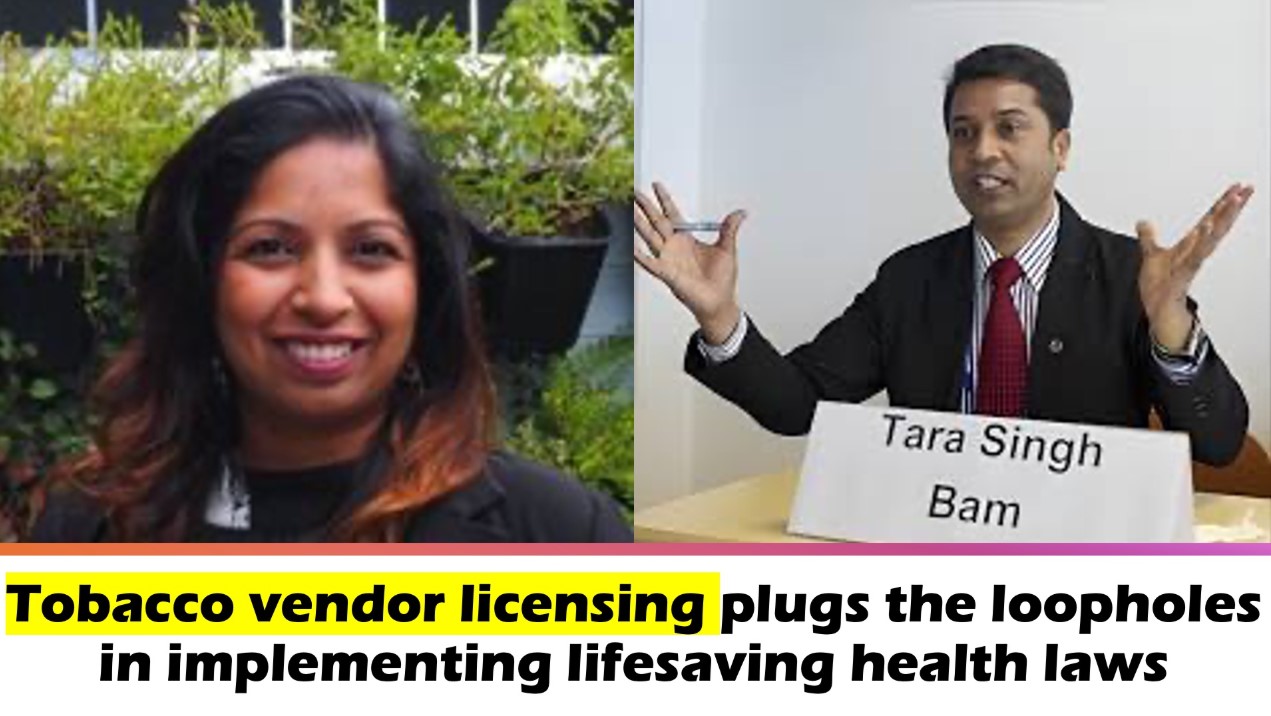
Before the intergovernmental global tobacco treaty meet opens next month, experts call for tobacco vendor licensing so that governments can enforce lifesaving tobacco control policies, protect children and youth from misleading tobacco industry tactics and lies, and progress towards ending tobacco use. “No one must suffer from tobacco-related diseases or die of them,” rightly said Dr Tara Singh Bam, noted global health expert and Asia Pacific Director of Vital Strategies.
“Tobacco vendor licensing reduces tobacco product availability and accessibility, particularly to vulnerable youth. A key tobacco control measure, tobacco vendor licensing can limit tobacco retailer density around schools, parks, and hospitals; this is critically important because vendor abundance normalises tobacco use, increases exposure to tobacco advertisements, and thwarts quit efforts. Tobacco vendor licensing can also restrict the types of products sold alongside tobacco and ensures inspectors know where products are sold, allowing for more effective enforcement of all point-of-sale tobacco laws,” said Dr Tara Singh Bam, who also serves as Board Director of Asia Pacific Cities Alliance for Health and Development (APCAT).
With no licensing for tobacco retail, tobacco industries get a freewheeling chance to violate lifesaving health policies – and keep profiteering while tobacco users suffer the assault of deadly tobacco-related diseases and die prematurely.
With strict licensing for tobacco retail, governments get a legal mechanism to enforce tobacco control policies and ensure compliance by retailers to all laws – for example, penalise those retailers who violate sale of tobacco to minor law, or sell illegal tobacco products (such as, e-cigarettes or vapes which are banned in several countries globally) or violate ban on point-of-sale tobacco advertising, promotion and/or sponsorship.
Almost 3 decades of enforcing tobacco retail laws in Singapore
“Singapore had first established its tobacco control law in 1993. Soon after, tobacco retail laws came into force in 1998. Singapore also made laws in 2003 to license importers and wholesalers of tobacco products, and license fees (and annual renewal) is hefty at over US$ 2000,” said Sabita Karapan, Programme Technical Officer (Tobacco Control) for Asia Pacific region at Vital Strategies and long-standing tobacco control and public health advocate. Fines for violation of tobacco control laws in Singapore are heftier.
Apart from domestic laws, Singapore also ratified the legally binding corporate accountability and public health treaty - global tobacco treaty in May 2004. This treaty is formally called as World Health Organization Framework Convention on Tobacco Control (WHO FCTC) in May 2004 and its Conference of the Parties is next month in Geneva.
Because of implementation of science- and evidence-based tobacco control laws in Singapore, deadly tobacco smoking has almost halved over the years (from 13.7% in 2007 to 8.8% in 2023, said Sabita.
Singapore has enforced a whole battery of science – and evidence-based tobacco control laws stringently. For example, there are very widespread smokefree areas, taxes on tobacco products are high (67.5%), tobacco advertising, promotion and sponsorship is banned, standardised packaging is enforced, and nicotine and tobacco industry’s so-called 'new' deadly products (such as e-cigarettes, vapes etc) are also banned. According to the WHO there is no safe level of tobacco use.
Tobacco kills, do not be duped.
Singapore has also banned point-of-sale display of tobacco products. Current minimum legal age for smoking has been increased in 2021 to 21 years.
Singapore’s Health Sciences Authority enforces the laws regarding licensing of tobacco retailers, importers and wholesalers.
License fee for tobacco retail is Singapore dollars 400 with an annual renewal fees of dollars 300. “Fines are hefty for violating laws, for example, there is a fine of up to Singapore dollar 10,000 for selling tobacco products to those under 21,” said Sabita Karapan. Before joining Vital Strategies, she earlier served the International Union Against TB and Lung Disease (The Union)’s Asia Pacific regional office.
Sabita Karapan said that it is the legal responsibility of tobacco retailer to ensure that all transactions of tobacco products are carried out at the outlet. The license holder is responsible for actions of all employees. Non-employees are not allowed by law to handle, retail or access tobacco at the outlet.
It is the responsibility of tobacco retail license holder to verify the age of the buyer. Moreover, the license holder must retain all invoices or receipts for each tobacco transaction for a period of 1 year from the date of issue. “They should be able to produce these during inspections by authorities,” said Sabita Karapan.
She outlined the importance of tobacco retail licensing by underpinning how it has helped Singapore to advance tobacco control in the country and save lives. For example, tobacco retail cannot happen at makeshift or temporary stalls, in hospitals, medical clinics, pharmacies, Chinese medical halls, traditional Chinese clinics, gaming arcades or childcare centres or youth centric institutions, among other places mentioned in the law.
“Licensing of tobacco importers, wholesalers and retailers in Singapore has helped to ensure that there are no illegal (nicotine or) tobacco products imported into the country,” said Sabita. Singapore’s Health Sciences Authority decides if any violation of law has taken place, and if so, then violator-licensee can face hefty fines, and/or even suspension or revocation of license.
Health Sciences Authority of Singapore evaluates severity of violation of tobacco control laws, explained Sabita Karapan. For example, selling to minor is more severe than forgetting to close the cabinet after selling the product. But fines are quite hefty, and rightly so. More importantly, compliance of these laws is fairly high too.
Sabita and Dr Bam were speaking in an online session hosted by Resource Centre for Tobacco Control at the Department of Community Medicine and School of Public Health of government-run Post-Graduate Institute of Medical Education and Research (PGIMER) Chandigarh, India, Vital Strategies and The Union.
Tobacco retail licensing is a vital component of Singapore’s comprehensive approach to tobacco control, said Sabita Karapan. Licensing plays a significant role in regulating the sale of tobacco products, protecting public health, and aligning with international standards, as well as boost the ongoing efforts to address emerging challenges and further reduce deadly smoking rates.






.jpeg)
.jpg)
.jpg)
.jpg)
.jpg)
.jpg)
.jpg)


.jpg)
.jpg)
.jpg)
.jpg)
.jpg)
.jpg)