Tuesday, October 27, 2026
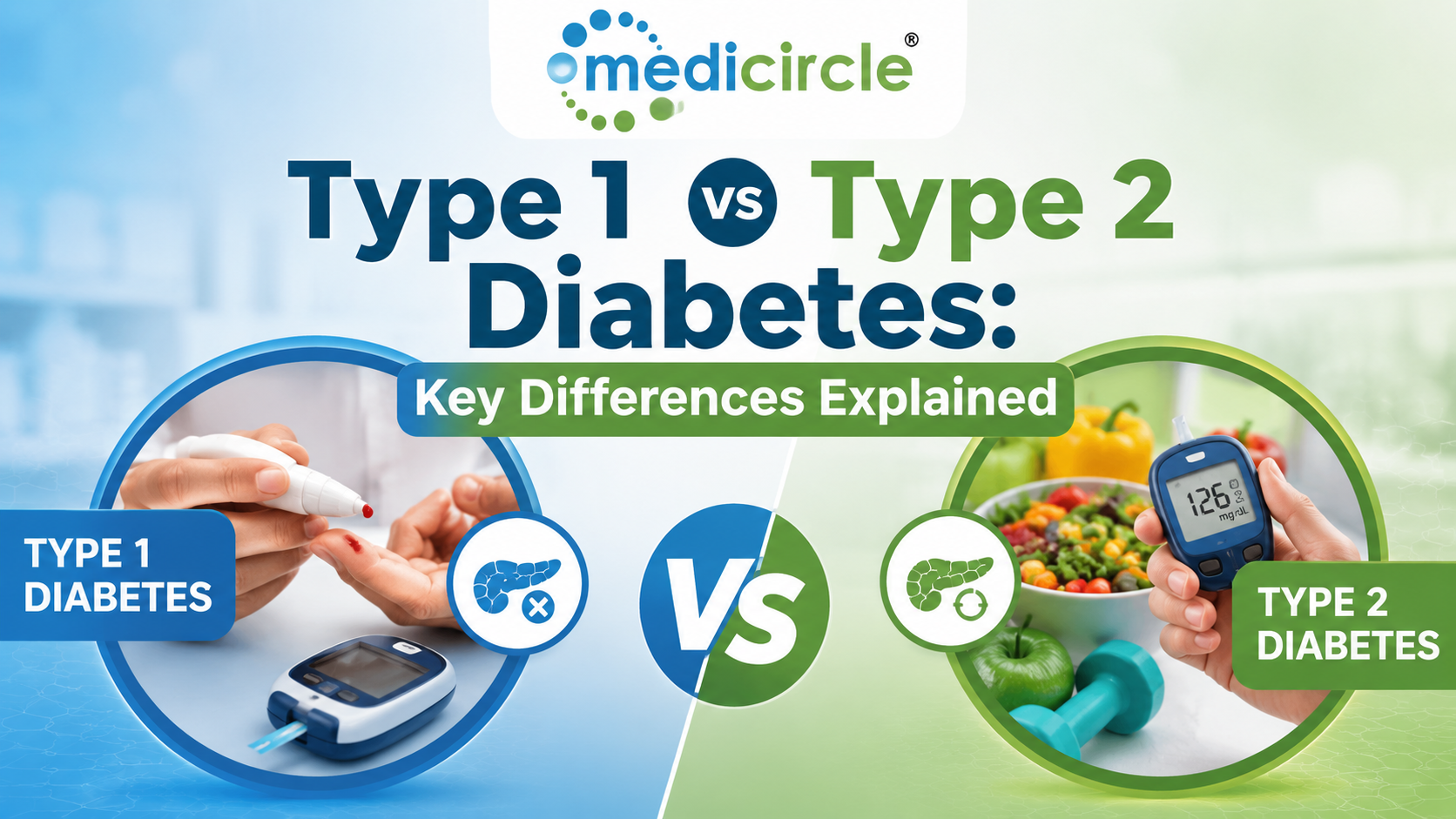
 This article explains the core differences between type 1 and type 2 diabetes, covering causes, symptoms, diagnosis, treatment, and prevention, with specific relevance to Indian patients and healthcare practices.





Introduction
Diabetes is one of the most widely discussed health conditions in India today, yet a surprising number of people still confuse type 1 and type 2 diabetes or assume they are simply different stages of the same disease. They are not. Type 1 and type 2 diabetes have distinct causes, affect different age groups in different ways, and require different approaches to long-term management. Understanding these differences is not just an academic exercise. It directly shapes how patients, families, and even employers in workplace wellness programs respond to a diagnosis, how early warning signs are recognised, and how treatment decisions are made.
India carries one of the largest burdens of diabetes in the world. According to data referenced by the International Diabetes Federation, India has more than 100 million people living with diabetes, and the country is often described as one of the leading contributors to the global diabetes burden. The overwhelming majority of these cases are type 2 diabetes, closely tied to lifestyle, urbanisation, and genetic predisposition among South Asian populations. Type 1 diabetes, while far less common, still affects a substantial number of children and young adults in India, and delayed recognition of its symptoms remains a serious clinical concern.
This article breaks down the core differences between type 1 and type 2 diabetes in a clear, medically grounded way, with particular attention to how these conditions present and are managed within the Indian healthcare system.
Understanding the Basics of Diabetes
Diabetes mellitus is a group of conditions characterised by elevated blood glucose levels, but the mechanism behind that elevation differs sharply between type 1 and type 2.
To understand either condition, it helps to understand insulin. Insulin is a hormone produced by beta cells in the pancreas. After eating, glucose from food enters the bloodstream, and insulin acts as the signal that allows glucose to move from the blood into the body's cells, where it is used for energy. When this system breaks down, glucose accumulates in the blood instead of being used properly, leading to the symptoms and complications associated with diabetes.
In type 1 diabetes, the immune system mistakenly attacks and destroys the insulin-producing beta cells in the pancreas. This is why type 1 diabetes is classified as an autoimmune condition. Over time, the body loses its ability to produce insulin altogether, which means insulin must be supplied externally through injections or a pump for survival.
In type 2 diabetes, the body usually continues to produce insulin, at least in the earlier stages, but the cells of the body do not respond to it effectively. This is known as insulin resistance. The pancreas tries to compensate by producing more insulin, but over years this compensatory mechanism can weaken, and insulin production may decline as well.
It is worth noting that type 2 diabetes accounts for roughly nine out of every ten diabetes cases globally and in India, while type 1 diabetes makes up a much smaller share, though it remains clinically significant, particularly in children and adolescents.
Primary Causes and Risk Factors
The causes of type 1 and type 2 diabetes are fundamentally different, and this is one of the most important distinctions to understand.
Type 1 diabetes does not have a clearly identified single cause. Researchers believe it results from a combination of genetic susceptibility and environmental triggers, possibly including certain viral infections, although the exact mechanism remains under study. Having a close family member with type 1 diabetes can modestly increase risk, but most people diagnosed with type 1 diabetes have no family history of the condition at all. Diet and lifestyle choices do not cause type 1 diabetes, and there is currently no known way to prevent it.
Type 2 diabetes, in contrast, has well-established risk factors, many of which are linked to lifestyle and metabolic health. These include:
- Being overweight or having a higher waist circumference, particularly central abdominal fat
- A sedentary lifestyle with limited physical activity
- A family history of type 2 diabetes
- Age, with risk increasing notably after 40, though it is now appearing more frequently in younger adults
- Ethnicity, since South Asian populations, including Indians, are known to develop insulin resistance and type 2 diabetes at a lower body mass index than many other populations
- A history of gestational diabetes or polycystic ovary syndrome
This last point about ethnicity is particularly relevant for Indian readers. Several studies have observed that Indians tend to have higher visceral fat and lower muscle mass relative to body weight compared to Western populations, a pattern that increases insulin resistance even among individuals who are not conventionally overweight by global standards. This is part of the reason India has seen rising type 2 diabetes rates even in urban professionals who do not appear overtly obese.
Recognising the Symptoms
Both type 1 and type 2 diabetes share a set of overlapping symptoms, but the speed at which these symptoms appear differs considerably.
Common symptoms shared by both types include excessive thirst, frequent urination, unusual fatigue, unexplained weight loss, blurred vision, slow healing of cuts and wounds, and increased hunger despite eating normally.
In type 1 diabetes, these symptoms typically develop quickly, often over a span of just a few weeks. Because the body stops producing insulin relatively abruptly, the onset can feel sudden and severe, sometimes leading to a medical emergency known as diabetic ketoacidosis if left untreated. Parents and caregivers in India are often advised to take rapid weight loss or sudden bedwetting in a previously dry child seriously, as these can be early indicators of type 1 diabetes.
Type 2 diabetes, on the other hand, tends to develop gradually over months or years. Many people experience no noticeable symptoms in the early stages, which is one reason type 2 diabetes is frequently diagnosed only during a routine health checkup or when complications have already begun. It is not uncommon for someone to live with undiagnosed type 2 diabetes for several years before symptoms become noticeable enough to prompt a doctor's visit.
This difference in symptom onset has real implications for screening. Public health messaging in India increasingly encourages adults, especially those above 30 with risk factors, to undergo periodic blood sugar testing rather than waiting for symptoms to appear.
Diagnosis and Medical Evaluation
Diagnosing diabetes generally involves blood tests that measure glucose levels, but distinguishing between type 1 and type 2 often requires additional clinical evaluation.
Standard diagnostic tests include fasting blood glucose, random blood glucose, the oral glucose tolerance test, and the HbA1c test, which reflects average blood sugar levels over the preceding two to three months. An HbA1c of 6.5 percent or higher is generally considered indicative of diabetes.
To differentiate between the two types, doctors may order additional tests such as autoantibody panels, which can detect the immune markers associated with type 1 diabetes, and C-peptide tests, which measure how much insulin the body is still producing on its own. A young patient presenting with sudden weight loss, high blood sugar, and positive autoantibodies would typically be diagnosed with type 1 diabetes, whereas an older adult with gradual symptom onset, insulin resistance markers, and no autoantibodies would more likely be diagnosed with type 2 diabetes.
In India, government health programs under the National Programme for Prevention and Control of Non-Communicable Diseases have expanded screening efforts at the primary health centre level, particularly for type 2 diabetes and hypertension, recognising that early detection significantly reduces the risk of long-term complications.
Treatment Options and Management Strategies
Management approaches for type 1 and type 2 diabetes differ significantly, largely because the underlying biological problem is different in each case.
Type 1 diabetes requires lifelong insulin therapy, since the body produces little to no insulin on its own. This is typically administered through multiple daily injections or a continuous insulin pump, alongside regular blood glucose monitoring. Patients are taught to count carbohydrates and adjust insulin doses accordingly, a skill that takes time and support to master, particularly for newly diagnosed children and their families. Continuous glucose monitors have become increasingly accessible in Indian metro cities, offering more precise, real-time tracking than traditional finger-prick testing.
Type 2 diabetes management is more varied and often begins with lifestyle modification before medication becomes necessary. Many people are able to manage blood sugar through dietary changes, increased physical activity, and weight management alone, particularly in the early stages. When lifestyle changes are insufficient, doctors may prescribe oral medications that work in different ways, some stimulating the pancreas to produce more insulin, others improving the body's sensitivity to insulin, and others reducing glucose production by the liver. As the condition progresses, some people with type 2 diabetes eventually require insulin therapy as well, which often leads to the misconception that they have somehow developed type 1 diabetes. This is incorrect. The underlying cause remains insulin resistance, not autoimmune destruction of beta cells.
Diet plays a particularly important role for Indian patients, given the carbohydrate-heavy nature of much of the traditional diet, including rice, roti, and various starches. Dietitians working with Indian patients often focus on portion control, fibre intake, and balancing carbohydrate-rich staples with adequate protein and vegetables, rather than eliminating traditional foods entirely.
Prevention and Proactive Health Measures
There is currently no known way to prevent type 1 diabetes. Because it is an autoimmune condition with no established environmental trigger that can be reliably avoided, prevention strategies do not yet exist, although research into early screening and immune therapies that might delay onset in high-risk individuals is ongoing.
Type 2 diabetes prevention, however, is well supported by evidence. Maintaining a healthy body weight, staying physically active, eating a balanced diet with controlled portions of refined carbohydrates and sugar, and undergoing regular health checkups can meaningfully reduce the risk of developing type 2 diabetes, particularly for those with a family history or other risk factors.
India's growing prediabetes population is a particular area of concern. Many adults in tier one and tier two cities are now being identified with prediabetes, a condition in which blood sugar levels are elevated but not yet high enough for a diabetes diagnosis. This stage represents an important window for intervention, since lifestyle changes at this point can often prevent or significantly delay progression to full type 2 diabetes. Government initiatives under Ayushman Bharat and state-level non-communicable disease screening programs have increasingly emphasised early identification of prediabetes as a public health priority.
Workplace wellness initiatives, increasingly common in corporate India, also play a role here, encouraging routine health screenings and healthier eating options in office cafeterias. Healthcare platforms that connect doctors, hospitals, and patients have a meaningful part to play in this effort, by helping translate clinical research and expert guidance into information that ordinary readers can understand and act on, supporting more informed conversations between patients and their healthcare providers.
Conclusion
Type 1 and type 2 diabetes may share a name and some overlapping symptoms, but they are fundamentally different conditions with different causes, different typical ages of onset, and different management pathways. Type 1 diabetes is an autoimmune condition requiring lifelong insulin therapy from the point of diagnosis, while type 2 diabetes is closely linked to insulin resistance and lifestyle factors, and can often be managed, delayed, or in some cases put into remission through sustained lifestyle change. For a country like India, where type 2 diabetes prevalence continues to rise alongside urbanisation and changing dietary patterns, and where type 1 diabetes still affects a significant number of children and young adults, understanding these differences is essential, not just for patients, but for families, employers, and healthcare systems working to respond to this growing health challenge.
Frequently Asked Questions
Q1: Can type 2 diabetes turn into type 1 diabetes?
No. Type 1 and type 2 diabetes have different underlying causes and cannot convert into one another. A person with type 2 diabetes who eventually requires insulin still has type 2 diabetes, not type 1, since the underlying mechanism remains insulin resistance rather than autoimmune destruction of beta cells.
Q2: Which type of diabetes is more common in India?
Type 2 diabetes is far more common, accounting for the large majority of diagnosed cases in India. Type 1 diabetes affects a smaller proportion of the population, though India is home to one of the largest populations of children and young adults living with type 1 diabetes globally.
Q3: Can type 2 diabetes be reversed or put into remission in India?
In many cases, yes. Sustained weight loss, dietary changes, and regular physical activity can put type 2 diabetes into remission for some individuals, particularly when the condition is identified early. This should always be attempted under proper medical supervision rather than self-directed.
Q4: Is type 1 diabetes only diagnosed in children?
No. While type 1 diabetes is frequently diagnosed in childhood or adolescence, it can develop at any age, including in adults, a presentation sometimes referred to as latent autoimmune diabetes in adults.
Q5: Do people with type 2 diabetes ever need insulin?
Yes. As type 2 diabetes progresses over the years, the pancreas may gradually produce less insulin, and some patients eventually require insulin therapy in addition to or instead of oral medications.





-23-300x250.png)

.jpeg)






.jpg)
.jpg)
.jpg)
.jpg)
.jpg)
.jpg)
.jpg)
.jpg)
.jpg)