Sunday, October 25, 2026
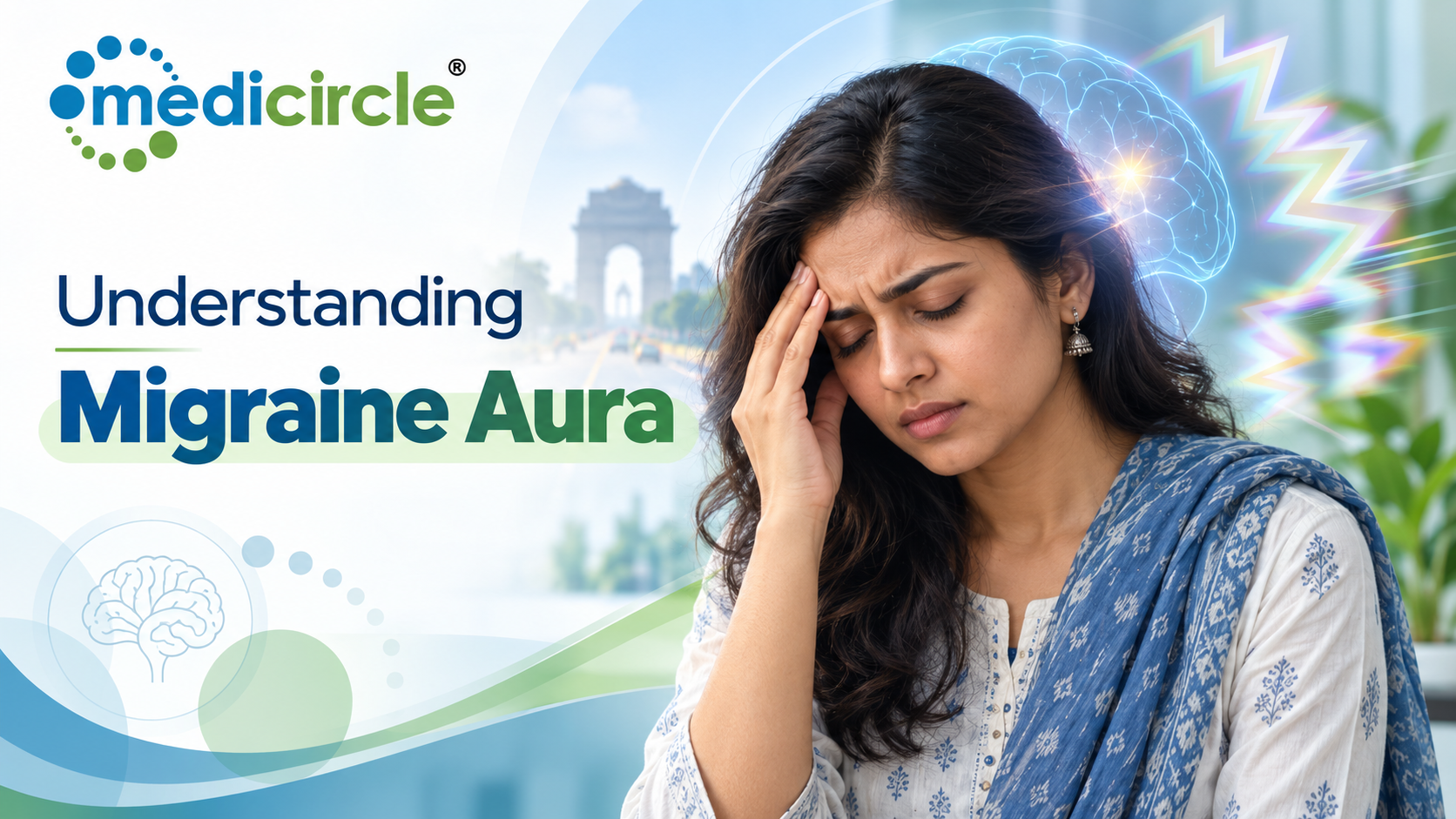
 Migraine aura can cause temporary visual, sensory, or speech changes before or during headaches. Recognizing triggers, tracking symptoms, maintaining routines, and knowing warning signs can support safer, more confident management.




If you've ever been looking at a plain wall and suddenly seen zigzag lines, flashing lights, or a growing blind spot, the experience can be frightening. In India, where long commutes, bright sunlight, bustling festivals and variable weather are part of daily life, many people notice that their headaches follow unusual visual or sensory experiences. Those episodes are often migraine aura — a set of temporary neurological symptoms that can feel alarming but are usually reversible.
This article explains what a migraine aura is, the most common visual disturbances and sensory symptoms, typical migraine triggers in adults, practical ways to track and reduce episodes, and clear advice on when to seek medical evaluation. The goal is to help you understand your body better and know when to get professional help — not to diagnose or prescribe.
What it meansA migraine aura is a collection of neurological warning signs that some people experience shortly before or during a migraine attack. Not everyone who gets migraines has aura, but for those who do, the sensory signals can be striking.
Common features of aura are:
- Visual disturbances: The most frequent aura symptoms are visual. People report shimmering lines (often described as zigzag or fortification spectra), flashing lights, blind spots (areas where part of the vision is missing), blurred spots, or kaleidoscopic effects. These are collectively called visual aura.
- Sensory symptoms: Some people feel pins-and-needles or numbness, usually starting in a hand or arm and spreading to the face. These are called sensory symptoms and are part of the aura spectrum.
- Speech and language changes: Difficulty finding words, slurred or slowed speech, or confusion can occur in some auras.
- Less commonly, motor symptoms such as temporary weakness may happen, but these types of aura are rarer and should prompt careful medical review.
Aura usually develops gradually over several minutes, often builds up, and then fades. For many people the sensory or visual episode lasts under an hour, after which a headache may start — though some people have aura without a pronounced headache.
Explaining the jargon
- Visual disturbances: Changes in what you see — flashing lights, spots, lines, or blind areas.
- Sensory symptoms: Altered feeling — pins and needles, numbness, or tingling.
- Neurological warning signs: Any sudden change in nervous system function (vision, speech, movement, sensation) that might indicate something more serious.
Understanding migraine aura matters for several reasons:
- Reassurance and safety: Recognising that these visual disturbances can be part of migraine helps reduce fear. But it is equally important to know which symptoms warrant urgent care.
- Better management: Recognising your aura pattern and triggers can help you take early action — for example, resting in a dark, quiet room or using strategies that have worked for you before — and discuss appropriate care with a doctor.
- Differentiation from other conditions: Some neurological events (such as stroke, transient ischemic attack, or certain eye problems) can mimic aura. Sudden, severe or progressing neurological signs need prompt evaluation.
- Quality of life: Auras can interfere with driving, safety at work, or the ability to care for children. Knowing how to anticipate and respond can reduce disruption.
In practice, understanding and tracking migraine aura symptoms and triggers in adults means paying attention to patterns. For example, a Bangalore software engineer who notices shimmering lights on days with long screen time and poor sleep may see a clear pattern. An elderly driver who suddenly develops loss of vision or weakness should be assessed right away to exclude other causes.
Practical guidanceThis section offers practical steps you can try at home and discuss with a healthcare professional. These are educational suggestions — not diagnostic instructions or prescriptions.
Recognising your aura
- Take note of the sequence: Does the visual change come first, followed by pins-and-needles, then a headache? Writing down the order helps your clinician understand your type of migraine.
- Note duration and recovery: How long does each aura episode last? Does your vision return fully or are there residual symptoms? This information is useful for medical evaluation.
Keeping a headache diary
A simple headache diary is one of the most useful tools for understanding triggers and patterns. Record each episode with these details:
- Date and time of aura onset.
- Description of symptoms (visual disturbances, numbness, speech difficulty).
- Duration of aura and whether a headache followed.
- Possible triggers that day (sleep patterns, missed meals, stress, weather change, strong smells, bright lights, alcohol, menstrual cycle).
- Actions taken and whether they helped (rest, hydration, over‑the‑counter pain relief — note: discuss medications with your doctor).
In India, cultural and environmental factors can influence triggers. Note if events like long power cuts, continuous exposure to motorcycle headlights during night shifts, or loud festival crowds preceded an episode. Over a few months, a pattern often emerges.
Identifying common triggers
While triggers differ by individual, these are frequently reported:
- Sleep disruption: Too little or too much sleep can both be problems.
- Skipped meals or low blood sugar: Long gaps between meals during busy days or fasting can precipitate aura and headache.
- Dehydration: High temperatures and inadequate fluids, common during Indian summers, are known triggers for many people.
- Sensory overload: Bright sunlight, flickering fluorescent lights, or strong smells (like perfumes or certain spices) can trigger visual disturbances or headaches.
- Caffeine and alcohol: Both can trigger attacks in some people, while caffeine withdrawal can cause headaches in others.
- Hormonal changes: Menstrual cycles often affect migraine patterns in women.
- Stress and emotional ups and downs: Both acute stress and relaxation after stress can trigger episodes.
Practical steps to reduce frequency
- Maintain a routine: Regular sleep and meal times help stabilise triggers linked to biological rhythms.
- Hydrate and eat regularly: Carry water, especially during travel or festivals, and try small frequent meals if you are prone to low blood sugar.
- Light and screen management: Reduce screen brightness, use anti-glare filters, or take frequent breaks. Sunglasses and wide-brimmed hats can help outdoors.
- Manage sensory environments: At crowded festivals or noisy workplaces, identify a quieter spot to rest when you feel early warning signs.
- Stress tools: Simple breathing exercises, short walks, and structured breaks during work can lower overall stress load.
- Headache diary: Use it to discuss targeted changes with your clinician.
What to do during an aura
- Stop driving and avoid operating machines until symptoms have resolved and you feel safe.
- Move to a quiet, dimly lit space and sit or lie down until symptoms pass.
- Use the diary to note what you experienced and when it began; this helps in later medical consultations.
When to seek medical evaluation
Some situations require urgent care:
- Sudden onset of a very severe headache (sometimes described as a “thunderclap” headache).
- Any new neurological symptoms such as weakness or numbness on one side of the body, slurred speech, confusion, sudden loss of vision, trouble walking, or fainting.
- Auras that are different from your usual pattern or that start after age 50.
- Aura with fever and neck stiffness (possible infection) or after head injury.
For non-urgent but important reasons to see your doctor:
- Recurrent aura that is changing in frequency, intensity or pattern.
- Auras causing frequent disruption to work, driving or family life.
- You want help with identifying triggers and exploring treatment options, or you are concerned about overlapping eye conditions.
What a medical evaluation may include
A primary care physician or neurologist will take a careful history and may examine your nervous system. Depending on findings, they might recommend further tests such as eye checks, brain imaging (MRI or CT scan) or blood tests to exclude other causes. Medical evaluation helps distinguish typical migraine aura from other neurological conditions that require different management.
Remember: evaluation is about ruling out red flags and deciding on appropriate support — it does not mean you have to accept severe disruption as unavoidable.
Common questionsBelow are frequently asked questions about migraine aura, with practical, balanced answers.
Can aura happen without a headache?Yes. Some people experience aura without a significant headache afterwards. These events can still be disruptive, and tracking them remains important.
Is aura a sign of a stroke?Most migraine aura events are not strokes. However, sudden or progressive neurological deficits — especially motor weakness, speech problems, or loss of consciousness — need immediate medical attention to rule out stroke or other serious conditions.
Will aura get worse with age?Migraine patterns can change over a lifetime. Some people notice fewer attacks with age, others notice new patterns. A new type of aura after age 50 should be evaluated.
Can stress alone trigger an aura?Stress is a common trigger, but usually interacts with other factors like sleep, dehydration, or missed meals. Managing stress is one part of a broader strategy.
Are there visual tests that can confirm aura?There is no single test that confirms migraine aura. Diagnosis is largely clinical, based on symptoms and history. Eye exams and imaging may be used to rule out other causes.
Are auras hereditary?Migraines often run in families, and a tendency toward aura may be inherited. Family history can be useful information for your clinician.
How do I tell the difference between eye problems and aura?Eye conditions usually affect vision persistently and may be associated with pain or specific eye signs. Aura tends to be temporary, often with spreading or changing visual patterns. If in doubt, an eye specialist or neurologist can help distinguish the causes.
ConclusionMigraine aura can be an unsettling experience, especially when visual disturbances or sensory symptoms appear without warning. Understanding what an aura feels like, tracking patterns with a headache diary, identifying personal migraine triggers, and taking simple practical steps (rest, hydration, consistent sleep and meals, light management) can reduce frequency and anxiety.
At the same time, it is important to recognise neurological warning signs that need urgent medical attention, such as sudden severe headache, new weakness, slurred speech, vision loss, or fainting. If your auras are new, changing, frequently disruptive, or accompanied by concerning symptoms, seek a medical evaluation so that a clinician can assess whether further tests or referral to a neurologist are needed.
You do not have to manage this alone. Discuss your headache diary, trigger patterns, and concerns with a primary care doctor or neurologist, who can help you understand options that fit your life and health needs.
Medical/Professional/Technology disclaimer
This article provides general information to help you understand migraine aura and related issues. It is not medical advice, does not diagnose conditions, and does not recommend specific treatments for individuals. If you experience sudden or worrying neurological symptoms, seek urgent medical attention. For personalised diagnosis and management, consult a qualified healthcare professional.
Resources
- World Health Organization – Headache disorders: https://www.who.int/news-room/fact-sheets/detail/headache-disorders
- NHS – Migraine: https://www.nhs.uk/conditions/migraine/
- Centers for Disease Control and Prevention – Migraine: https://www.cdc.gov/headaches/migraine/index.htm
- PubMed Central – Search: migraine aura: https://pubmed.ncbi.nlm.nih.gov/?term=migraine+aura
- Ministry of Health & Family Welfare, Government of India: https://www.mohfw.gov.in/
- Indian Council of Medical Research (ICMR): https://www.icmr.gov.in/
Interlinking Keywords
Migraine treatment options, Tension headache vs migraine, Keeping a headache diary in India, Common migraine triggers, When to see a neurologist for headaches, Managing migraines during festivals and travel





-23-300x250.png)

.jpeg)


.jpg)
.jpg)
.jpg)
.jpg)
.jpg)
.jpg)
.jpg)
.jpg)
.jpg)