 Tuesday, October 27, 2026
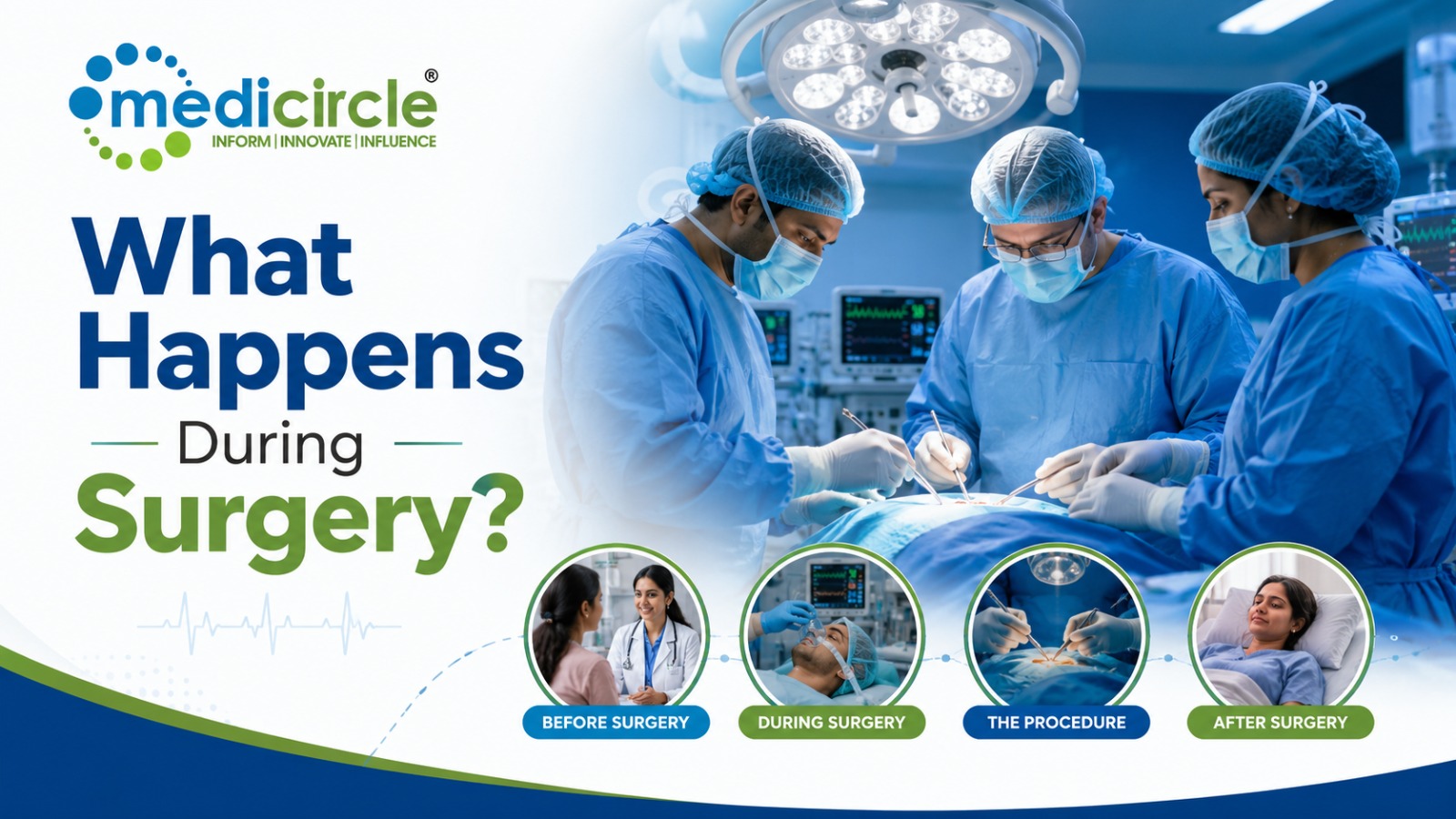
 This guide explains what happens before, during, and after surgery in India, covering pre-operative preparation, the surgical team, anaesthesia types, operating room procedures, and post-surgical recovery for patients.





Introduction
Surgery can feel like a mystery to most patients. The operating room, the medical terms, and the unfamiliar equipment often create more anxiety than the procedure itself. Understanding what actually happens, step by step, from the moment a patient is admitted to the moment they are wheeled into recovery, can significantly reduce this fear and help patients and their families feel more prepared.
In India, where surgical volumes continue to rise sharply due to increasing access through schemes such as Ayushman Bharat Pradhan Mantri Jan Arogya Yojana (PM-JAY), more patients than ever are undergoing planned and emergency operations each year. Yet many still enter the operating theatre with limited knowledge of the process. This guide walks through the entire surgical journey in clear, simple language, covering preparation, the surgical team, anaesthesia, the operation itself, and recovery, so that patients can approach their procedure with confidence rather than confusion.
Understanding What Surgery Actually Involves
Surgery is a medical procedure that involves treating an injury, disease, or deformity by manual or instrumental means. This may include cutting into the body to repair, remove, or replace tissue, or increasingly, using minimally invasive tools such as laparoscopes, robotic systems, and endoscopes that avoid large incisions altogether.
Surgical procedures generally fall into a few broad categories. Elective surgery is planned in advance for conditions that are not immediately life threatening, such as joint replacement or gallbladder removal. Emergency surgery is performed without delay to prevent serious harm, such as an appendectomy for acute appendicitis. Semi elective surgery sits between the two, recommended fairly soon to prevent a condition from worsening.
India's surgical landscape has changed considerably in the last decade. Government data shows that Ayushman Bharat PM-JAY, the world's largest government funded health insurance scheme, now covers close to 1,949 medical procedures across 27 specialities, offering cashless treatment of up to five lakh rupees per family per year at empanelled hospitals. This has made major surgeries such as cardiac bypass, joint replacement, and cancer related procedures far more accessible to families who previously could not afford them.
Before the Operation: Preparation and Pre Surgical Checks
Preparation for surgery usually begins well before the actual day of the procedure. The surgical team evaluates the patient's overall health through blood tests, imaging, and a review of medical history, including existing conditions such as diabetes, hypertension, or heart disease, all of which are common in the Indian population and can affect anaesthesia safety and recovery.
Patients are typically asked to stop certain medications, particularly blood thinners, and to disclose any allergies, including reactions to anaesthesia in the past. Fasting instructions are also given, usually requiring patients to avoid solid food for six to eight hours before surgery and clear liquids for about two hours, to reduce the risk of aspiration during anaesthesia.
On the Day of SurgeryPatients are generally asked to arrive at the hospital a couple of hours before the scheduled procedure time. On arrival, a nurse records vital signs such as blood pressure, heart rate, and temperature, and an identification bracelet is placed on the patient's wrist. The patient changes into a hospital gown and is asked to remove jewellery, contact lenses, dentures, and any other items that could interfere with the procedure.
- An intravenous (IV) line is placed to allow fluids and medications to be given directly into the bloodstream.
- The surgeon may mark the exact site of the operation on the body to avoid any confusion.
- The anaesthesiologist visits to discuss the anaesthesia plan and answer any last questions.
Family members are usually allowed to stay with the patient until they are taken to the operating theatre, after which they wait in a designated waiting area.
Who Is Part of the Surgical Team
A surgical team is rarely just one doctor. Most operations involve a coordinated group of professionals, each with a distinct role.
The surgeon leads the procedure and has primary responsibility for the operation. The anaesthesiologist administers anaesthesia and monitors the patient's vital functions throughout the surgery. Depending on the complexity of the case, there may also be a surgical assistant, an operating room nurse who hands instruments and supplies, and a surgical technologist who ensures all tools are sterile and ready. For larger hospitals in Indian metros as well as growing centres in tier two cities, this team may also include residents and fellows undergoing specialised training.
Anaesthesia: How Pain Is Managed During Surgery
One of the most common concerns patients have is whether they will feel pain during the operation. Anaesthesia exists precisely to prevent this, and the type used depends on the nature and complexity of the surgery.
- Local anaesthesia numbs only a small, specific area while the patient remains fully awake.
- Regional anaesthesia, such as a spinal or epidural block, numbs a larger region of the body, commonly used for lower body or obstetric procedures.
- General anaesthesia puts the patient into a controlled state of unconsciousness and is used for major operations, delivered through an IV line or inhaled gases.
Throughout the procedure, the anaesthesiologist continuously tracks the patient's heart rate, oxygen levels, and blood pressure, adjusting medication as needed. Reactions to anaesthesia are rare, and most patients, including those with existing health conditions, tolerate it well.
What Happens Inside the Operating Room
Once the patient is taken into the operating theatre, the surgical site is cleaned with an antiseptic solution and covered with sterile drapes, leaving only the area to be operated on exposed. The entire team follows strict aseptic protocols, including thorough handwashing, sterile gloves, gowns, and masks, to minimise the risk of infection.
The surgeon then proceeds with the operation itself, which may involve excision of diseased tissue, repair of an injury, reconnection of structures, or insertion of an implant or prosthetic device, depending on the reason for surgery. Monitoring devices such as an ECG, blood pressure cuff, and a pulse oximeter clipped to the finger track the patient's condition throughout. Once the required work is complete, the incision is closed using sutures or staples, and anaesthesia is gradually reversed.
Modern Indian hospitals increasingly rely on minimally invasive techniques, including laparoscopic and robotic-assisted surgery, which typically involve smaller incisions, reduced blood loss, and shorter hospital stays compared with traditional open surgery.
Recovery and What Happens After Surgery
After the operation is complete, the patient is moved to a recovery room where the medical team monitors breathing, heart rate, and the surgical site as the effects of anaesthesia wear off. Depending on the type of procedure, patients may go home the same day, which is common for minimally invasive or outpatient surgeries, or may need to stay in the hospital for a few days for closer observation.
Discharge criteria generally include stable vital signs, the ability to eat and drink normally, and adequate pain control. Patients are usually advised on wound care, activity restrictions, and warning signs that require immediate medical attention, such as fever, worsening pain, unusual discharge from the wound, or swelling in one leg, which could indicate a blood clot.
Common Risks After SurgeryWhile Indian hospitals follow rigorous safety protocols, some risks remain possible after any operation, including infection, bleeding, and complications related to prolonged bed rest such as blood clots or chest infections. Patients can reduce these risks by following pre and post-operative instructions carefully, staying mobile as soon as it is medically safe to do so, and maintaining open communication with their care team about any new symptoms.
Making Informed Decisions About Surgery in India
Access to reliable information plays a major role in how confidently patients approach surgery. Platforms like Medicircle work to bridge the gap between medical experts and the public by bringing verified healthcare knowledge, hospital insights, and doctor perspectives to readers in a simple and trustworthy format. For patients navigating a surgical decision, understanding the process itself, along with knowing the right questions to ask a surgeon, contributes meaningfully to both physical recovery and peace of mind.
With continued expansion of schemes like Ayushman Bharat and growing surgical infrastructure across tier one and tier two cities, more Indian families now have access to procedures that were once out of reach. Being informed about what to expect at each stage remains one of the simplest ways patients can advocate for their own care.
Conclusion
Surgery, whether planned well in advance or performed as an emergency, follows a structured and carefully monitored process designed around patient safety. From the initial pre operative checks to the role of the surgical team, the administration of anaesthesia, and the final stages of recovery, each step exists to protect the patient and support the best possible outcome. Understanding this journey does not eliminate every concern, but it does replace uncertainty with clarity, which is often exactly what patients and their families need most before an operation.
Frequently Asked Questions
Q1: How long before surgery should I stop eating and drinking?
Most hospitals in India ask patients to stop eating solid food at least six to eight hours before surgery and stop drinking clear liquids about two hours before, though the exact timing depends on the type of anaesthesia and should always be confirmed with the surgical team.
Q2: Will I feel pain during the operation?
No, anaesthesia is specifically given to prevent pain during surgery, whether it is local, regional, or general anaesthesia, and the anaesthesiologist monitors the patient throughout the procedure to keep them comfortable.
Q3: Is Ayushman Bharat applicable for surgery costs in India?
Yes, Ayushman Bharat Pradhan Mantri Jan Arogya Yojana covers a wide range of surgical procedures across many specialities for eligible families through cashless treatment at empanelled hospitals, though certain procedures such as cosmetic surgery are excluded.
Q4: How long does recovery take after surgery?
Recovery time varies widely depending on the type of surgery, the patient's overall health, and whether it was minimally invasive or open surgery, ranging from a few days for minor procedures to several weeks or months for major operations.
Q5: What should I ask my surgeon before the operation?
Patients should ask about the purpose of the surgery, the type of anaesthesia planned, expected recovery time, possible risks and complications, and what post operative care will be required at home.
Resources
- World Health Organization (WHO) India Country Office: Guidance and reports on surgical care and patient safety.
- National Health Authority, Government of India: Official information on Ayushman Bharat PM-JAY coverage for surgical procedures.
- Indian Council of Medical Research (ICMR): Research and clinical guidelines relevant to surgical practice in India.
- Ministry of Health and Family Welfare (MoHFW): Policy updates and public health information on hospital care and patient rights.
- National Accreditation Board for Hospitals and Healthcare Providers (NABH): Standards and accreditation information for surgical and hospital facilities.
Interlinking Keywords
surgery recovery tips, types of anaesthesia, Ayushman Bharat coverage, hospital preparation checklist, minimally invasive surgery, post-surgery care, choosing a surgeon in India
Last medically reviewed by:
Medicircle Medical Advisory Panel on July 18, 2026
Medical Disclaimer
This article is intended for general informational and educational purposes only and does not constitute medical advice, diagnosis, or treatment. The content should not be used as a substitute for consultation with a qualified surgeon, anaesthesiologist, or other licensed healthcare provider. Every surgical procedure carries its own specific risks, preparation requirements, and recovery expectations that depend on the individual patient's health condition. Readers are strongly advised to consult their treating doctor or hospital for guidance specific to their situation before making any decisions related to surgery.





-23-300x250.png)

.jpeg)








.jpg)
.jpg)
.jpg)
.jpg)
.jpg)
.jpg)
.jpg)
.jpg)
.jpg)

