 Wednesday, November 18, 2026
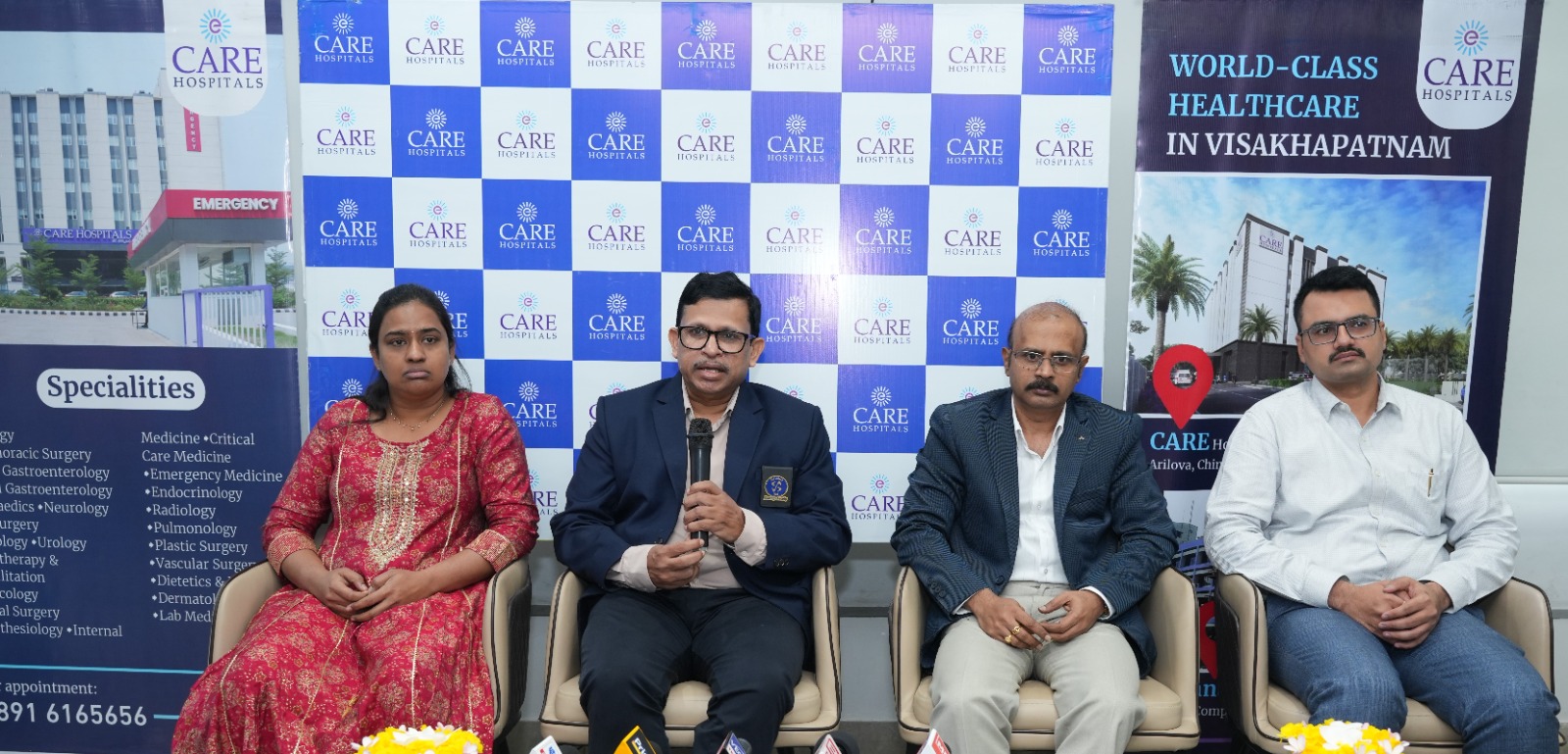
 Renowned Surgical Gastroenterologist and Robotic Surgeon Dr. B. B. Das sets a new benchmark in advanced gastrointestinal care, reinforcing Eastern India’s leadership in precision-driven robotic surgery.





Visakhapatnam, 5th December 2025: Renowned Surgical Gastroenterologist and Robotic Surgeon Dr. B. B. Das, CARE Hospitals, Visakhapatnam achieved a landmark 1,000 Robotic Gastrointestinal (GI) Surgeries within just 18 months, reinforcing Eastern India’s leadership in advanced, precision-driven gastrointestinal care. More than a numerical feat, this milestone highlights the region’s rapid adoption of cutting-edge medical technology and underscores CARE Hospitals’ commitment to delivering high-precision GI treatments with improved safety, accuracy, and faster recovery for patients.
With decades of clinical experience, Dr. Das has pioneered minimally invasive and robotic surgical advancements, enabling safer and more precise GI procedures for patients across Andhra Pradesh, Odisha, Chhattisgarh, and neighboring regions. The adoption of the da Vinci Robotic Surgical System has significantly enhanced surgical standards, offering improved accuracy, minimal tissue damage, and faster recovery for patients undergoing complex GI procedures.
Speaking on the achievement, Dr. B. B. Das, Clinical Director - Department of Surgical Gastroenterology & Robotic Surgery, CARE Hospitals, Visakhapatnam said, “Reaching 1,000 robotic GI surgeries within 18 months demonstrates how cutting-edge technology is reshaping gastrointestinal care in Eastern India. Robotic platforms provide superior dexterity, vision, and control while navigating delicate anatomy, directly enhancing patient safety, reducing postoperative discomfort, and significantly shortening hospital stay durations—bringing world-class surgical precision closer to our region.”
The press meet also highlighted transformative patient outcomes made possible through robotic precision. A 50-year-old woman underwent a combined robotic gallbladder removal and hysterectomy through sub-centimetre ports and returned home pain-free within 48 hours. A 63-year-old patient with a recurrent post-surgery hernia received a scarless robotic repair with deep mesh placement and precise suturing, recovering fully without discomfort. Another patient with pancreatic stones and uncontrolled diabetes underwent a complex robotic pancreatojejunostomy through tiny keyhole ports, achieving smooth recovery with no infection and minimal pain. In a rare emergency feat, a 15-year-old boy with life-threatening splenic bleeding was treated through a robotic splenectomy—avoiding a large incision, ensuring rapid recovery with negligible blood loss. Together, these cases demonstrate how robotic surgery is redefining outcomes, even in the most challenging scenarios.
Commenting on the occasion, Mr. G Sukesh Reddy, Chief Operating Officer, CARE Hospitals, Visakhapatnam, said, “Achieving 1,000 robotic GI surgeries in such a short span underscores our commitment to global-standard healthcare. This milestone reflects the expertise of our clinical teams and the trust from our patients. It represents a technological shift that is transforming outcomes and expanding access to advanced treatment across Eastern India.”
CARE Hospitals highlighted that the rapid rise in robotic GI surgeries signals a broader movement toward technology-driven, patient-centered healthcare. Robotic procedures are demonstrating strong clinical advantages—minimal blood loss, lower infection risk, reduced postoperative pain, faster rehabilitation, and enhanced precision—driving growing patient preference and wider regional adoption.
The hospital reaffirmed its ongoing investment in future-ready healthcare, including upgraded robotic platforms, advanced imaging systems, multidisciplinary GI care pathways, and enhanced recovery protocols (ERAS). With strong clinical expertise and state-of-the-art infrastructure, CARE Hospitals continues to position Visakhapatnam as a leading hub for advanced gastrointestinal care in Eastern India.





-23-300x250.png)





















