 Thursday, October 08, 2026
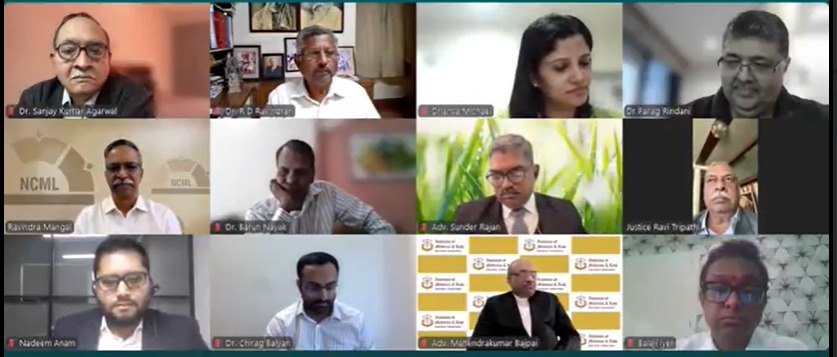
 Experts Call for Policy on Reuse of Single-Use Medical Devices - Balancing Affordability and Patient Safety.




Mumbai, 26th November 2025: The 10th National Convention on Medicine & Law 2025 concluded on November 24, following an intense and critical discussion on "Reuse of single-use devices - Bridging the policy gap." The Convention brought together regulators, doctors, legal experts, patient advocates, and industry representatives to address the widespread, yet unregulated, practice of reusing Single-Use Devices (SUDs) in India.
The Convention highlighted the urgent need for India-specific regulations, greater transparency, scientific validation, and legal protection for healthcare providers who reuse devices in good faith to reduce patient costs.
Speakers highlighted the central conflict between affordability and patient safety. Dr. Sanjay Kumar Agarwal mentioned that the primary driver for reuse is the high cost of devices, stating, "The dilemma is to save a patient who cannot afford it by reusing." The convention underscored that, in India, sustainability is currently a secondary concern, or "merely a by-product," and that cost reduction should be the main motivation. It was pointed out that the current situation puts immense pressure on healthcare providers, who operate under "three tight ropes" - the government's push for lower prices, the patients' desire for safety but at a lower cost, and the manufacturers' motive to maximize profitability.
A significant part of the debate centered on the legal and scientific risks of reuse; the absence of regulations and standards; confusion about legal liability; risks to patient safety; and the importance of transparency, disclosures, and standardized consent procedures to foster patient trust.
Dr. Ravindran from the Aravind Eye Hospitals presented data showing that scientifically validated reuse does not compromise patient safety. Reuse has also significantly reduced biomedical waste, especially during COVID-19 when alternate protocols were adopted.
Speakers compared India's vacuum to global frameworks. On one side, the US allows reuse with licensed reprocessors, clear datasets, UDI tracking, recall systems, and mandatory reporting. On the other side, the UK discourages unsafe reuse, while France and China fully ban it. India currently lacks the infrastructure—such as testing, monitoring, and licensing systems—to immediately adopt the US model.
The core recommendations that emerged from the Convention are as follows:
- Develop an India-specific National Reuse Policy
- Ensure Transparency and Patient Consent
- Prescribe Safety Protocols for Reuse
- Protect Doctors from Legal Liability
- Build National Evidence on Data
- Ensure Economic Benefits are passed to the patients
The Convention concluded that India cannot simply borrow foreign frameworks, nor can it allow unregulated reuse to continue. The way forward must combine scientific validation, transparency, accountability, and patient safety, while addressing India’s unique economic realities. A national policy built on evidence and multi-stakeholder consensus is the urgent need of the hour.
The National Convention is an annual event organised by the Institute of Medicine & Law. The session was chaired by Justice Ravi Tripathi, Former Judge of Gujarat High Court, the convenor was Dr. Barun Nayak, HOD – Ophthalmology at Hinduja Hospital, and moderated by Dr. Parag Rindani, CEO of Wockhardt Group of Hospitals.






.jpeg)










.jpg)
.jpg)
.jpg)
.jpg)
.jpg)
.jpg)


.jpg)