 Monday, November 16, 2026
 Patient walks independently the very next day after an eight-hour corrective spine surgery.





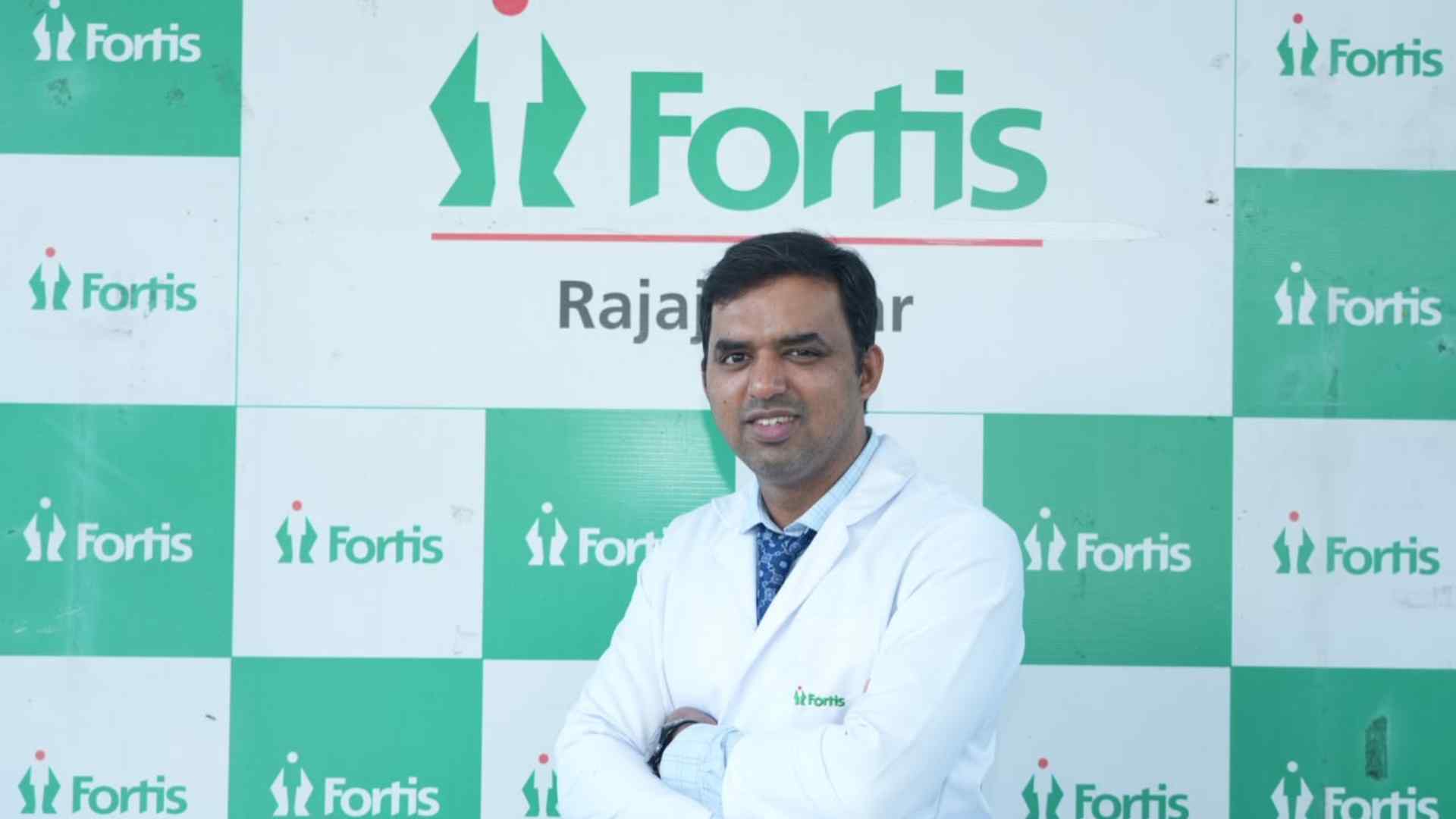
Bengaluru, October 13, 2026: Fortis Hospital, Rajajinagar, has successfully treated a 60-year-old man who had been living with a severely bent back for nearly 20 years. The patient had a spinal curvature of more than 70 degrees, causing severe pain and making it difficult for him to walk and carry out everyday activities. His condition had worsened significantly over the past year following an old spine fracture. A multidisciplinary team led by Dr. Shreekantha K.S., Orthopaedic and Spine Surgeon, Fortis Hospital, Rajajinagar, performed an eight-hour surgery to correct the severe spinal deformity. Following the procedure, the patient was able to stand upright, perform his personal activities independently and walk the very next day.
The patient had ankylosing spondylitis, a condition that causes the spine to gradually become stiff and lose its flexibility. He had also suffered a fracture in the upper part of his spine following a fall, which was treated without surgery. Over the years, the combination of the underlying condition and the old fracture caused his back to bend progressively. Over the past year, he developed severe pain at the most curved part of his back and found it increasingly difficult to walk and perform routine activities.
Following a detailed evaluation, doctors decided that surgery was required to correct the fixed deformity. The team performed a Pedicle Subtraction Osteotomy (PSO), a complex procedure used to correct severe spinal curvature and bring the spine back into better alignment. The surgery lasted approximately eight hours, and involved carefully correcting and stabilizing the spine while continuously monitoring the nerves and spinal cord.
The patient's severe spinal curvature also made putting him under anaesthesia particularly challenging. His neck and spine had very limited movement, making it difficult to position him safely for the procedure. To address this, Dr. Naveen Gowda, Anaesthesiologist, Fortis Hospital, Rajajinagar, performed awake fibreoptic intubation, a technique that allows the breathing tube to be placed safely while the patient continues to breathe on his own and unnecessary movement of the spine is avoided. Following the surgery, the patient was observed in the ICU for approximately a day before being shifted to the ward. He began walking the next day and was able to perform his personal activities independently.
Speaking about the case, Dr. Shreekantha K.S., Orthopaedic and Spine Surgeon, Fortis Hospital, Rajajinagar, Bengaluru, said, “The patient had been living with a severe spinal deformity for nearly 20 years, which had significantly affected his mobility and everyday life. Correcting a fixed deformity of more than 70 degrees requires careful planning and precise surgery. Our objective was not only to correct the curvature but also to help him regain his independence and quality of life. It was particularly encouraging to see him stand upright and walk independently the very next day.”
Dr. Naveen Gowda, Anaesthesiologist, Fortis Hospital, Rajajinagar, said, “The severe curvature and stiffness of the patient’s spine made administration of anaesthesia particularly challenging. His neck movement was also restricted, making conventional placement of the breathing tube difficult. We therefore used awake fibreoptic intubation, which allowed us to safely manage his airway while minimising movement of his spine. Close coordination between the surgical, anaesthesia and critical care teams was important in ensuring a safe outcome.”
The patient said, “For almost 20 years, I had become used to living with my back bent and found it difficult to do many simple things that people normally take for granted. The pain and difficulty in walking had gradually become a part of my everyday life. After the surgery, being able to stand straight and walk on my own the very next day was something I never expected so soon. Being able to look straight at people again and do my daily activities independently has given me a sense of freedom that I had almost forgotten. I am extremely grateful to Dr. Shreekantha and the entire team at Fortis Hospital Rajajinagar for their care, expertise and support throughout my treatment.”
Ms. Hansa Shashank, Facility Director, Fortis Hospital, Rajajinagar, said, “This was a challenging case that required expertise and close coordination across multiple teams. The outcome demonstrates what is possible when specialised surgical care, anaesthesia and critical care work together. At Fortis Rajajinagar, we remain committed to providing advanced care that helps patients regain mobility, independence and a better quality of life.”





-23-300x250.png)