 Thursday, November 19, 2026
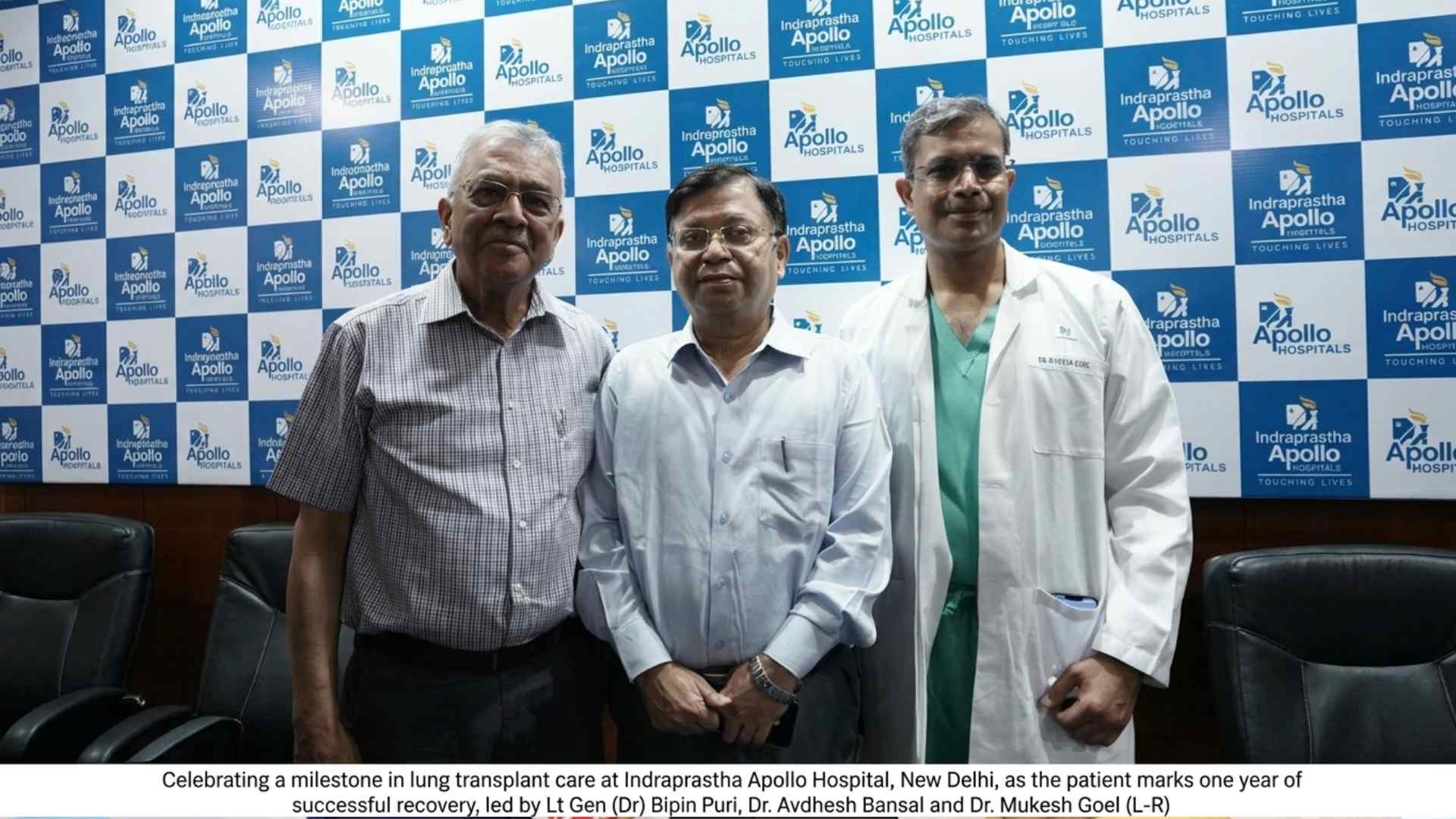
 A 65-year-old woman from Faridabad is breathing independently one year after a bilateral lung transplant, marking a first by a private hospital in Delhi and an important milestone for lung transplant care in the capital.





New Delhi, 26th May 2026: A year ago, a 65-year-old woman from Faridabad was living with end-stage Interstitial Lung Disease caused by scleroderma, a rare autoimmune condition that had severely damaged her lungs. She depended on 4 to 5 litres of oxygen every minute, and even simple activities or short conversations had become difficult. Despite ongoing medical treatment, her condition had reached an advanced stage.
Today, she has completed one year after undergoing a bilateral lung transplant at Indraprastha Apollo Hospital, New Delhi, becoming the first patient by a private hospital in Delhi to reach this milestone after the procedure. She no longer requires oxygen support and is continuing her recovery with physiotherapy, nutritional care and counselling.
The surgery came together because of an act of extraordinary generosity. A 48-year-old patient in Noida was declared brain-dead, and his family chose to donate his organs. Apollo's team moved quickly. The seven-hour transplant was performed with the patient on ECMO support to maintain her oxygenation through the procedure. Recovery was long and demanding. She needed ventilatory support, a tracheostomy, and more than 15 bronchoscopies before her natural breathing reflexes returned. One by one, each form of external support was removed. She was placed on oral medication and, week by week, began to regain her strength.
Lung transplantation is among the most demanding procedures in medicine, and the first twelve months after surgery are the most critical. What makes this so difficult is the shortage of viable organs: only 15 to 20 percent of donated lungs are typically suitable for use, and between 25 and 30 percent of patients on waiting lists do not survive long enough to receive one. For a patient of this age, with autoimmune complications and advanced lung fibrosis, reaching the one-year mark in good health reflects the precision and coordination of every stage of care, from the moment a donor organ becomes available to the months of rehabilitation that follow.
Dr. Mukesh Goel, Senior Consultant, Cardiothoracic Surgery, Indraprastha Apollo Hospital, New Delhi said, "This case changes what patients in Delhi, and the wider NCR region can expect. For years, a lung transplant meant travelling to Chennai or Hyderabad. With NOTTO now recognising Apollo Delhi for lung allocation, that is no longer the case. Our focus is on building a programme that consistently delivers long-term survival. This one-year milestone is where that journey begins."
Dr. Avdhesh Bansal, Senior Consultant, Respiratory Medicine, Indraprastha Apollo Hospital, New Delhi said, "Lung transplant is the most complex procedure as compared to any other transplant. Completing one year after a bilateral lung transplant is a significant milestone, especially in a case as complex as this. When the patient first came to us, her lungs were failing rapidly, and she required continuous oxygen support. Today, seeing her leading a healthier life is incredibly encouraging. This milestone reflects not just the success of the transplant, but also the role of sustained rehabilitation and multidisciplinary care in helping patients recover and regain quality of life."
The patient reflected on her recovery journey, saying, “Before the transplant, I was completely dependent on oxygen 24 hours a day. Even simple daily activities like taking a bath, changing clothes, or going into the kitchen had become extremely difficult. Today, I can do all these things independently and no longer require oxygen support. I feel more energetic and full of life. The journey after the transplant was also not easy. I had to take medicines regularly, and undergo frequent medical and blood check-ups. Maintaining proper nutrition was also important. But now things have become much easier. I am slowly getting back to normal life and can step out while following precautions like wearing a mask and avoiding crowded places.





-23-300x250.png)





















