 Thursday, October 08, 2026
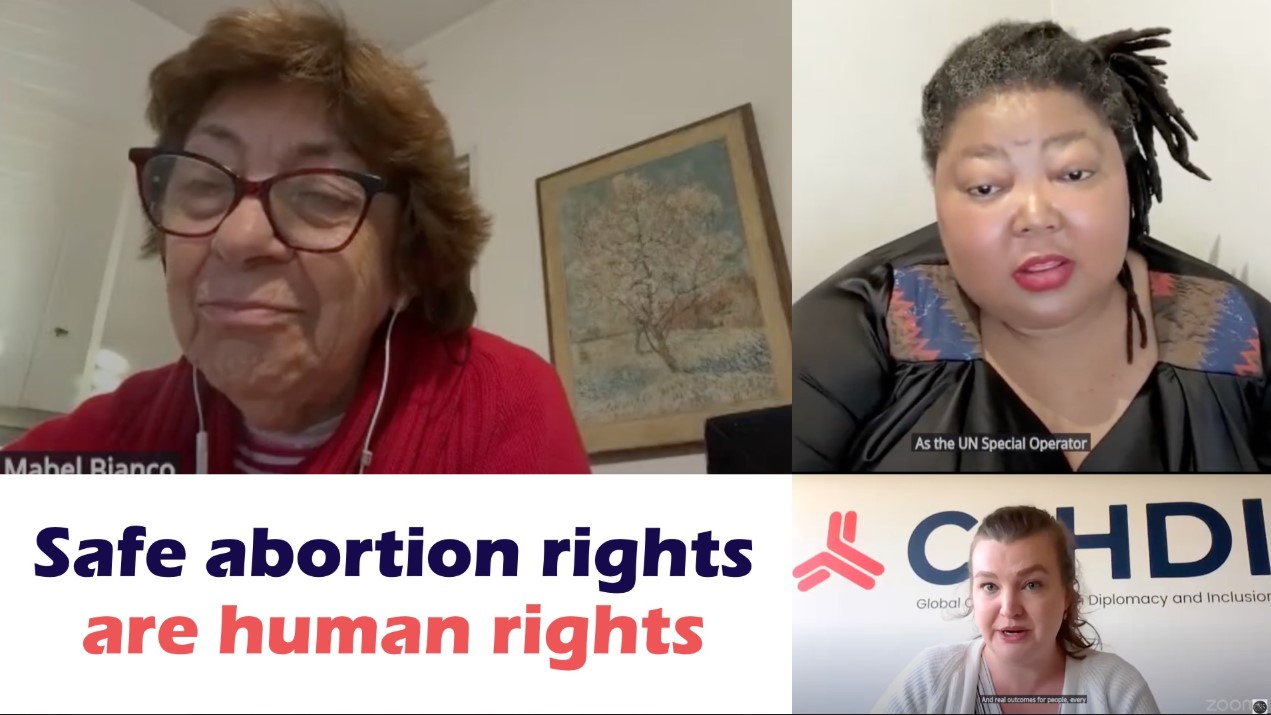
 “Sexual and reproductive health rights are an integral element of the right to health.




👉 Order now at BestCheapPills and discover exclusive discounts for registeredcustomers!
“Sexual and reproductive health rights are an integral element of the right to health. Yet we know when we are speaking specifically about abortion care, that obstacles exist. They are interrelated and entrenched and operate at different levels in clinical care, at the level of health systems and in the underlying determinants of health. Abortion is health care. Access to abortion is a human rights issue. Full stop.” These are the words of Dr Tlaleng Mofokeng, United Nations Special Rapporteur on Right To Health, who gave an opening address at SHE & Rights Anniversary Special session ahead of 80th United Nations General Assembly (UNGA), Contraception Day (26 September) and Safe Abortion Day (28 September).
Safe abortion saves lives
“Safe abortion saves lives. It is an essential component of sexual and reproductive health provision and central to one's reproductive autonomy and freedom and bodily integrity. Discriminatory practices and laws not only violate women and people who require abortions rights but also contribute to poor health outcomes which exacerbate existing health inequalities,” added Dr Mofokeng. “And this is true for LGBTQIA+ persons who may also require abortion services.”
This SHE & Rights session on the theme “Abortion rights are human rights” was together hosted by Global Center for Health Diplomacy and Inclusion (CeHDI), International Conference on Family Planning (ICFP) 2025, Family Planning News Network (FPNN), International Planned Parenthood Federation (IPPF), Asian-Pacific Resource and Research Centre for Women (ARROW), Women’s Global Network for Reproductive Rights (WGNRR), Asia Safe Abortion Partnership (ASAP), Asia Pacific Media Alliance for Health and Development (APCAT Media) and CNS.
Without safe abortion rights, the right to health cannot be fully realised
Kelcey Armstrong-Walenczak, Senior Advocacy Manager, Global Center for Health Diplomacy and Inclusion (CeHDI) reminded us that the human right to health as recognised in the International Covenant on Economic, Social, and Cultural Rights and reaffirmed through multiple international agreements places 3 fundamental responsibilities on states to respect, to protect, and to fulfill:
- “Respect” means removing the legal and practical barriers that prevent people from accessing services, including restrictive abortion laws, unnecessary medical authorisations, or stigmatising procedures,
- “Protect” refers to safeguarding individuals from discrimination, coercion, and violence, and
- “fulfill” means actively ensuring that the full range of health and services, including comprehensive sexual and reproductive healthcare, are available, accessible, acceptable, and of good quality.
“Safe abortion care sits squarely within this framework. Without it, the right to health cannot be fully realised. Global health landscape is more challenging than at any point in recent memory. Around the world, we are witnessing the rise of regressive policies that are rolling back hard-won rights. We are seeing a retreat from multilateralism at the very moment when global challenges most require global cooperation. We face increasing politicisation and polarisation of health issues as well as anti-science rhetoric that undermines evidence-based policy. These trends have real consequences. They cost lives. They deepen inequalities and weaken the credibility of health systems and trust in governments as providers and protectors of health. We need an urgent reset to reframe action through the lens of the right to health. Sexual and reproductive health and rights are not optional. They are not negotiable. They are obligations under international law. And they are essential for advancing equity, dignity, and justice, particularly for marginalised groups, including women, young people, and the LGBTQIA+ community,” said Kelcey.
“They also bring wide-ranging benefits, healthier communities, stronger economies, more resilient societies and greater equity and stability. Their implementation creates opportunities for development and enhances health sovereignty within and across states. Advancing the right to health is a shared responsibility. Ensuring access to safe abortion is not only a matter of legal obligation, but also of sound public policy and effective governance. We believe that progress comes from dialogue, evidence, and cooperation across sectors and regions,” added Kelcey of CeHDI.
Denying safe abortion rights is violation of women’s rights
“Safe abortion rights are part of sexual and reproductive health, rights and justice – and not separate. That is why in 1990, 28th September was first observed as Safe Abortion Day (Campaña 28 Septiembre) in Argentina and other places in Latin America, to advocate for decriminalising abortion and access to safe abortion services. The meeting was held in San Bernardo, Argentina with Latin American groups where we proposed to have 28th September as a day for united advocacy for safe abortion rights. Not giving safe abortion rights is State’s violation of women’s rights,” said Dr Mabel Bianco, noted physician activist and founding president of FEIM (foundation for studies and research on women), Argentina.
Since 2015, Women’s Global Network for Reproductive Rights (WGNRR) mobilised a range of groups worldwide to observe 28 September as International Safe Abortion Day.
“When we were starting to fight for sexual and reproductive health and rights in Latin America, it was the Church that did not want to promote anything about sexual and reproductive health. We categorically denounced that the restrictive laws for abortion and sexual and reproductive health in our countries are creating high maternal mortality and morbidity rates. It was important that our advocacy was based on growing evidence and so was our demand to decriminalise safe abortion rights and services and make them accessible to everyone. Back then in 1980s, it was necessary to push the medical doctors and researchers to generate robust scientific evidence base to demonstrate the association between these restrictive laws (that criminalise abortion or other sexual and reproductive health services) with high rates of maternal mortality,” shared Dr Mabel Bianco.
A leaf from history: Hard-won health rights
“When we were working hard in the preparation for the International Conference on Population and Development (ICPD 1994), we could eventually get the recognition of reproductive rights, but not sexual rights. It was at the 4th UN World Conference on Women in Beijing that we could get recognition of reproductive and sexual health and rights in 1995. So, it is not “what we want” but “what we could have” back then. Despite important recognitions of reproductive and sexual health and rights back then, we are still fighting to change laws to decriminalise safe abortion rights and make it a reality for all women. We continue fighting to make safe abortion rights accessible for all in most of countries in Latin America,” said Dr Mabel Bianco.
“Our network for safe abortion rights also calls for comprehensive sexuality education, women’s right to decide, access to full range of sexual and reproductive health services to avoid abortion, and safe abortion laws to eliminate the death of women due to abortion. We hard fought for these demands. We could get a law that allows comprehensive sexuality education in all schools,” said Dr Bianco.
Comprehensive sexuality education is necessary for children, adolescents and young people so that they can receive correct age-appropriate education, know their rights, services and information about accessing them.
“We had to fight for 10 years from 1992-2002 to get a national law to make sexual and reproductive health services accessible for all. We created the programme at the Argentinian Ministry of Health so that it can be fully budgeted and resourced. We needed supplies like contraceptives, resources to train our medical and other healthcare personnels, and other essential activities. My organisation was among those that has been fighting for the implementation of Argentinian laws for making sexual and reproductive health services accessible to all, but it has been a challenge as need of contraception is less recognised here. Those who say that ‘we need to have more children because we need to populate’ must also care how many women and children die due to lack of sexual and reproductive health and rights. We must fight for bodily autonomy, women’s agency and her right to decide and full range of sexual and reproductive health and rights,” rightly says Dr Mabel Bianco in SHE & Rights session.
No more femicides
“No more anyone should die or suffer sexual and gender-based violence. No more femicides. Not having legal and safe abortion rights for all is also a form of violence, it violates the human rights of women and specifically young women,” said Dr Mabel Bianco.
“When we tried to pass the safe abortion law in 2018, despite all efforts, we could only get it passed in the Chambers of Deputies of Argentina, but Argentine Senate rejected it (due to the church’s position against abortion). Finally in 2020 we could get safe abortion law passed in Argentina. I think the great success as feminists we have today is to have medical abortion. Medical abortion is something in which we decide as women when, where and how to get a safe abortion. So, we have the pills, we use them, we decide when, where and how. And this of course needs to be early in the first 12 weeks of pregnancy or maybe 14 weeks sometimes,” said Dr Bianco.
"We must make sure that sexual and reproductive health, rights and justice, including safe abortion rights, are recognised when we refer to women’s rights in context of 80th United Nations General Assembly or Beijing+30 (30 years since adoption of Beijing Declaration 1995 and its Platform for Action). Women’s rights must be respected in all countries. This is not something we are ‘requesting in order to remain good buddies’ but demanding it as a right. We are pro-life. Those who are opposing safe abortion rights are against life of women and society," rightly concludes Dr Mabel Bianco.
Shobha Shukla – CNS (Citizen News Service)
(Shobha Shukla is a feminist, health and development justice advocate, and an award-winning founding Managing Editor and Executive Director of CNS (Citizen News Service). She was also the Lead Discussant for SDG-3 at United Nations inter-governmental High Level Political Forum (HLPF 2025). She is a former senior Physics faculty of prestigious Loreto Convent College; current President of Asia Pacific Regional Media Alliance for Health and Development (APCAT Media); Chairperson of Global AMR Media Alliance (GAMA received AMR One Health Emerging Leaders and Outstanding Talents Award 2024); and coordinator of SHE & Rights (Sexual Health with Equity & Rights). Follow her on Twitter/X @shobha1shukla or read her writings here www.bit.ly/ShobhaShukla)






.jpeg)








.jpg)
.jpg)
.jpg)
.jpg)
.jpg)
.jpg)


.jpg)
.jpg)
.jpg)