Friday, October 30, 2026
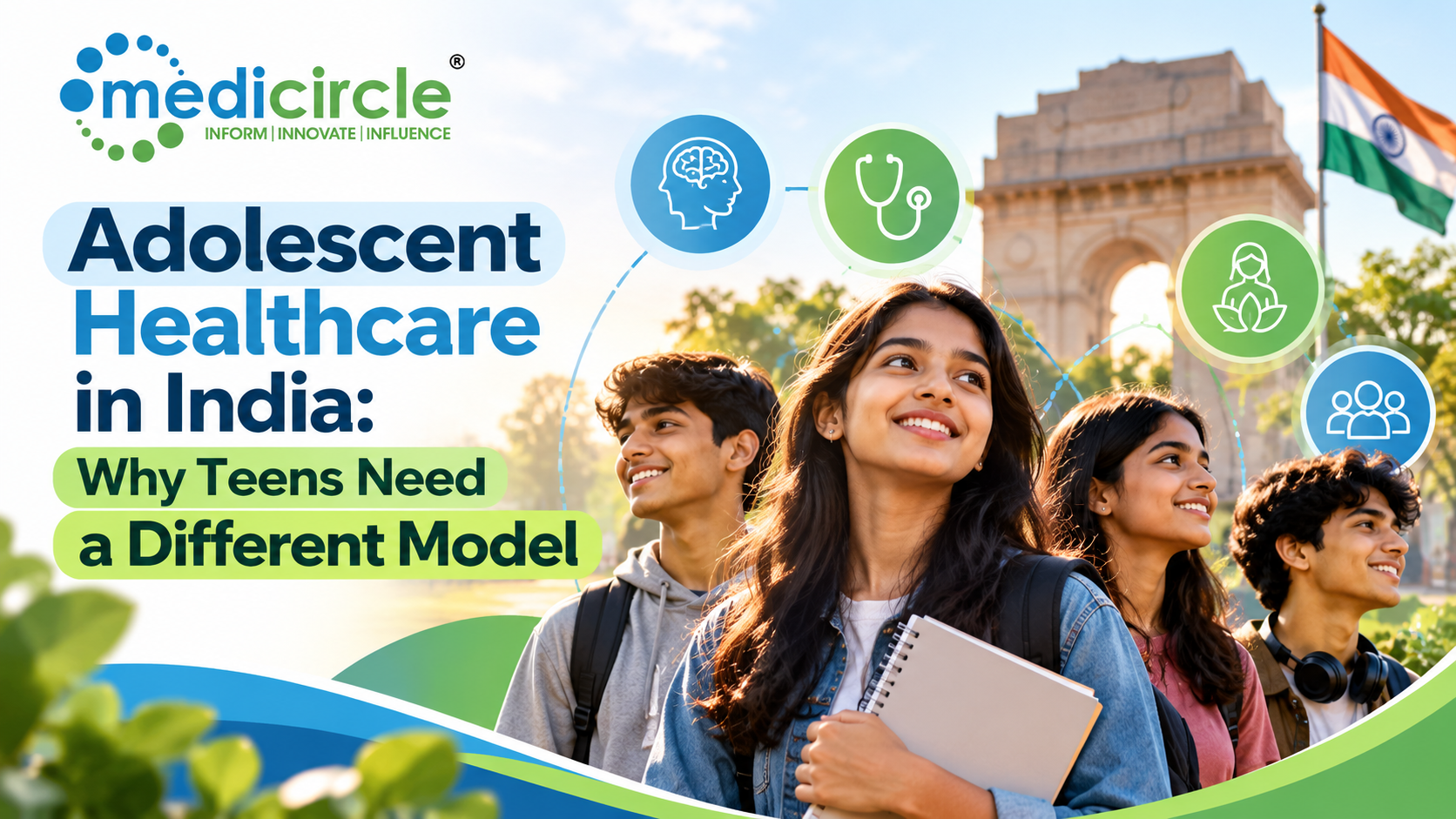
 India's 253 million adolescents need a dedicated healthcare model addressing their unique nutritional, mental, and reproductive health needs beyond what pediatric or adult systems currently offer.





Introduction
India is home to approximately 253 million adolescents between the ages of 10 and 19, making it one of the largest adolescent populations in the world. This group represents nearly one-fifth of the country's total population, and the health decisions, habits, and medical conditions that take root during these formative years will define the overall public health landscape of India for the next several decades. Yet, despite this enormous demographic weight, adolescents remain among the most underserved groups within the Indian healthcare system.
The core problem is structural. Indian healthcare, both public and private, has historically been organized around two broad categories: pediatric care for children and adult medicine for grown-ups. Adolescents fall awkwardly between these two worlds. A 14-year-old dealing with menstrual disorders, a 16-year-old experiencing severe anxiety, or a 17-year-old struggling with early signs of hypertension cannot be adequately addressed through either a pediatrician's consultation or a standard adult outpatient visit. Their needs are biologically, psychologically, and socially distinct.
This is why adolescent healthcare needs its own dedicated model in India, one built around the specific realities of this age group rather than one that borrows frameworks designed for other populations.
Understanding the Adolescent Phase and Why It Is Different
Adolescence is defined by the World Health Organization as the period between ages 10 and 19. It is one of the most dynamic phases of human development, marked by rapid changes in the body, brain, emotions, social identity, and behavior. In India, this phase is further shaped by factors such as early marriage in certain communities, pressure from academic competition, shifting dietary patterns, increasing digital screen exposure, and deep-seated social stigmas around topics like menstruation, mental health, and sexual development.
From a medical standpoint, adolescents are not simply smaller adults. Their physiology is in a state of active transition. Hormonal changes affect everything from bone density and immune function to mood regulation and sleep cycles. Risk-taking behavior, which is a neurologically expected feature of adolescent brain development, often leads to the first exposures to tobacco, alcohol, and other substances. Early nutritional deficiencies established during this phase, particularly in iron and calcium, have long-term consequences that persist well into adulthood.
What makes adolescent care genuinely different from pediatric or adult care is not just biology. It is also the nature of the patient-provider relationship. Adolescents require confidentiality, non-judgmental communication, and a level of personal agency in their healthcare decisions that is often not available in standard clinical settings. A teenager is unlikely to disclose concerns about menstrual irregularities, substance use, or emotional distress to a doctor sitting across from them in a general adult medicine queue, especially if a parent is present in the room.
The Health Challenges Adolescents in India Actually Face
Understanding why a separate healthcare model is necessary begins with understanding the actual disease burden within this age group in India.
Nutritional Deficiencies and AnaemiaAnaemia remains one of the most pervasive health problems among Indian adolescents, particularly girls. According to the National Family Health Survey 5 (NFHS-5), more than 59 percent of adolescent girls in India are anaemic. This figure is not simply a statistic. Anaemia during adolescence affects cognitive development, academic performance, physical growth, and reproductive health outcomes in later years. The government's Weekly Iron and Folic Acid Supplementation (WIFS) program addresses this to some degree, but implementation gaps persist across states, particularly in rural and tribal areas.
Mental HealthThe mental health crisis among Indian adolescents is both significant and significantly underacknowledged. The National Mental Health Survey of India estimated that the prevalence of mental disorders among adolescents is around 7.3 percent. Anxiety, depression, self-harm, and academic pressure-related distress are increasingly reported, yet most adolescents in India have no access to mental health services that are either age-appropriate or affordable. The stigma attached to mental health in Indian families and communities means that most cases go unaddressed until they reach a critical stage.
Reproductive and Sexual HealthIndia's adolescent population includes a substantial number of girls who are married before the age of 18, particularly in states like Bihar, Rajasthan, West Bengal, and Madhya Pradesh. Early pregnancy carries serious health risks, including maternal anaemia, obstetric complications, and infant mortality. Beyond child marriage, adolescents across socioeconomic groups have very limited access to accurate, non-stigmatizing information about reproductive health, menstrual hygiene, and contraception. The absence of school-based sexual health education programs in most Indian states leaves adolescents to navigate these topics without any credible guidance.
Non-Communicable Disease Risk FactorsThe rise of non-communicable diseases (NCDs) such as type 2 diabetes, hypertension, and obesity among adolescents is an emerging public health concern in India. Rapid urbanization, sedentary screen-based lifestyles, high consumption of ultra-processed foods, and low physical activity levels are creating a generation of young people who are developing cardiometabolic risk factors earlier than any previous generation. A study published in The Lancet estimated that India's childhood and adolescent obesity numbers more than doubled over the past decade.
Substance UseTobacco use often begins during adolescence. The Global Youth Tobacco Survey India found that nearly 14 percent of students between the ages of 13 and 15 use some form of tobacco. Alcohol and substance use initiation during the same period is also well-documented. Without adolescent-specific screening, counseling, and intervention services, these behaviors tend to escalate silently into adulthood.
Why the Existing Healthcare System Falls Short
India's public health infrastructure is primarily organized through a tiered system of sub-centres, primary health centres, community health centres, and district hospitals. This system was largely designed to address maternal and child health, communicable diseases, and basic outpatient care. It was not built with the adolescent patient in mind.
Several structural problems prevent adolescents from accessing adequate care within the existing system:
- Most government health facilities lack separate, private spaces where adolescents can consult a provider without a parent or guardian present.
- Healthcare providers receive minimal training in adolescent-specific communication, counseling, or clinical assessment.
- Reproductive health and mental health services are not consistently available at the primary care level.
- Adolescents from lower socioeconomic backgrounds have limited awareness of their entitlement to free public health services.
- Cultural and social barriers prevent many adolescents, especially girls, from independently seeking healthcare.
Private healthcare, while more accessible for urban adolescents from middle-class families, is expensive and similarly lacks standardized adolescent health services. A teenager visiting a private clinic for mood-related concerns is more likely to be seen by a general physician than a trained adolescent health specialist.
What India Has Done and What Remains to Be Done
India recognized the need for a dedicated adolescent health strategy with the launch of the Rashtriya Kishor Swasthya Karyakram (RKSK) in 2014 under the Ministry of Health and Family Welfare. RKSK represented a significant policy shift, moving from a narrow focus on adolescent reproductive health to a broader vision covering nutrition, mental health, substance use, injuries, and non-communicable diseases.
Key components of RKSK include Adolescent Friendly Health Clinics (AFHCs), peer educators, a dedicated adolescent helpline (Saathiya Resource Kit), and the integration of adolescent health services into the broader National Health Mission framework. The program has expanded to more than 9,000 AFHCs across the country.
However, implementation remains uneven. AFHCs are not consistently operational, peer educator programs lack structured supervision in many districts, and the integration of mental health services into primary care remains largely aspirational. Urban adolescents from middle and upper-income groups often have no awareness of RKSK services, while rural adolescents may find the nearest functional AFHC too far to access without support.
What India needs is not simply more infrastructure but a more coherent model, one that includes:
- Mandatory adolescent health training for all healthcare providers at the primary care level
- Integration of school health programs with the public health system so that screening, counseling, and referral happen within educational institutions
- A standardized, nationally consistent adolescent health package delivered across all public health facilities
- Digital health platforms designed for adolescent users, with multilingual, age-appropriate health content and tele-counseling options
- Community-level destigmatization of mental health and reproductive health conversations
Platforms like Medicircle play a meaningful role in this ecosystem by bringing credible health information to adolescents, parents, educators, and healthcare providers in an accessible and responsible format.
Prevention and the Long-Term Vision for Adolescent Health in India
The case for a dedicated adolescent healthcare model in India is ultimately a case for prevention. Every rupee invested in adolescent health today reduces the burden of adult NCDs, mental illness, maternal mortality, and productivity loss tomorrow. The demographic dividend that India is positioned to benefit from over the next two decades depends in large part on whether this generation of adolescents enters adulthood in good physical and mental health.
Preventive adolescent healthcare must be built on three pillars:
- Awareness and education: Adolescents need access to scientifically accurate, culturally sensitive, and age-appropriate information about their bodies, minds, and health rights.
- Access and affordability: Health services for adolescents must be geographically accessible, financially free or low-cost, confidential, and non-stigmatizing.
- Accountability and integration: Adolescent health must be a clearly defined priority within national health policy, with measurable indicators, accountability mechanisms, and cross-sectoral coordination between health, education, and social welfare ministries.
Frequently Asked Questions
Q1: What is adolescent healthcare in India?
Adolescent healthcare in India refers to health services specifically designed for individuals aged 10 to 19, addressing their unique physical, mental, reproductive, and nutritional needs through dedicated programs like the Rashtriya Kishor Swasthya Karyakram (RKSK) and Adolescent Friendly Health Clinics.
Q2: What are the main health problems faced by adolescents in India?
Key health challenges include anaemia, malnutrition, mental health disorders such as anxiety and depression, reproductive and menstrual health concerns, substance use initiation, and rising cardiometabolic risk factors driven by sedentary urban lifestyles and poor dietary habits.
Q3: Does India have a national program for adolescent health?
Yes. The Rashtriya Kishor Swasthya Karyakram (RKSK), launched in 2014 under the Ministry of Health and Family Welfare, is India's flagship national adolescent health program. It operates through Adolescent Friendly Health Clinics and peer educator networks across the country.
Q4: Why cannot adolescents share the same healthcare model as children or adults?
Adolescents are neither children nor adults. They undergo rapid biological, psychological, and social changes that require age-appropriate, confidential, and non-judgmental care. Neither pediatric services nor standard adult medicine are structured to address these specific needs effectively.
Q5: How can parents support adolescent health in India?
Parents can support adolescent health by maintaining open and non-judgmental communication about physical and mental changes, ensuring regular health checkups, encouraging balanced nutrition and physical activity, setting healthy boundaries around screen time and sleep, and actively reducing stigma around mental health conversations at home.
Resources
- Ministry of Health and Family Welfare (MoHFW): Official source for RKSK guidelines, AFHC frameworks, and India's national adolescent health policy documents.
- World Health Organization (WHO) India: Regional data and global frameworks on adolescent health, including mental health, nutrition, and reproductive health indicators.
- National Family Health Survey 5 (NFHS-5): India's most comprehensive household health survey providing state-level data on adolescent anaemia, nutrition, and marriage prevalence.
- Indian Council of Medical Research (ICMR): Peer-reviewed research and clinical guidance on adolescent health conditions prevalent in India.
- UNICEF India: Reports and advocacy resources on adolescent wellbeing, child marriage, school health, and out-of-school youth in India.
Interlinking Keywords
Adolescent health India, RKSK program, adolescent mental health, teenage anaemia India, Adolescent Friendly Health Clinics, child marriage India, adolescent nutrition, school health programs India, reproductive health adolescents, non-communicable diseases in youth
Last reviewed by:
Dr. Manthan Tripathi, Medicircle Editorial and Medical Advisory Team on 29, October 2026.
Disclaimer
This article is intended for general health awareness and informational purposes only. It does not constitute medical advice, diagnosis, or treatment. Readers should consult a qualified and registered healthcare professional for any personal health concerns. The information provided reflects publicly available evidence and guidelines at the time of writing and is subject to change as new research and policy updates emerge.





-23-300x250.png)