 Saturday, October 10, 2026
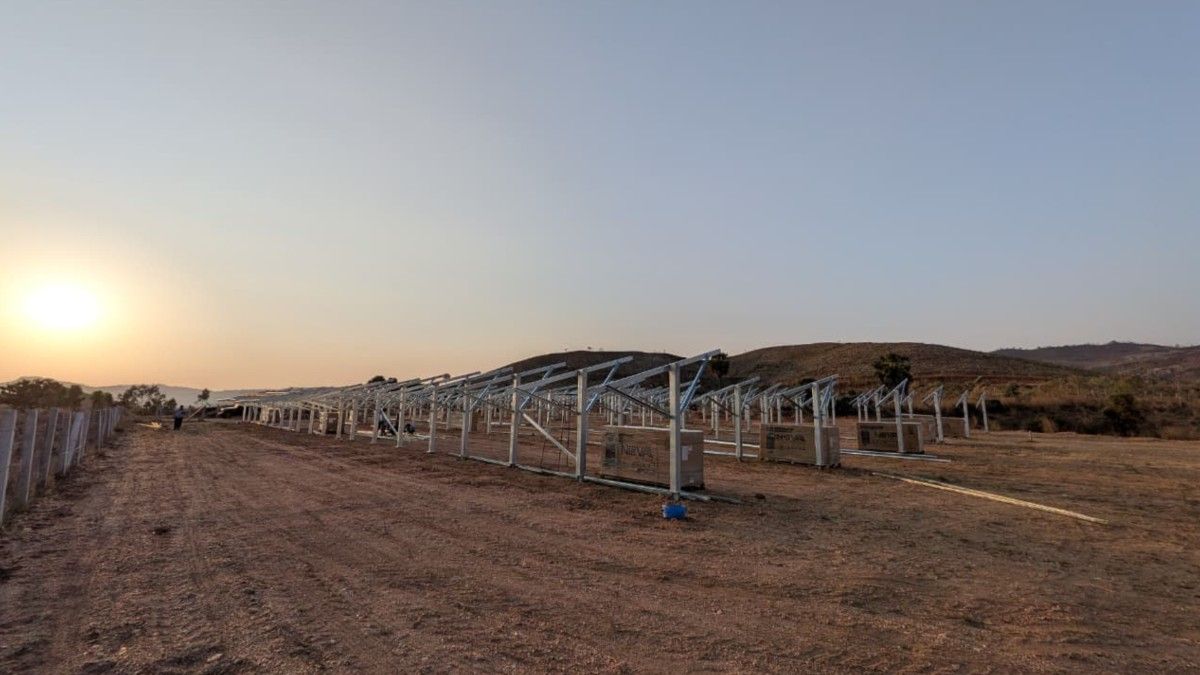
 An agrivoltaic solar project has been launched at Thirumala Raju Puram (Palyam) in Chittoor district under Project Chittoor, a long-term rural regeneration initiative being developed by the Atria Group, in partnership with Atria Renewable Private Limited.




Chittoor, Andhra Pradesh: An agrivoltaic solar project has been launched at Thirumala Raju Puram (Palyam) in Chittoor district under Project Chittoor, a long-term rural regeneration initiative being developed by the Atria Group, in partnership with Atria Renewable Private Limited.
The project introduces field integrated agrivoltaic systems, where solar panels are installed above active farmland, allowing crops and clean energy generation to coexist on the same land. Each agrivoltaic block spans 1-1.5 acres with an installed solar capacity of approximately 300 kW, ensuring that agricultural activity continues uninterrupted.
Project Chittoor is being built as a long-term, self-sustaining rural ecosystem in Chittoor district, addressing key challenges faced by farmers, including income volatility, rising climate stress, unreliable power supply, and increasing input costs. The agrivoltaic model adds a second, stable layer of income for farmers without requiring them to give up cultivable land.
Power generated from the agrivoltaic installations will be used to operate shared agricultural infrastructure within the farming clusters, including pumps, borewells, cold storage units, dryers, packhouses, and other processing facilities. This reduces operating costs, lowers dependence on grid power, and helps retain more economic value within the local farming ecosystem. Any surplus energy generated at the block level will create an additional revenue stream linked back to the cluster.
The elevated solar panels also provide partial shading, which helps reduce heat stress and evaporation for certain crops, improving farm resilience during hotter months.
Commenting on the initiative, Dr. Sunder Raju, Chairman, Atria Group, said, “Agrivoltaics enables farms to produce food and energy from the same acre, without compromise. By integrating clean energy directly into agricultural infrastructure, we are improving income predictability for farmers, while strengthening the long-term resilience of rural communities. At Project Chittoor, our focus is on building systems that work reliably over decades.”
Karthik Raju, Executive Director, Atria Renewable Pvt. Ltd., added, “This is a field integrated agrivoltaic system designed to power real farm needs, including storage, processing, and cluster level infrastructure. Energy here is not an add on. It is embedded into how the farming ecosystem functions, creating stability and scalability at the block level.”
Project Chittoor spans approximately 600 acres, with a target agrivoltaic capacity of around 6 MW, deployed throughout the project. The long-term vision is to make clean energy a core component of farm infrastructure, alongside irrigation, storage, and processing.
The initiative demonstrates a scalable model where food and energy are produced from the same land, with no reduction in cultivable area, lower energy costs for agricultural operations, and more predictable incomes for farmers.






.jpeg)










.jpg)
.jpg)
.jpg)
.jpg)
.jpg)
.jpg)


.jpg)