 Saturday, October 10, 2026
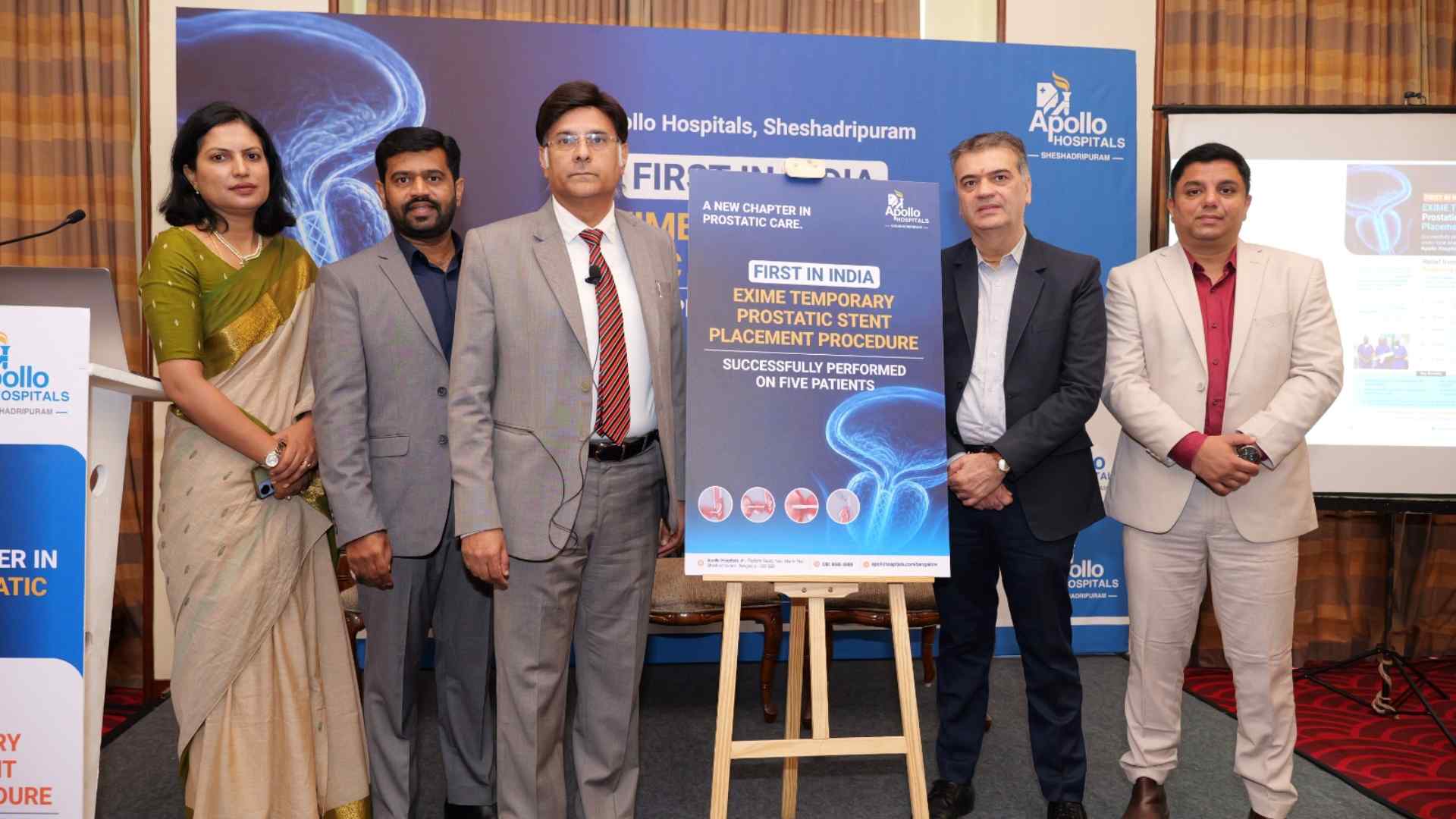
 In a significant advancement in minimally invasive urological care, Apollo Hospitals, Seshadripuram, Bengaluru, has become one of the first hospitals in India to adopt EXIME Temporary Prostatic Urethral Stent technology, with Dr T. Manohar and his team successfully performing the procedure on five patients.




Bengaluru, 17 September 2026: In a significant advancement in minimally invasive urological care, Apollo Hospitals, Seshadripuram, Bengaluru, has become one of the first hospitals in India to adopt EXIME Temporary Prostatic Urethral Stent technology, with Dr T. Manohar and his team successfully performing the procedure on five patients.
The EXIME temporary stent is designed to keep the prostatic urinary passage open, allowing patients to pass urine while they await definitive treatment or when surgery is not appropriate. The stent can remain in place for one year, creating a window to stabilise the patient's medical condition or plan further treatment.
The five patients included
- A 73-year-old high-risk cardiac patient with recurrent urinary retention, urinary infections and previous severe urosepsis, who required uninterrupted blood-thinning medication and had recently recovered from cardiac arrest.
- A 70-year-old patient with recurrent/metastatic urothelial cancer, undergoing palliative treatment and considered unfit for definitive prostate surgery.
- Two patients, aged 66 and 83, who developed severe urinary symptoms, retention and obstructive uropathy following PTCA. Their prostate surgery had to be deferred while they remained on dual antiplatelet therapy for at Least 3 months.
- A 90-year-old patient with multiple comorbidities and bladder dysfunction, who had been dependent on long-term catheterisation and was considered for temporary stenting as a potential catheter-sparing option.
All five patients were able to pass urine following the procedure, which was performed under local anaesthesia with mild sedation. The procedure took an average of 10 minutes, with patients able to void immediately and showing nil post-void residual urine, enabling immediate catheter-free status. The procedure was performed as a day-care intervention, with no complications reported, and patients were followed up for three weeks.
The temporary stent is not intended to replace definitive procedures such as HoLEP or TURP in patients who are fit for surgery. Its potential role is in carefully selected patients where surgery must be postponed because of cardiac conditions, blood-thinning medication, ongoing cancer treatment, advanced age or other significant medical risks.
“For these patients, the challenge is to relieve the urinary obstruction without adding significant risk when they are already medically vulnerable. A temporary stent can provide a window for the patient to pass urine while we address the underlying medical issues or plan definitive treatment” said Dr T. Manohar, Innovator and Clinical Director, Apollo Prostate Institute, Renal Sciences & Kidney Transplantation, Apollo Hospitals, Seshadripuram, Bengaluru.
“We see this as a Least Invasive Surgical Treatment, or LIST, option for carefully selected BPH patients where in medication has severe side effects and conventional surgery needs to be delayed or may not be appropriate.” Dr Manohar added.
Uday Davda, Vice President, Apollo Hospitals, Seshadripuram, said, “For patients whose medical conditions make immediate surgery unsuitable, expanding treatment choices can make a meaningful difference. Introducing EXIME reflects Apollo Hospital commitment to supporting clinical innovation that addresses these gaps in care. Our focus remains on careful patient selection, informed decision-making and follow-up to evaluate outcomes.”
Apollo Hospitals, team is also exploring Indian modifications to temporary prostatic stents, including size-adjustable designs, which could potentially allow greater customisation for individual patients.
The five procedures mark an important step in exploring minimally invasive options for medically complex BPH patients, particularly those who may otherwise face repeated urinary retention or prolonged catheter dependence while waiting for definitive treatment.






.jpeg)










.jpg)
.jpg)
.jpg)
.jpg)
.jpg)
.jpg)


.jpg)