 Sunday, October 11, 2026
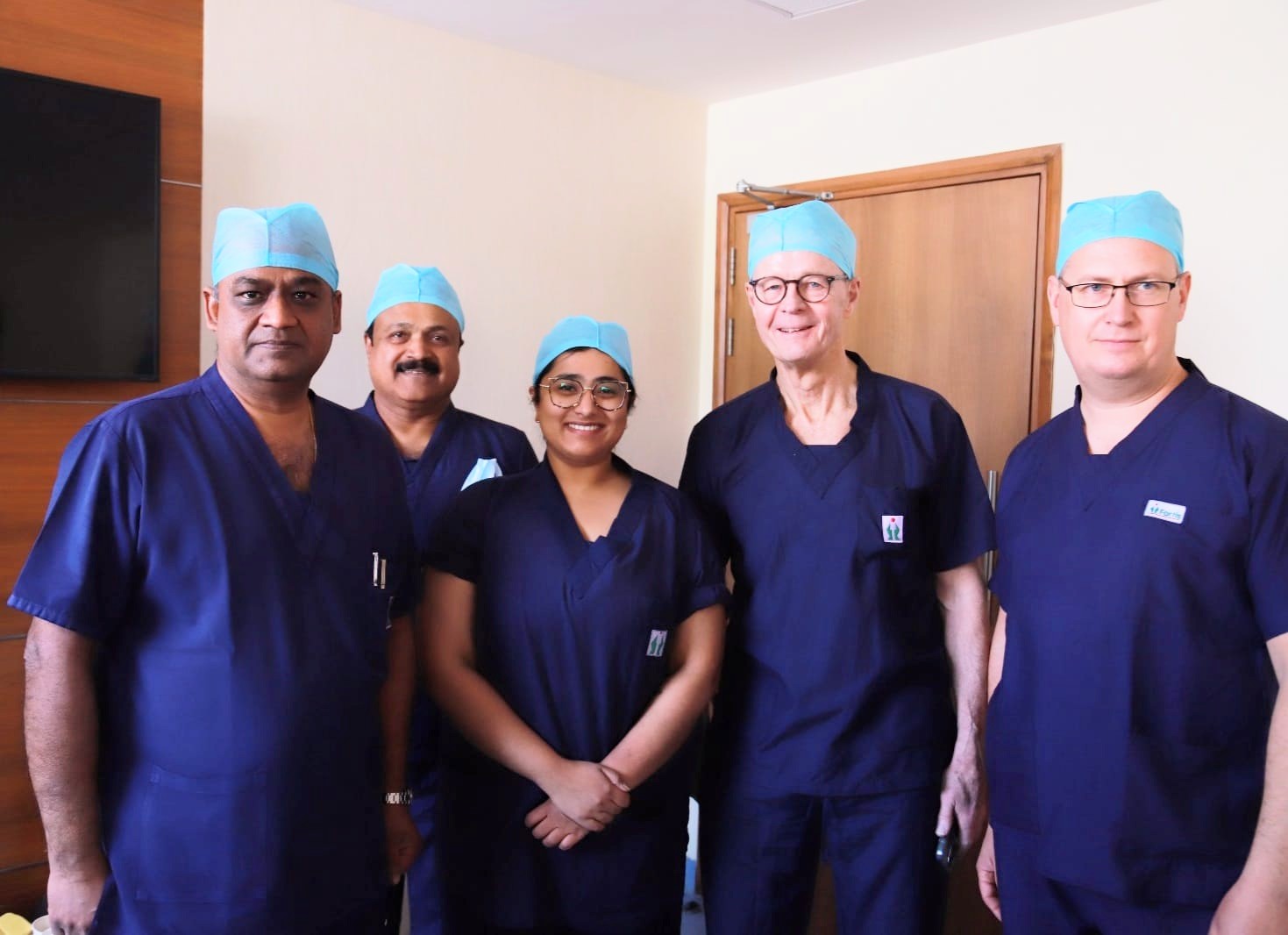
 The surgery was successfully carried out by Dr. Atul Mishra under the guidance of Prof. Leif Ryd at Fortis Hospital in Noida, New Delhi.




New Delhi - Today's changing lifestyle and its effects are increasing diseases. About 35 to 40 percent of people in India suffer from knee pain. Knee pain can be caused by many factors such as excessive friction in the knee joint, wrong sitting and standing posture, changing lifestyle, obesity. Until now knee replacement was the only option when the pain worsened but now Swedish technology has made it possible to save the knee. Where previous knee problems required a complete knee replacement, Swedish doctors have succeeded in saving the knee by replacing the part affected by friction using an advanced transplant system. Episurf Medical of Sweden has developed individualised patellofemoral implants for all knee disorders and a surgical drill guide for the treatment of articular cartilage injuries. This method of treatment has been practised in Sweden for many years but now Episurf Medical is ready for treatment in India.
The first patellofemoral joint replacement surgery in Asia Pacific Region -
Leif Ryd, former Professor at Karolinska Institute, Stockholm and founder of Episurf Medical, Marketing Director Fredrik Zetterberg are in India. Mohan Nair, Managing Director, Episurf Medical India, announced with sheer joy that the first patellofemoral joint replacement surgery, using Swedish advanced technique in the Asia Pacific region was done on a 51-year-old Businessman, Rajesh (name changed) due to prolonged trauma. The surgery was successfully carried out by Dr. Atul Mishra under the guidance of Prof. Leif Ryd at Fortis Hospital in Noida, New Delhi.
Comment by Dr. Atul Mishra, Director & Head for Orthopedics at Fortis Hospital, Noida. "I was very much impressed with the ease of use and the finesse with which the implant fits in. Glad to operate the Asia Pacific's 1st Patellofemoral joint (PFJ) case."
According to information disseminated by Episurf -
TKA & UKA
Total Knee Replacement (TKA, total knee arthroplasty) and partial knee replacement) and (UKA, unicompartmental knee arthroplasty/uni-prosthesis) surgeries are performed using Individualised Patellofemoral Implant and the Surgical Drill Guide. The goal of the surgery using this developed implant system is to restore the knee function and reduce the pain significantly, as well as stop or delay the need for a joint replacement surgery.
Design of an Implant-
The individualised design of the Patellofemoral Implant is based on MR imaging. By data processing, a virtual 3D model of the damaged knee surface is created, and the lesion is defined. Subsequently, the Patellofemoral Implant and instruments are designed to remove the damaged tissue as well as to restore the area with a perfectly fitting implant. Using the Drill Guide during surgery increases the precision of the surgical procedure for optimal positioning of the implant.
The Individualised Patellofemoral Implant is made of cobalt-chrome alloy. The part of the implant that is countersunk in the bone and cartilage is covered with a Titanium undercoating and a hydroxyapatite outer coating, ensuring a quick and lasting fixation to the bone.
The benefits of Individualised implants -
This customised implant replaces bone defects, improves bone function and improves joint function, less pain to the patient, faster healing process, improved quality of life and longevity of the patient.





.jpeg)










.jpg)
.jpg)
.jpg)
.jpg)
.jpg)
.jpg)


.jpg)