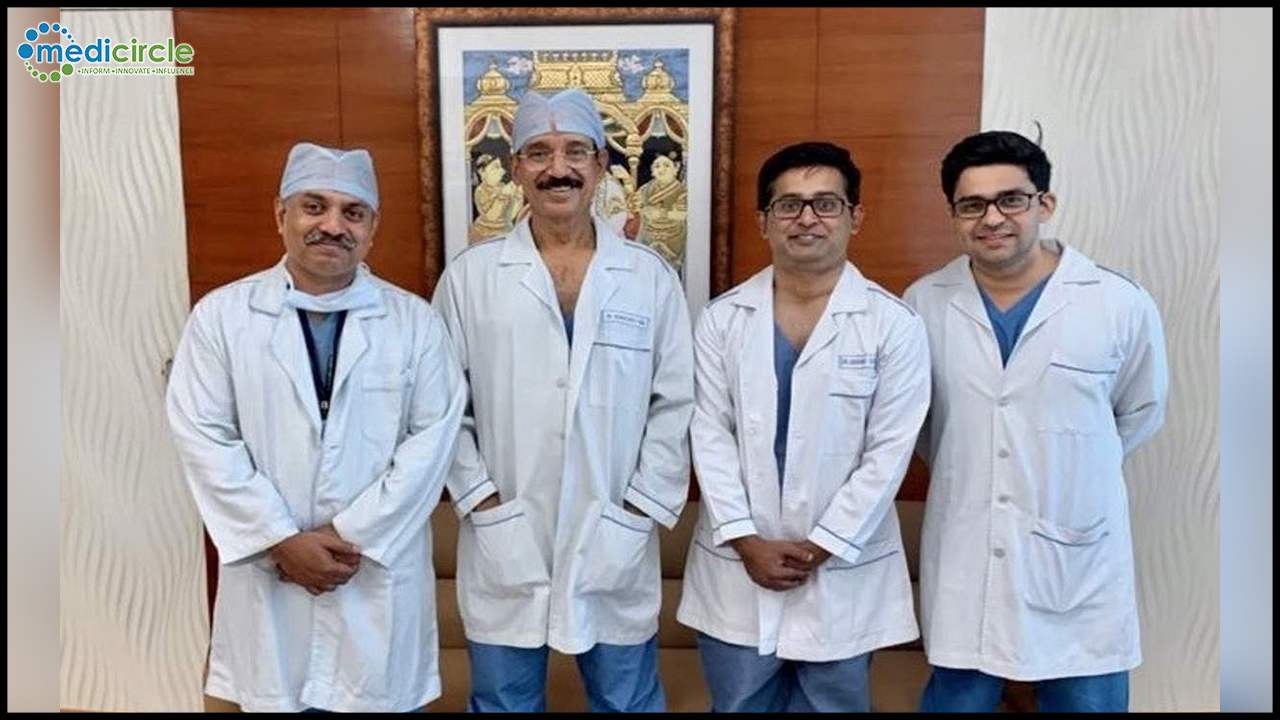
Asian Heart Institute marks, Congenital Heart Defect Awareness Day by opening GUCH clinic

▴ Asian Heart Instityte marks ,Congenital Heart Defect Awareness Day by opening GUCH clinic
Considering a birth prevalence of congenital heart disease as 9/1000, the estimated number of children born with congenital heart disease in India is more than 200,000 per year.


This Feb 14, which incidentally Congenial Heart Defect Disease Awareness Day, Asian Heart Institute opened GUCH Clinic, which will cater to children above 16 years of age with congenital heart disease (CHD) who have undergone surgical intervention in the past and those who have not, the hospital said.

Speaking on the occasion Dr Ramakanta Panda, Cardiovascular Thoracic Surgeon and Vice Chairman, Asian Heart Institute said “The number of grown-ups with congenital heart diseases is steadily increasing. Some of these children who have reached adult life need constant follow-ups and special care in a conducive environment to tide over the health issues that arise due to CHD. With this special outpatient service, we intend to cater to this patient population coming to us from across India.

Congenital heart disease (CHD) is a group of gross structural abnormalities that are present at birth. Congenital malformations of the heart and circulation are not fixed anatomic defects that appear at birth but instead are anomalies in flux that originate in the early embryo, evolve during gestation, survive the dramatic circulatory alterations at birth, and change considerably during extrauterine life.Considering a birth prevalence of congenital heart disease as 9/1000, the estimated number of children born with congenital heart disease in India is more than 200,000 per year. Of these, about one-fifth are likely to have serious defect, requiring an intervention in the first year of life.



Tags : #Guchclinic #Apollohospital #Congenitalheartdisease

Related Stories

Loading Please wait...

-Advertisements-


Trending Now

Immuneel Therapeutics and THSTI Announce Strategic Partnership to Advance CAR-T Cell Therapy and Lentiviral Vector Manufacturing July 28, 2026
Differential Diagnosis of Acute Abdomen: Differentiating Surgical Emergencies from Gastrointestinal MimicsJuly 28, 2026
Management of Rheumatic Heart Disease in Developing Nations: Secondary Prophylaxis and Valve InterventionsJuly 28, 2026
Hormonal Imbalance in Women: Understanding the Causes, Recognising the Symptoms, and Finding the Right TreatmentJuly 28, 2026
Why Regular Health Screening Matters: A Complete Guide for IndiansJuly 28, 2026
Galderma introduces Sculptra® in India, ushering in a new era of regenerative aestheticsJuly 27, 2026
Artificial Intelligence in Diagnostic Imaging: Enhancing Radiologist Precision and Reducing Human ErrorJuly 27, 2026
Transitioning from Acute Care to Urgent Care Centers: Optimizing Healthcare Facility InfrastructureJuly 27, 2026
Ahead of World Head & Neck Cancer Day, HNCII Launches “Delay is the Real Killer” Cancer Awareness CampaignJuly 25, 2026
Menopause Symptoms Explained: What Every Indian Woman Should KnowJuly 25, 2026
Sleep Deprivation and Its Hidden Impact on Your Health: What Every Indian Should KnowJuly 25, 2026
Air Pollution and Health Effects: What Every Indian Must KnowJuly 25, 2026
NABH Accreditation Explained: What It Means for Indian Hospitals and PatientsJuly 25, 2026
Hypertension in Young Indians: Causes and Early InterventionJuly 24, 2026
How Stress Damages Your Heart: The Mind-Body ConnectionJuly 24, 2026
Living with Arthritis in India: Pain Management and Lifestyle TipsJuly 23, 2026
Iron Deficiency vs B12 Deficiency: Spotting the Difference in IndiansJuly 23, 2026
The ePlane Company and Apollo Hospitals Join Forces to Bring India's Golden Hour Within ReachJuly 23, 2026
Importance of Women's Health Screening: A Comprehensive Guide to Preventive CareJuly 23, 2026