 Thursday, October 08, 2026
 Bengal and Union Ministry Unlockdown 4 News Updates September 1




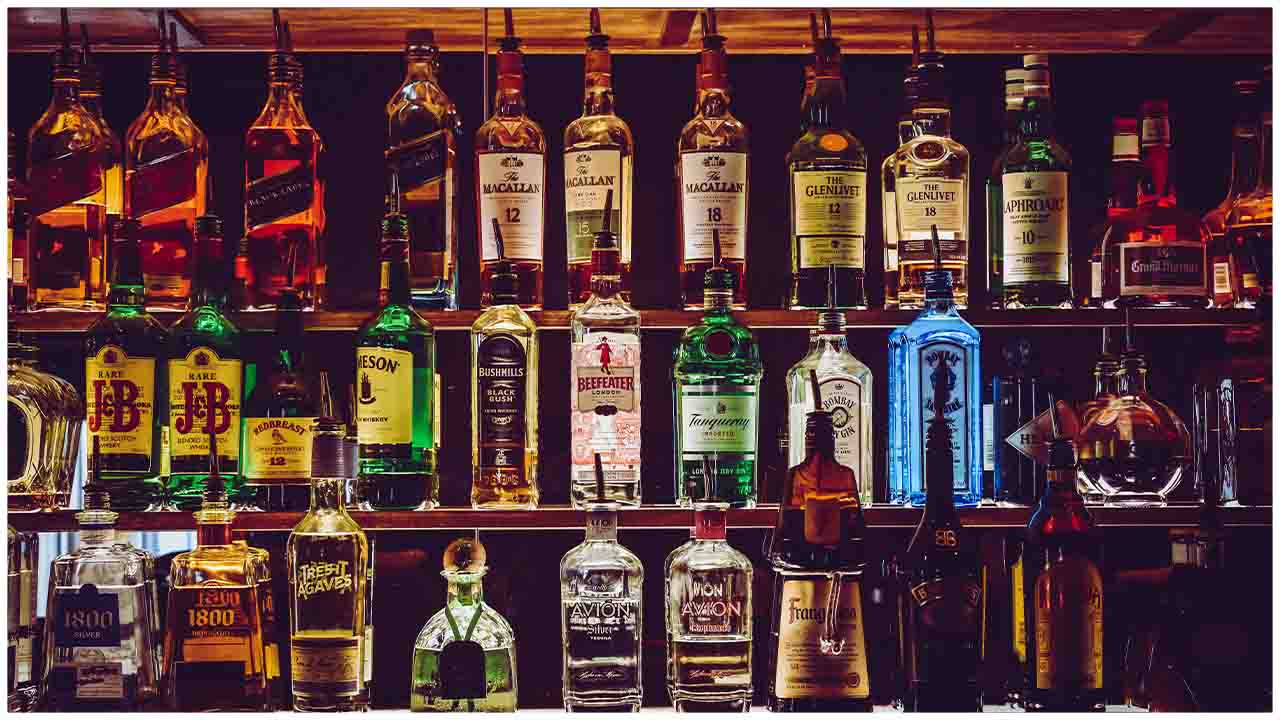
The West Bengal government on Monday allowed bars to open in the state outside containment zones under phase four of nationwide unlock in progress.
According to an order issued by the state excise department, bars and restaurants have been allowed to serve alcohol at service areas of their licensed premises.
"Service of liquor for consumption may take place within any service area attached to such bar. Operating hours for liquor service will be according to the opening hours of foodservice in restaurants as specified by appropriate authorities in view of the pandemic situation," the order states.
Bars will be required to put in place adequate arrangements to ensure strict adherence to social distancing norms, hand hygiene, frequent sanitisation and wearing of masks.
Restaurants with liquor service areas have been asked to operate at 50 per cent occupancy for strict compliance to Covid-19 guidelines.
"Restaurants shall not allow any guest to use the dance floor, if any, withing the service area in order to avoid crowding," the order states.
The Ministry of Home Affairs (MHA) has issued new guidelines recently for opening up of more activities in areas outside the Containment Zones. In Unlock 4, which will come into effect from September 1, 2020, the process of phased re-opening of activities has been extended further. The new guidelines, issued today, are based on feedback received from States and UTs, and extensive consultations held with related Central Ministries and Departments.
Salient features of the new guidelines
Metro rail will be allowed to operate with effect from 7th September 2020 in a graded manner, by the Ministry of Housing and Urban Affairs (MOHUA)/ Ministry of Railways (MOR), in consultation with MHA. In this regard, Standard Operating Procedure (SOP) will be issued by MOHUA.
Social/ academic/ sports/ entertainment/ cultural/ religious/ political functions and other congregations will be permitted with a ceiling of 100 persons, with effect from 21st September 2020. However, such limited gatherings can be held with mandatory wearing of face masks, social distancing, provision for thermal scanning and hand wash or sanitizer.
Open air theatres will be permitted to open with effect from 21st September 2020.
After extensive consultation with States and UTs, it has been decided that Schools, colleges, educational and coaching institutions will continue to remain closed for students and regular class activity up to 30th September 2020.
Online/distance learning shall continue to be permitted and shall be encouraged. However, following will be permitted, in areas outside the Containment Zones only, with effect from 21st September 2020 for which, SOP will be issued by the Ministry of Health & Family Welfare (MoHFW):
-States/ UTs may permit upto 50% of teaching and non-teaching staff to be called to the schools at a time for online -teaching/ tele- counselling and related work.
-Students of classes 9 to 12 may be permitted to visit their schools, in areas outside the Containment Zones only, on voluntary basis, for taking guidance from their teachers. This will be subject to written consent of their parents/ guardians.
-Skill or Entrepreneurship training will be permitted in National Skill Training Institutes, Industrial Training Institutes (ITIs), Short term training centres registered with National Skill Development Corporation or State Skill Development Missions or other Ministries of Government of India or State Governments.
-National Institute for Entrepreneurship and Small Business Development (NIESBUD), Indian Institute of Entrepreneurship (IIE) and their training providers will also be permitted.
-Higher Education Institutions only for research scholars (Ph.D.) and post-graduate students of technical and professional programmes requiring laboratory/ experimental works. These will be permitted by the Department of Higher Education (DHE) in consultation with MHA, based on the assessment of the situation, and keeping in view incidence of COVID-19 in the States/ UTs.
All activities, except the following, shall be permitted outside containment zones:
-Cinema halls, swimming pools, entertainment parks, theatres (excluding open air theatre) and similar places.
-International air travel of passengers, except as permitted by MHA.
-Lockdown shall continue to be implemented strictly in the Containment Zones till 30th September, 2020.
Containment Zones shall be demarcated by the District authorities at micro level after taking into consideration the guidelines of MoHFW with the objective of effectively breaking the chain of transmission. Strict containment measures will be enforced in these containment zones and only essential activities will be allowed.
Within the containment zones, strict perimeter control shall be maintained and only essential activities allowed.
These Containment Zones will be notified on the websites of the respective District Collectors and by the States/ UTs and information will also be shared with MOHFW.
States not to impose any local lockdown outside Containment Zones
State/ UT Governments shall not impose any local lockdown (State/ District/ sub-division/City/ village level), outside the containment zones, without prior consultation with the Central Government.
No restriction on Inter-State and intra-State movement
There shall be no restriction on inter-State and intra-State movement of persons and goods. No separate permission/ approval/ e-permit will be required for such movements.
National Directives for COVID-19 management
National Directives for COVID-19 management shall continue to be followed throughout the country, with a view to ensure social distancing. Shops will need to maintain adequate physical distancing among customers. MHA will monitor the effective implementation of National Directives.
Protection for vulnerable persons
Vulnerable persons, i.e., persons above 65 years of age, persons with co-morbidities, pregnant women, and children below the age of 10 years, are advised to stay at home, except for meeting essential requirements and for health purposes.






.jpeg)










.jpg)
.jpg)
.jpg)
.jpg)
.jpg)
.jpg)


.jpg)