 Wednesday, October 28, 2026
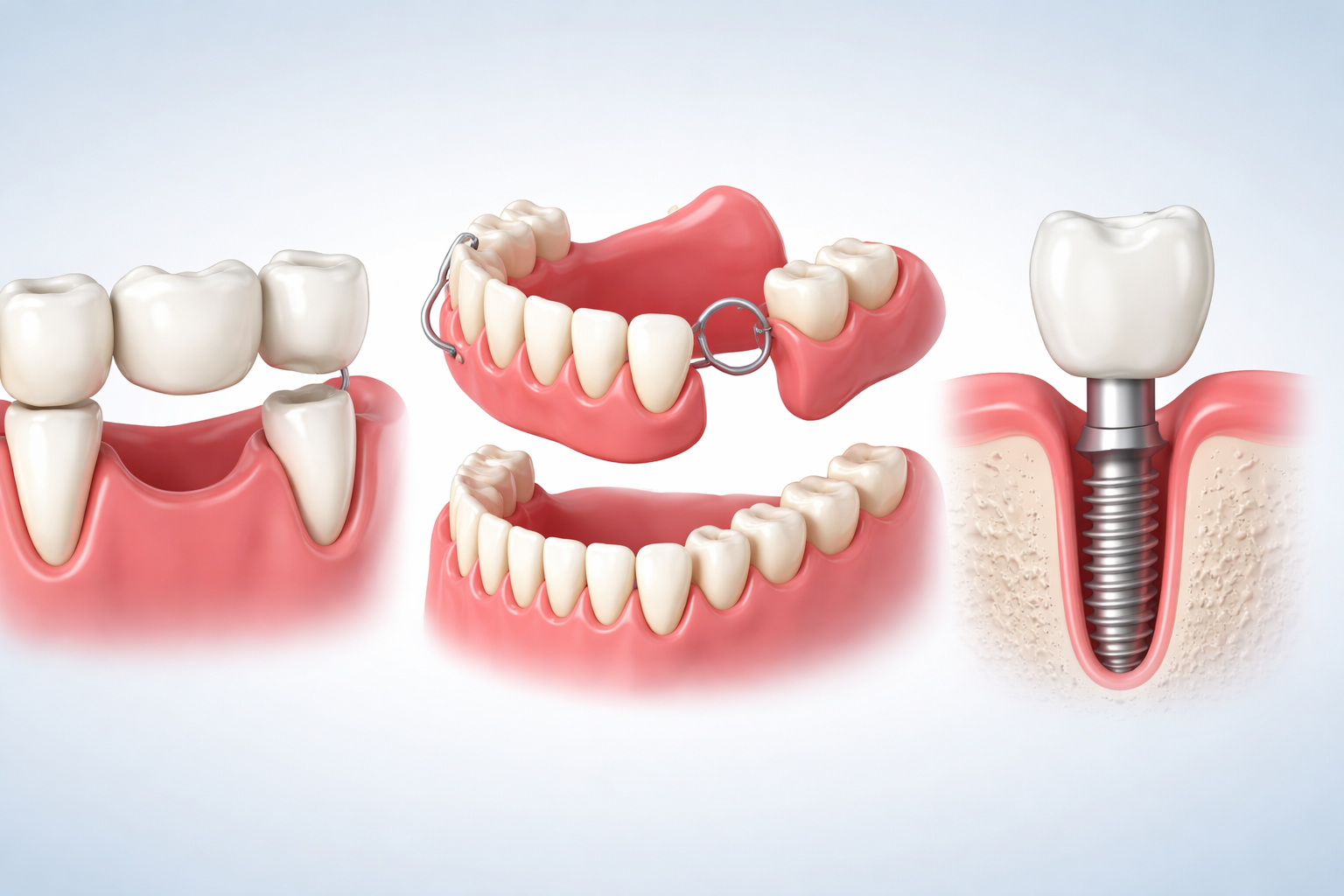
 Missing teeth from decay or injury can affect chewing and confidence. Options like bridges, dentures, implants, or hybrids offer solutions—choose based on comfort, cost, appearance, and your dentist’s advice.




Key Takeaways:
- Missing teeth can result from decay, gum issues, accidents, or genetics.
- Solutions include bridges, dentures, dental implants, and hybrid treatments.
- Dental implants offer a long-lasting, natural-looking option.
- Hybrid approaches combine treatments for better comfort and stability.
- The right choice balances cost, oral health, and appearance with the dentist's guidance.
Losing a tooth can be unsettling. You may notice your smile looks different or that chewing certain foods feels awkward. Sometimes, even speaking can feel strange. The good news? From bridges and dentures to dental implants, modern dental care offers multiple missing teeth treatments.
You just need to decide with your dentist which of these fits your lifestyle, comfort, and budget. Still, choosing the right treatment for missing teeth can feel overwhelming. The key is knowing your options and understanding what works best for you. Here’s a simple guide to help you understand your options.
Why Teeth Sometimes Fall Out
Teeth don’t just disappear for no reason. A number of factors can lead to tooth loss. Understanding why a tooth is missing is important because it helps your dentist recommend a solution that works best for your case. Some of the most common culprits of your falling teeth trouble are as follows:
- Cavities Left Untreated: Cavities can gradually damage a tooth until it can no longer be saved.
- Gum Problems: Gum diseases like periodontitis can weaken the structures that hold teeth in place, making them more likely to loosen or fall out.
- Genetic Factors: Some people are born without certain teeth, which is perfectly normal and nothing to worry about.
- Accidents and Injuries: wounds and injuries can knock teeth out unexpectedly, whether from a fall, sports activity, or even a minor mishap.
- Complications From Dental Treatment: Although rare, a root canal or extraction may result in tooth loss if healing does not go as planned.
Missing Teeth Treatment Options
Here are some of the permanent solutions for missing teeth. Each has its advantages, and the right choice depends on your health, preferences, and lifestyle. Check them out!
- Dental Bridges
Bridges are a traditional treatment that literally “bridges” the gap between two teeth. They anchor to the teeth on either side. It holds the replacement tooth in place. Bridges are fixed, so you don’t have to remove them for cleaning. They can be completed relatively quickly and often look very natural.
There is only one main consideration that the teeth supporting the bridge may need a little adjustment. However, the comfort and natural feel make bridges an excellent choice.
- Dentures
Dentures are removable replacements that can restore one tooth, multiple teeth, or even a full set. They are usually easier to start with and come at a lower upfront cost than implants. It can take a little while to get used to dentures.
At first, eating or speaking may feel slightly different. However, with adjustments and practice, they can become a comfortable and practical solution for everyday life.
- Dental Implants
If you are looking for the best solution for missing teeth, artifical teeth implants are a strong option. An implant is a small post inserted into the jawbone that acts as a replacement root, topped with a natural-looking tooth. They work and feel just like real teeth. With the right maintenance, they help preserve the health of the jawbone and last a long time.
Whether replacing a single tooth, multiple teeth, or even supporting a full mouth restoration, dental implants for missing teeth offer durability and a natural look.
- Combined Treatments
Sometimes, the best solution is a combination. A denture can be supported by a few implants, or a bridge can be paired with an implant for added stability. These hybrid treatments are particularly useful for people missing several teeth or looking for a more permanent and comfortable solution.
Combining these missing teeth treatments can give you the benefits of multiple approaches, creating a natural feel and long-lasting results.
How to Decide What’s Right
Cost and oral health are two important considerations when deciding how to replace missing teeth. Dentures are often more affordable at the start. But dental implants can save money in the long run because they last longer and require less maintenance.
Your dental health matters too. Factors such as gum condition, jawbone strength, and the number of teeth missing also affect which option works best. Implants, for example, preserve bone and do not rely on neighbouring teeth for support, while bridges depend on adjacent teeth to hold the replacement.
Ultimately, the best solution for missing teeth is the one that balances comfort, functionality, and appearance. Talking to a dentist helps ensure you get a plan tailored to your mouth and lifestyle.
To conclude, missing teeth don’t have to affect your confidence or everyday life. Bridges, dentures, dental implants, and hybrid solutions all offer ways to restore your smile. Dentures can be a practical starting point, while implants often provide the most permanent solution. Hybrid options give flexibility and extra comfort for complex cases.
Your dentist can guide you through the choices. They can help you find a permanent solution for missing teeth that fits your needs and feels natural. With the right treatment, your smile can return to its full potential. You can eat, speak, and laugh without worrying about gaps. Yes, you can enjoy the confidence of a healthy, functional, and attractive smile!
Author Bio: Kavya is a Patient Care Manager at Dezy, one of India’s leading dental clinic chains, where she focuses on simplifying complex dental topics and helping patients understand their treatment options, as well as broader health and wellness practices for everyday living. Outside of work, she enjoys crocheting and spending time with her dog, Mimi.





-23-300x250.png)

.jpeg)








.jpg)
.jpg)
.jpg)
.jpg)
.jpg)
.jpg)
.jpg)
.jpg)
.jpg)

