 Wednesday, November 18, 2026
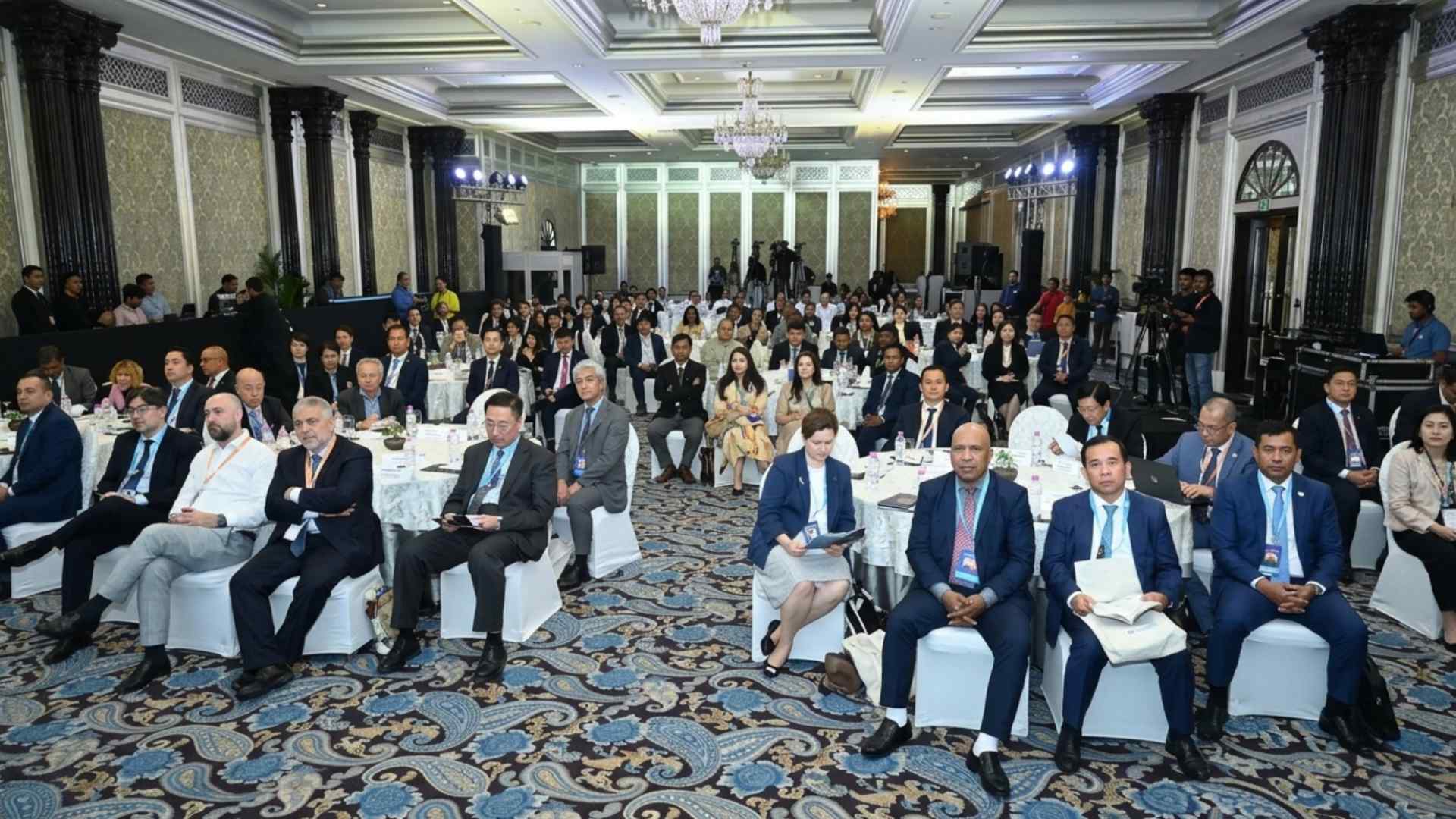
 The Credit Guarantee Fund Trust for Micro and Small Enterprises (CGTMSE) successfully hosted the Global Symposium on Credit Guarantee & 38th Annual Conference of the Asian Credit Supplementation Institution Confederation (ACSIC) in Mumbai during April 23–24, 2026, as part of its Silver Jubilee celebrations.





Mumbai, April 27, 2026: The Credit Guarantee Fund Trust for Micro and Small Enterprises (CGTMSE) successfully hosted the Global Symposium on Credit Guarantee & 38th Annual Conference of the Asian Credit Supplementation Institution Confederation (ACSIC) in Mumbai during April 23–24, 2026, as part of its Silver Jubilee celebrations. The two-day Symposium highlighted the evolving role of credit guarantee systems in fostering inclusive growth, strengthening financial ecosystems and enabling resilient Micro and Small Enterprises (MSEs).
The Symposium brought together a distinguished global gathering with participation from over 19 countries and 26 leading organisations, including policymakers, credit guarantee institutions, financial sector leaders and international experts, reinforcing the importance of global cooperation and knowledge exchange in advancing credit guarantee frameworks.
The event was inaugurated by Shri Manoj Mittal, Chairman, CGTMSE & CMD, SIDBI, who delivered the Special Address, highlighting the strategic importance of credit guarantee mechanisms in catalysing credit flow to underserved segments. Shri Manish Sinha, CEO, CGTMSE, delivered the Welcome Address, setting the context for the Symposium as a platform for global dialogue, innovation, and collaboration.
Delivering the Keynote Address, Dr. Rajneesh, IAS, Additional Secretary & Development Commissioner, Ministry of MSME, Government of India, emphasized the Government’s continued commitment to strengthening the MSME ecosystem through progressive reforms, improved ease of doing business, and enhanced financial inclusion. He highlighted the critical role of credit guarantee frameworks in addressing the persistent challenge of collateral constraints and enabling broader access to formal finance.
Over the two days, the Symposium featured a series of high-impact panel discussions, presentations and knowledge sessions covering key thematic areas including global perspectives and cross-border cooperation, risk management and sustainability, green financing, ESG integration, financial inclusion, and support for women-led and underserved entrepreneurs. The deliberations reflected a strong alignment between policy priorities and institutional efforts in building robust and future-ready credit guarantee ecosystems.
The discussions also explored emerging dimensions such as digital transformation, data-driven and AI-enabled credit guarantee models, and the evolving role of guarantee institutions in supporting government schemes and navigating global economic uncertainties. These sessions highlighted the need for innovation, adaptability and stronger institutional frameworks to meet the changing demands of the MSME sector.
The Symposium concluded with key highlights and closing remarks reaffirming the shared commitment of stakeholders towards strengthening credit guarantee systems globally. CGTMSE reiterated its pivotal role in enabling collateral-free credit at scale and its continued focus on supporting inclusive entrepreneurship, while aligning closely with national priorities and government policies.
By bringing credit guarantee institutions across the globe on a common platform, the Symposium reinforced India’s leadership in advancing dialogue and cooperation in the credit guarantee domain and marked an important milestone in CGTMSE’s journey of strengthening access to finance for MSEs.





-23-300x250.png)





















