Tuesday, October 27, 2026
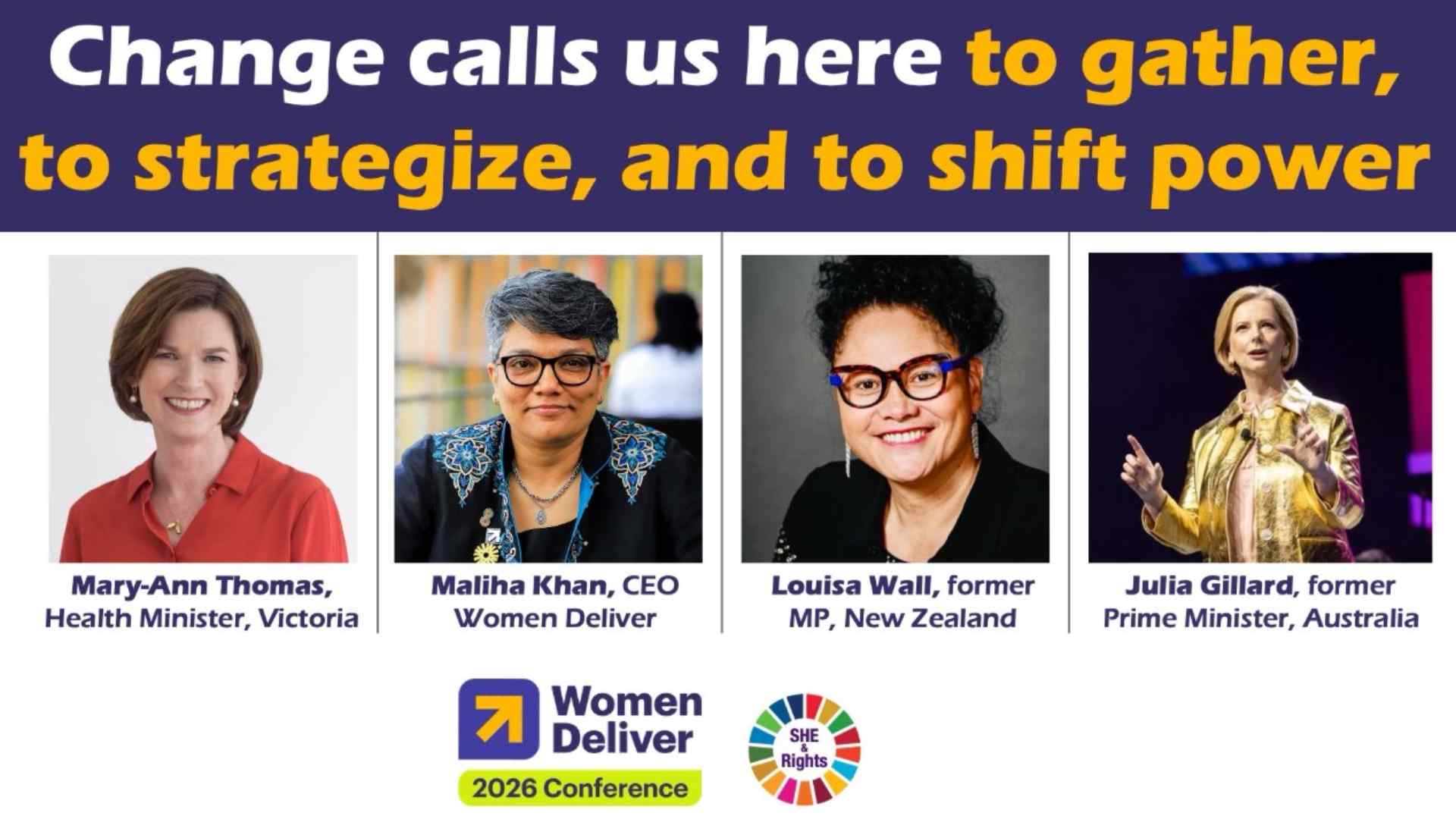
 "Change calls us here to gather, strategise and shift power," so says the theme of Women Deliver Conference 2026, which is purported to be the world's largest global gathering on gender equality and the rights and health of girls, women, and gender diverse peoples this year.




"Change calls us here to gather, strategise and shift power," so says the theme of Women Deliver Conference 2026, which is purported to be the world's largest global gathering on gender equality and the rights and health of girls, women, and gender diverse peoples this year.
Since its inception in 2007, it is for the first time that the Women Deliver Conference will be held in the Oceania or Pacific region on the unceded lands of the Wurundjeri Woi Wurrung Peoples of the Kulin Nation, in Narrm (Melbourne)- the capital city of the state of Victoria in Australia.
"Change" is calling over 6500 participants (including advocates, policymakers, and feminist leaders) from 185 countries to Women Deliver Conference 2026 amidst rising global conflicts, climate crisis, spread of disinformation and the global backlash by conservative groups against human rights, targeting the human rights of women, girls, indigenous First Nations peoples, and peoples with diverse gender identities. The conference aims to focus on regional leadership and intersectional feminist approaches to driving change.
Power belongs to the people
For Louisa Wall, Oceanic Pacific Mobilisation Advisor, Women Deliver Conference 2026, this regional hosting model marks a profound shift in global representation, signalling the fundamental principle that power belongs to the people, and not to distant institutions. It is a recognition that Pacific women, indigenous and First Nations women, must be central to shaping and guiding solutions that are centred on self-determination, and lived experiences and are accountable to those affected.
Louisa Wall is a First Nations tribal representative, former Member of Parliament of Aotearoa New Zealand, a human rights advocate, and former athlete with over two decades of experience advancing social justice, gender equality, and LGBTQIA+ rights across Aotearoa and the Pacific.
She insists that women's leadership and First Nations leadership must be central to addressing regional and global challenges.
"Our region is on the forefront of climate change- cyclones, rising seas, and the erosion of lands and livelihoods. Pacific women also face high rates of gender-based violence and historically low political representation. Women Deliver Conference 2026 will elevate these regional feminist priorities of climate and gender justice."
It is interesting to note that Australia ranks 13 (out of 148 countries) in the global gender gap index. 44% of its Cabinet members are women. Mary-Ann Thomas, Minister for Health, Women, and Ambulance Services for the state of Victoria, shares that Victoria's Gender Equality Strategy and Action Plan that was launched in 2023 has implemented gender responsive budgeting by guiding investment in workforce and education initiatives - that enable girls and women to thrive - with the goal to deliver a safe and equal society where everyone has the opportunity to realise their full potential.
Victoria is also the first state in Australia to address period poverty by ensuring that access to pads and tampons is freely available for women and girls and gender diverse people in its schools and higher education institutes, public libraries, hospitals and railway stations.
In all states of Australia, abortion care is destigmatised and it is part of the mainstream health services with easy access to both medical and surgical abortion services. All jurisdictions have laws prohibiting anti-abortion protesters from using verbal abuse, threats, and impeding entry outside abortion clinics. Also, no parental consent is required from a minor seeking abortion services.
Victoria is also the first state in Australia to pass the Statewide Treaty Act 2025, enabling a formal Treaty with First Peoples. The agreement establishes a permanent First Peoples' Representative Body known as Gellung Warl and sets the framework for future local treaties with Traditional Owners.
We are living in difficult times
Julia Gillard, former Prime Minister of Australia (and first female PM of Australia) and the Women Deliver Ambassador, rightly laments that we are living in a world that is beset with wars and conflicts, challenged by climate change, with many nations - including those in the Pacific region - facing the brunt of climate change much more than others.
There is also a thriving global economy, which is largely stagnant in terms of growth.
Australia's former PM Julia firmly believes that: "The current economic model is resulting in very unequal outcomes - there is growing poverty, while some continue to amass unimaginable amounts of wealth. And all of that is on top of a historic pattern of wrongs and exploitation, which means many nations bear the burden of being disproportionately exploited to enrich other nations at their cost."
Another challenge Julia mentions is an 'anti-rights' and 'anti-gender' brand of politics, that is being used in many parts of the world to seek popular appeal. Also attitudes to gender equality in many countries are going backwards, particularly amongst young men. So the challenges to women's rights are being fought in many ways around the world.
We want justice
According to Dr Maliha Khan, CEO of Women Deliver, the present system that was created after the two World Wars was supposed to bring peace to the world, and bring prosperity to countries that were newly emerging from colonialism. However, that has not happened.
Maliha insists that it is high time to reimagine a new system and to remember that the states are under international obligations to meet the rights that every person has in their own personhood - be they girls, women, or gender diverse peoples.
“We want to redefine accountability. We want to have a better resourced and more locally driven, nationally centred movement, and an ecosystem that really centres around those who are most marginalised, and those who can actually bring about the change the most within this system. It is about restructuring our resources and responsibilities so that we can deliver - not just development - but justice, because these are the rights of each individual," said Maliha.
The way forward
Julia is happy to note how Women Deliver has grown and changed from its initial inception in 2007 - from a conference centred around the vital issue of maternal mortality to the current epic scale, which is about every woman and every girl to have the ability to control their own bodies, and to be the architects of their own lives.
"To realise that broad vision, our response must be collective, coordinated, and grounded in protecting rights. We need to come together, to think through the challenges that we face, and come up with new strategies to campaign afresh to mobilise community support and find new ways of making an impact - a new narrative that can unlock waves of public support (globally and locally), for gender equality, which will build a better world for everyone," said Julia.
Louisa insists that power belongs to the people, and not to distant institutions. For Louisa, women’s leadership must not be an afterthought. It must be central to solutions at every level.
She is hopeful that “Women Deliver Conference 2026 provides a historic opportunity to move power where it belongs - into the hands of communities, women, and indigenous peoples. It is a time to shift from global conversations that often remain abstract, to locally lead solutions that reflect live realities, cultural wisdom, and resilience."
We have to collaborate and support one another to demand justice, and to deliver meaningful change for women, girls, and communities across the globe.





-23-300x250.png)

.jpeg)






.jpg)
.jpg)
.jpg)
.jpg)
.jpg)
.jpg)
.jpg)
.jpg)
.jpg)