 Monday, October 12, 2026
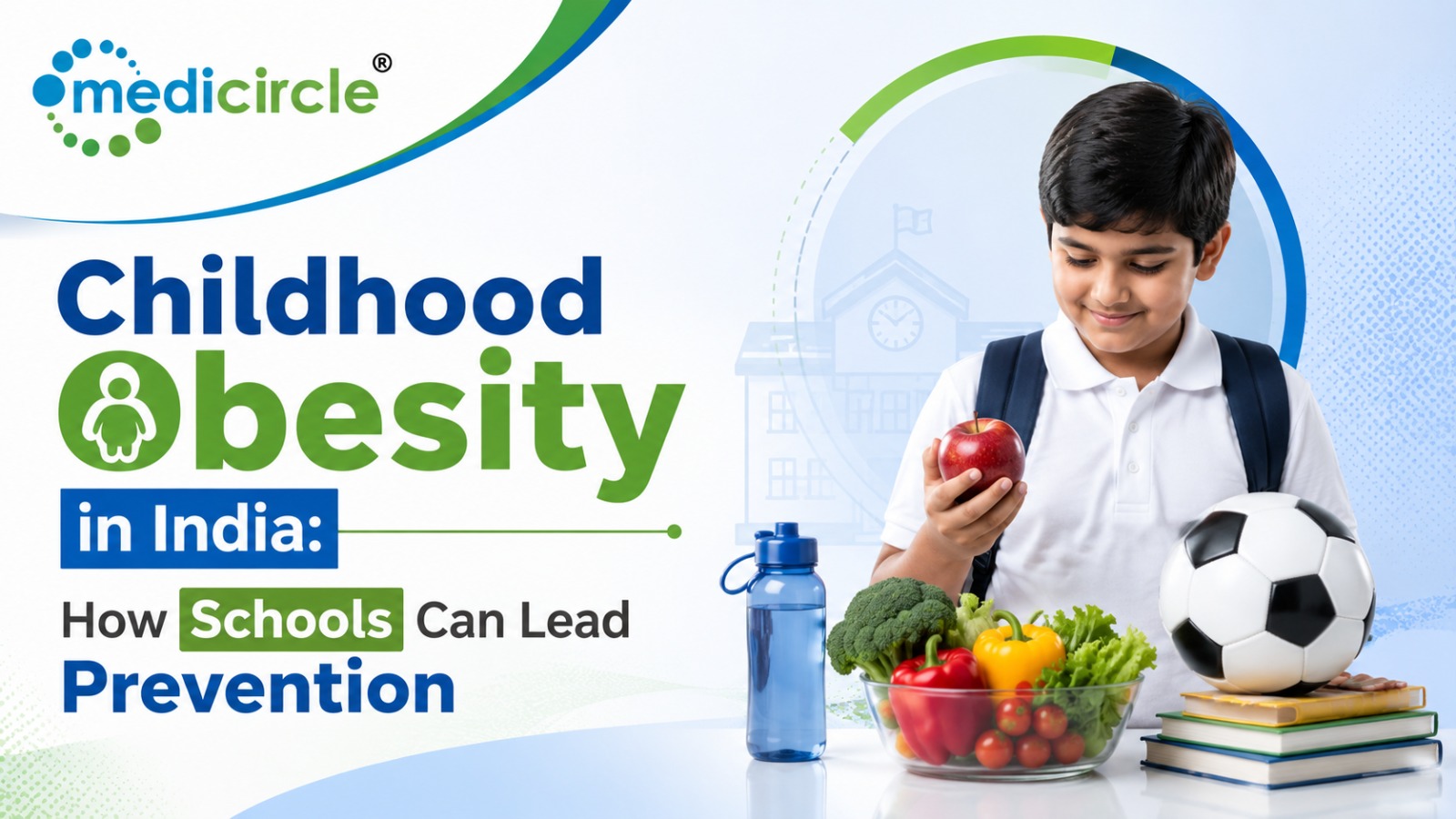
 Childhood obesity is rising rapidly in India, affecting millions of school-age children. Schools, through nutrition education, physical activity, and health screening, represent the most effective prevention frontline available.





Introduction
India is facing a public health challenge that is quietly unfolding inside its classrooms, school canteens, and playgrounds. Childhood obesity, once largely associated with wealthy Western nations, has firmly established itself as a growing crisis across Indian cities, towns, and increasingly, semi-urban areas. The numbers are alarming, the trajectory is worsening, and the window for intervention is narrowing with each passing year.
According to data cited by leading researchers and public health bodies, India has the second-highest number of obese children in the world, trailing only China. Approximately 14.4 million children in India are classified as overweight or obese, and projections suggest this figure will rise sharply unless systemic action is taken. What makes this crisis particularly pressing is that it is no longer restricted to affluent families in metropolitan cities. Rising incomes, changing food environments, digital entertainment, and declining physical activity are creating conditions for obesity across socioeconomic groups.
The school environment, where children spend the most structured and consistent hours of their formative years, has emerged as the most promising frontline for prevention. This is not a coincidence. It is a recognition that families alone cannot carry the burden of reversing a trend shaped by food systems, urban design, screen culture, and social norms. Schools, with their reach, routine, and authority, are uniquely positioned to act.
Understanding the Scope of Childhood Obesity in India
Childhood obesity is defined as a body mass index at or above the 95th percentile for age and sex among children and adolescents. In India, the prevalence of overweight and obesity among school-age children varies significantly by geography, with urban areas consistently showing higher rates than rural counterparts.
Research published in peer-reviewed journals and data from the Indian Council of Medical Research (ICMR) indicate that in certain urban pockets, as many as one in five school-going children is overweight. Private schools in Tier 1 cities report higher prevalence compared to government schools, largely owing to dietary patterns associated with higher household incomes and more sedentary after-school routines.
The condition carries consequences far beyond physical appearance. Obese children are significantly more likely to remain obese as adults, and they carry elevated risks of developing type 2 diabetes, hypertension, cardiovascular disease, sleep apnea, orthopedic complications, and non-alcoholic fatty liver disease before they even reach adulthood. Psychological consequences are equally serious. Studies consistently link childhood obesity with low self-esteem, poor body image, social withdrawal, anxiety, and depression.
Primary Causes and Risk Factors in the Indian Context
The causes of childhood obesity in India are layered and deeply contextual. No single factor explains the rise. Instead, it is a convergence of dietary shifts, lifestyle changes, environmental pressures, and systemic gaps.
Dietary Transformation
India's food environment has changed dramatically over the past two decades. Ultra-processed foods, high in refined carbohydrates, trans fats, salt, and sugar, are now widely accessible and aggressively marketed. Packaged snacks, sugary beverages, instant noodles, and fast food chains have become part of everyday life for urban Indian children. The marketing of these products specifically targets children through television, social media, and school-adjacent retail spaces.
Traditional Indian diets, which were naturally rich in fiber, complex carbohydrates, and fresh vegetables, are being displaced, particularly in cities, by convenience-driven food choices. Even within school canteens and tuck shops, nutritionally poor options frequently dominate.
Physical Inactivity and Screen Time
The reduction in physical activity among Indian children is stark. Academic pressure, exam-oriented curricula, long school hours, and heavy homework loads leave little time or energy for physical play. Compounding this, the widespread availability of smartphones, tablets, and streaming platforms has created a generation of children whose leisure time is overwhelmingly sedentary.
Urban planning presents its own challenge. Dense residential neighborhoods with limited open spaces, unsafe streets, and the absence of parks mean that even children who want to be physically active have fewer safe opportunities to do so.
Genetic and Socioeconomic Factors
South Asians, including Indians, are known to have a higher metabolic risk at lower BMI thresholds compared to Western populations. This means Indian children accumulate health risks at body fat levels that might appear moderate by global standards. Genetic predispositions, combined with environmental triggers, accelerate the development of obesity-related complications.
Socioeconomic factors play a dual role. In higher-income families, calorie excess, screen time, and reduced physical labor create conditions for obesity. In lower-income families, paradoxically, access to cheap, energy-dense but nutritionally poor foods alongside reduced access to healthcare creates a different but equally concerning pathway.
Recognizing the Symptoms and Early Warning Signs
Early recognition of childhood obesity allows for timely intervention before serious health complications develop. Parents, teachers, and school health workers should be alert to the following indicators:
- Rapid or excessive weight gain relative to height and age
- Visible accumulation of fat around the abdomen, chest, or thighs
- Fatigue, breathlessness, or reduced stamina during physical activity
- Snoring or disturbed sleep, which may indicate sleep apnea
- Emotional withdrawal, reluctance to participate in group activities, or signs of bullying
- Early puberty signs, particularly in girls, which can be associated with obesity
- Joint pain or flat feet in children, which may result from excess body weight
Schools are in a strong position to identify these warning signs early, especially through routine health check-ups and physical education observations. A trained and empathetic school environment can be the first system to flag concern and guide families toward appropriate medical evaluation.
Diagnosis and Medical Evaluation
Diagnosing childhood obesity involves more than a visual assessment. Pediatricians use age- and sex-specific BMI charts to determine whether a child falls within the overweight or obese category. In India, revised cutoff points developed specifically for Indian children are increasingly recommended, given the documented differences in body composition between South Asian and Western populations.
A thorough medical evaluation for an obese child typically includes:
- Detailed dietary and physical activity history
- Family history of obesity, diabetes, or cardiovascular disease
- Blood tests including fasting glucose, insulin levels, lipid profile, liver enzymes, and thyroid function
- Blood pressure measurement
- Screening for signs of insulin resistance or polycystic ovarian syndrome in adolescent girls
Pediatric endocrinologists, dietitians, and child psychologists often work together in managing childhood obesity, recognizing that the condition has biological, behavioral, and emotional dimensions that require coordinated care. Platforms like Medicircle play an important role in helping families understand these diagnostic pathways and connect with the right specialists through credible healthcare information.
Why Schools Are the New Prevention Frontline
The school environment offers something that no other setting can replicate: consistent, daily, structured contact with children across their most critical developmental years. This makes schools not merely participants in prevention but, arguably, the most powerful lever available.
Nutrition Education and Food Literacy
Children who understand how food affects their bodies are better equipped to make healthier choices. Schools can integrate age-appropriate nutrition education into their curricula, moving beyond general awareness to practical food literacy. Teaching children to read food labels, understand portion sizes, distinguish between processed and whole foods, and appreciate traditional Indian dietary wisdom gives them tools they carry into adulthood.
FSSAI's Eat Right India campaign has recognized this opportunity and has been actively working with schools to promote healthier food environments. Canteen guidelines that limit the sale of high-sugar, high-fat products and encourage fruits, legumes, and unprocessed snacks can quietly but powerfully shift what children consume daily.
Daily Physical Activity as a Non-Negotiable
The Central Board of Secondary Education (CBSE) and several state boards have guidelines recommending physical education as a core subject. However, implementation remains inconsistent. Many schools, particularly those under academic pressure, allow physical education periods to be absorbed by examination preparation.
Reversing this requires a cultural shift in how schools, parents, and policymakers value physical activity. Daily structured movement, whether through sports, yoga, dance, or simple aerobic exercises, has documented benefits not only for weight management but also for academic performance, concentration, and emotional regulation.
Health Screening and BMI Monitoring
Routine school health check-ups that include height, weight, and BMI tracking allow early identification of children at risk. When done sensitively and without stigma, these screenings create opportunities for early intervention. Schools can connect at-risk children and their families with dietitians, pediatricians, or community health programs before the condition progresses.
The Ayushman Bharat Health and Wellness Centres framework, which includes school health components under the Rashtriya Bal Swasthya Karyakram (RBSK), provides a structural foundation for integrating such screenings at scale.
Mental Health and Anti-Stigma Environments
Obesity in children is frequently accompanied by bullying, social exclusion, and significant psychological distress. Schools that actively cultivate cultures of inclusion, body respect, and mental health awareness reduce the stigma that often prevents obese children from seeking help or participating in physical activities.
Counselors, trained teachers, and peer support programs can collectively create an environment where a child's health is addressed with compassion rather than shame.
Prevention and Proactive Health Measures
Preventing childhood obesity in India requires action at three levels simultaneously: the family, the school, and the policy environment.
At the family level, parents play a central role in shaping food habits, screen time norms, and physical activity routines. Simple, sustained habits such as cooking at home more often, limiting sugary beverages, keeping consistent meal times, and engaging in outdoor activities together create a protective environment.
At the school level, the interventions described above, including nutrition education, daily physical activity, health screenings, and mental health support, form a coherent prevention framework that complements family efforts.
At the policy level, India has several programs that directly or indirectly address childhood obesity:
- The Fit India Movement, launched to promote physical fitness as a national priority
- Poshan Abhiyaan, which addresses nutritional deficiencies and quality across age groups
- FSSAI's Eat Right India initiative, which includes school food environment guidelines
- The Mid-Day Meal Scheme, which provides a critical nutrition touchpoint for millions of government school children
Strengthening these programs, ensuring their consistent implementation, and building accountability mechanisms will determine whether India is able to arrest the trajectory of this epidemic.
Conclusion
Childhood obesity is not a problem that will resolve itself, and it is not a problem that any single family, doctor, or government department can solve alone. It is a systems problem, and it demands a systems response. Schools sit at the center of that system. They reach every child, every day, during the years when habits, values, and health trajectories are being formed.
India has the knowledge, the policy infrastructure, and the community resources to make schools genuine prevention frontlines. What is needed now is the will to prioritize child health as seriously as academic achievement, and to recognize that the two are not in competition. A healthier child is a more engaged, more resilient, and ultimately more successful student. The classroom of the future must be one where physical well-being is not an afterthought but a foundation.
Q1: What is the current rate of childhood obesity in India?
Studies estimate that approximately 14.4 million children in India are overweight or obese, with urban areas showing significantly higher prevalence. India holds the second-highest number of obese children globally, according to public health research.
Q2: What causes childhood obesity in Indian children?
Key causes include shifting dietary habits toward ultra-processed foods, sedentary screen-based lifestyles, reduced physical activity in schools, academic pressure that limits outdoor play, genetic predispositions specific to South Asians, and wider food environment changes.
Q3: How can schools help prevent childhood obesity in India?
Schools can integrate nutrition literacy into curricula, mandate daily physical education, set healthier canteen standards, conduct routine BMI screenings, and build anti-stigma environments that support children's physical and mental well-being.
Q4: What are the long-term health risks of childhood obesity?
Obese children face significantly elevated risks of type 2 diabetes, cardiovascular disease, hypertension, non-alcoholic fatty liver disease, sleep disorders, orthopedic problems, and serious psychological conditions including depression and chronic low self-esteem.
Q5: Are there government programs in India addressing childhood obesity?
Yes. The Fit India Movement, Poshan Abhiyaan, FSSAI's Eat Right India campaign, Rashtriya Bal Swasthya Karyakram, and the Mid-Day Meal Scheme all contribute to improving child nutrition and physical fitness across India.
RESOURCES
- Indian Council of Medical Research (ICMR): Research publications and guidelines on nutrition, obesity, and child health in India
- World Health Organization (WHO) India Country Office: Global and India-specific data on childhood obesity, physical activity, and prevention frameworks
- Food Safety and Standards Authority of India (FSSAI): Eat Right India initiative resources and school food environment guidelines
- Ministry of Health and Family Welfare, Government of India: Rashtriya Bal Swasthya Karyakram program details and school health frameworks
- NITI Aayog: Policy reports on nutrition, public health outcomes, and child welfare in India
INTERLINKING KEYWORDS
childhood obesity India, school health programs India, BMI monitoring children, Fit India Movement, FSSAI Eat Right India, pediatric nutrition India, childhood diabetes risk, physical education in schools, Poshan Abhiyaan, Ayushman Bharat school health
Last reviewed by:
Medicircle Editorial and Healthcare Advisory Team on August 29, 2026
Medical Disclaimer:
This article is intended for informational and educational purposes only. It does not constitute medical advice, diagnosis, or treatment. Parents and caregivers concerned about a child's weight or health should consult a qualified pediatrician or healthcare professional for personalized guidance.






.jpeg)










.jpg)
.jpg)
.jpg)
.jpg)
.jpg)
.jpg)


.jpg)