Tuesday, October 27, 2026
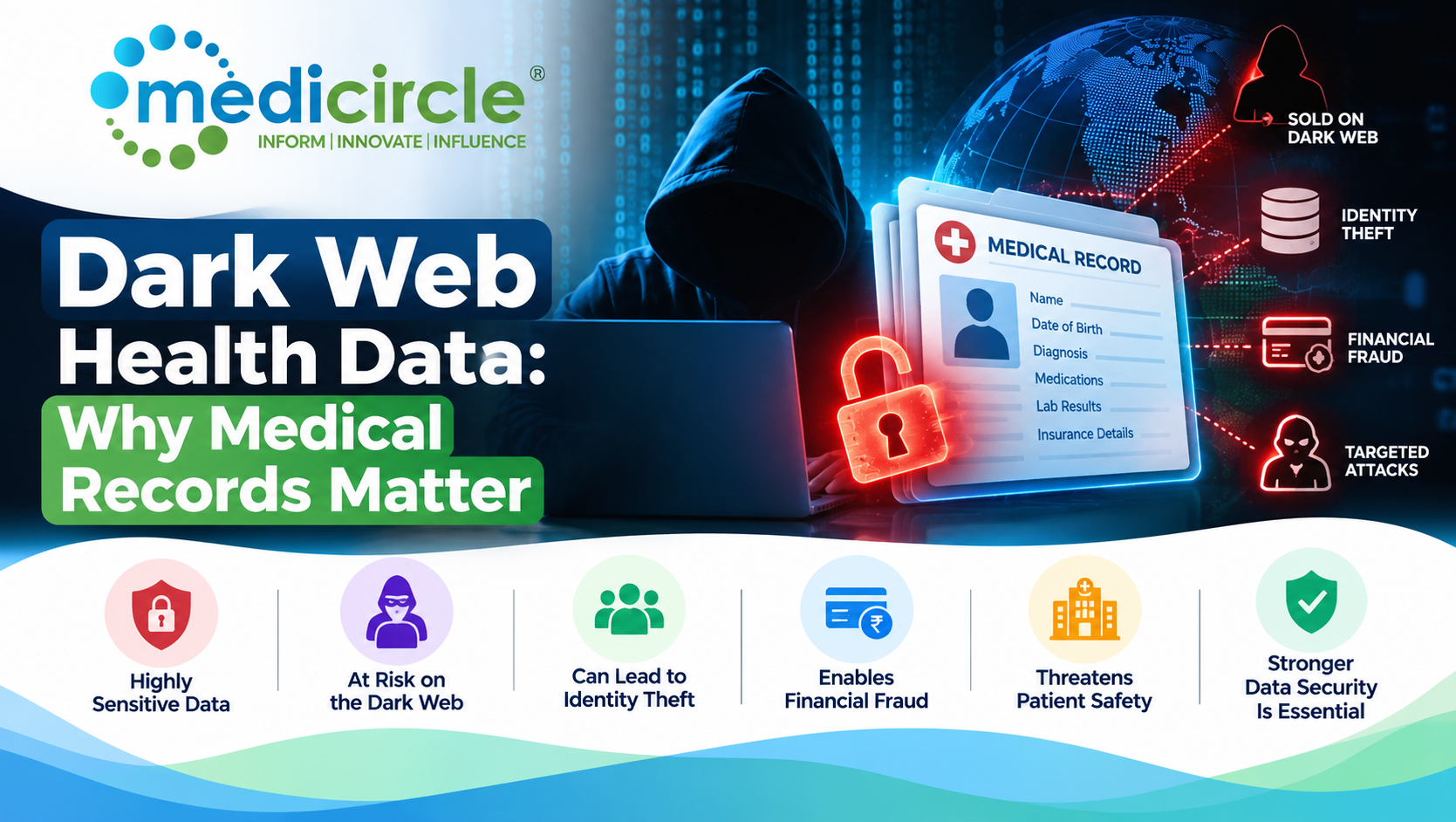
 Medical records command high prices on the dark web due to their permanent, multi-layered value. This article examines the risks facing Indian patients and healthcare organizations, alongside practical protective measures.





Introduction
Every time a patient walks into a hospital, fills out a registration form, or consults a doctor through a digital health platform, a detailed record is created. That record contains a name, an age, a diagnosis, a prescription, sometimes a bank or insurance detail, and much more. For healthcare providers, this information is clinical. For cybercriminals operating on the dark web, it is currency.
Medical records have quietly become one of the most sought-after commodities in global cybercrime markets, and India is far from immune. With the rapid expansion of digital health infrastructure under the Ayushman Bharat Digital Mission (ABDM), the growing adoption of electronic health records across public and private hospitals, and the rising use of healthtech platforms and telemedicine apps, the volume of sensitive health data being generated in India is at an all-time high. The security systems protecting that data, unfortunately, have not always kept pace.
This article explains why health data is so valuable to criminals, what makes it different from other stolen data, how Indian patients and healthcare organizations are affected, and what practical steps can reduce the risk.
Understanding What Makes Medical Records So Valuable
A stolen credit card number might be worth one or two dollars on an illegal marketplace. A medical record, by contrast, can fetch anywhere from ten to a thousand dollars depending on how complete and verifiable it is. The difference comes down to the richness and permanence of health data.
A medical record typically includes a patient's full legal name, date of birth, contact information, national identification numbers, insurance or Ayushman Bharat health account details, diagnostic history, prescription records, and sometimes financial information linked to billing. Unlike a compromised password, which a user can change within minutes, none of this information can be easily altered. A person cannot change their date of birth, their blood type, or their history of surgery.
This permanence is precisely what makes health data so appealing. Criminals use stolen medical records for:
- Medical identity theft, in which someone fraudulently uses another person's health credentials to access medical services, medicines, or insurance claims
- Targeted phishing and social engineering attacks, where detailed personal and clinical knowledge makes scam messages appear highly credible
- Financial fraud, particularly when billing information, government health scheme IDs, or insurance policy numbers are included
- Blackmail and extortion, especially when records contain sensitive diagnoses related to mental health, reproductive health, HIV status, or substance use disorders
The combination of personal, financial, clinical, and sometimes deeply private information in a single file creates what security professionals call a "fullz" record. In the cybercrime world, this completeness has extraordinary monetary value.
The Indian Healthcare Cybersecurity Landscape
India's healthcare sector has undergone a significant digital transformation over the past decade. The government's push toward a unified digital health ecosystem through ABDM and the Ayushman Bharat Health Account (ABHA) system has created a centralizing momentum that is largely positive for healthcare delivery. However, it also concentrates large volumes of sensitive data in interconnected systems that, if inadequately protected, become high-value targets.
Several high-profile data incidents in the Indian healthcare space have already raised alarms. Reports of patient databases from Indian hospitals and diagnostic chains appearing on dark web forums have surfaced repeatedly in recent years, often involving millions of records at a time. In many cases, the affected organizations were unaware of the breach for weeks or months.
The vulnerabilities that enable these breaches often share common characteristics:
- Legacy IT infrastructure in public hospitals with outdated software and minimal cybersecurity investment
- Inadequate staff training on phishing attacks, which remain the most common entry point for ransomware in healthcare settings
- Third-party vendor access to hospital systems, including lab software providers, billing platforms, and insurance portals, without adequate oversight
- Insufficient encryption of stored patient records and data transmitted between departments or facilities
- Absence of dedicated cybersecurity teams in small and mid-sized private healthcare facilities
India currently does not have a sector-specific healthcare data protection law equivalent to the HIPAA legislation in the United States. The Digital Personal Data Protection Act 2023 (DPDPA) is a significant step forward, establishing responsibilities for data fiduciaries including healthcare organizations, but full implementation and enforcement remain works in progress. Until robust compliance becomes standard, the structural vulnerabilities in Indian health data systems will continue to be exploited.
How Patient Data Moves from Hospitals to the Dark Web
Understanding the pathway from a hospital server to a dark web marketplace helps illustrate why this problem is difficult to solve quickly.
A cyberattack on a healthcare organization typically begins with a phishing email sent to a hospital employee. The email may appear to come from a government health authority, a medical supply vendor, or even the hospital's own IT department. When the employee clicks a malicious link or downloads an infected attachment, malware installs itself on the hospital network. This malware may operate silently for weeks, harvesting data from patient management systems, electronic health records, billing software, and connected diagnostic equipment.
Once a sufficient volume of data is collected, it is extracted and listed on dark web forums and marketplaces, which operate on anonymizing networks and accept payments exclusively in cryptocurrency. Buyers on these platforms may be fraudsters seeking to claim insurance benefits under stolen identities, organized criminal groups targeting specific high-profile individuals, or smaller operators looking to conduct phishing campaigns on a large scale.
In India, the additional layer of complexity comes from the integration of health scheme data. Records that include an ABHA ID linked to Ayushman Bharat coverage, for instance, can potentially be exploited to make fraudulent claims for hospitalization or treatment reimbursements, which represents a direct financial loss to both the insured individual and the public healthcare system.
Ransomware: The Parallel Threat
While data theft for sale on the dark web is a serious problem, ransomware represents an equally devastating and more immediate cybersecurity threat to Indian healthcare. In a ransomware attack, criminals do not merely steal data. They encrypt it, lock out the hospital's own staff, and demand payment to restore access.
Hospitals are particularly vulnerable to ransomware because of their operational urgency. When patient records, scheduling systems, and diagnostic software are locked, the pressure to pay and restore access quickly is enormous. This makes healthcare organizations more likely to comply with ransom demands than businesses in most other sectors.
Several Indian hospitals have reportedly faced ransomware incidents, though public disclosure remains inconsistent. The true scale of the problem is likely significantly underreported, partly due to reputational concerns and partly because India currently has limited mandatory breach notification requirements for healthcare entities.
What Indian Patients Should Know and Do
The patient's role in health data protection is often underestimated. While the primary responsibility for securing data lies with healthcare providers and the government, individual awareness can meaningfully reduce personal risk.
Patients should be cautious about sharing more personal information than is clinically necessary, particularly on platforms they are unfamiliar with. Before registering on a digital health app or telemedicine platform, it is worth checking whether the platform has a clear and accessible privacy policy, whether it is registered with relevant regulatory bodies, and how it stores and shares personal health information.
If a patient receives an unexpected call or message claiming to be from a hospital, insurance company, or government health authority and asking for confirmation of health scheme details, diagnosis information, or bank account numbers, this should be treated with suspicion. Medical identity theft often begins with a phone or SMS-based social engineering attempt using details the criminal already obtained from a data breach.
Patients who suspect their health data may have been compromised should:
- Immediately report the matter to the relevant hospital or health platform
- File a complaint with the National Cyber Crime Reporting Portal at cybercrime.gov.in
- Inform their insurance provider if they hold health insurance, to flag any fraudulent claims
The Responsibility of Healthcare Organizations
Hospitals, diagnostic chains, telemedicine platforms, and healthtech companies operating in India have both a legal and an ethical obligation to protect the patient data entrusted to them. The DPDPA 2023 creates a framework for this responsibility, but compliance cannot be treated as a checkbox exercise.
Meaningful data protection in healthcare requires investment in encrypted databases, regular security audits, staff training on social engineering and phishing threats, clearly defined access controls that limit which personnel can view sensitive records, and a tested incident response plan that includes breach notification procedures.
Platforms like Medicircle, which play a role in healthcare communication and awareness, have a part to play in raising the level of public and professional understanding about these risks. When healthcare media, patient advocacy organizations, and industry bodies collectively normalize conversations about cybersecurity, the entire ecosystem benefits.
Conclusion
Medical records are not merely administrative documents. They are deeply personal, clinically sensitive, and financially significant records that, in the wrong hands, can cause serious harm to individuals and to the broader healthcare system. The dark web trade in stolen health data is real, it is growing, and it affects countries like India with expanding digital health ecosystems in ways that are not yet fully understood or addressed.
The solution requires coordinated action: stronger cybersecurity investment from healthcare providers, clearer and more enforceable data protection regulations, greater patient awareness, and a cultural shift in the healthcare sector that treats data security as a clinical and ethical priority rather than an IT afterthought. The stakes are high. A patient's health data is not just information. It is their identity, their privacy, and in some cases, their safety.
Frequently Asked Questions
Q1: Why are medical records more valuable than credit card data on the dark web?
Medical records contain a comprehensive combination of personal, financial, clinical, and identity information that cannot be changed or cancelled, unlike a credit card number. This permanence and richness make them far more valuable to cybercriminals for fraud, identity theft, and extortion purposes.
Q2: Has India experienced major healthcare data breaches?
Yes. Multiple reports over recent years have documented Indian hospital and diagnostic chain databases appearing on dark web forums, often involving millions of patient records. The full scale of the problem is believed to be underreported due to the absence of mandatory breach disclosure requirements.
Q3: What is medical identity theft and how does it harm patients in India?
Medical identity theft occurs when a criminal uses another person's health credentials to access medical services, prescription medicines, or insurance scheme benefits. In India, this can include fraudulent claims under Ayushman Bharat, which results in financial harm to the patient and misuse of public health funds.
Q4: What law protects patient health data in India?
The Digital Personal Data Protection Act 2023 (DPDPA) is India's primary personal data protection legislation and applies to healthcare organizations as data fiduciaries. However, India does not yet have a dedicated healthcare-specific data protection law equivalent to HIPAA in the United States.
Q5: What should a patient do if they suspect their health data has been stolen?
Patients should immediately contact the concerned hospital or health platform, file a complaint at the National Cyber Crime Reporting Portal (cybercrime.gov.in), and notify their health insurer to prevent fraudulent claims from being processed under their policy.
Resources
- Ministry of Electronics and Information Technology (MeitY): Official source for the Digital Personal Data Protection Act 2023 and related data governance policies in India.
- National Health Authority (NHA): Governing body for Ayushman Bharat Digital Mission and ABHA health account security guidelines.
- Indian Computer Emergency Response Team (CERT-In): National nodal agency for cybersecurity incidents, including healthcare sector threats and breach reporting guidelines.
- National Cyber Crime Reporting Portal: Government platform at cybercrime.gov.in for reporting cybercrime, including medical identity theft and data breach incidents.
- World Health Organization (WHO) India: Country office resources on digital health governance, patient data rights, and health information security frameworks.
Interlinking Keywords
healthcare cybersecurity India, medical identity theft, dark web data breach, patient data protection, ABDM digital health security, health data privacy India, ransomware hospitals India, DPDPA healthcare, Ayushman Bharat fraud, electronic health records security
Last reviewed by:
Dr. Manthan Tripathi, Medicircle Editorial and Medical Advisory Team on 26, October 2026.
Disclaimer
This article is intended for general awareness and informational purposes only. It does not constitute medical, legal, or cybersecurity advice. Readers are advised to consult qualified professionals for guidance specific to their clinical, legal, or data security requirements. Medicircle does not endorse any specific product, service, or organization mentioned in this article.





-23-300x250.png)