 Wednesday, November 18, 2026
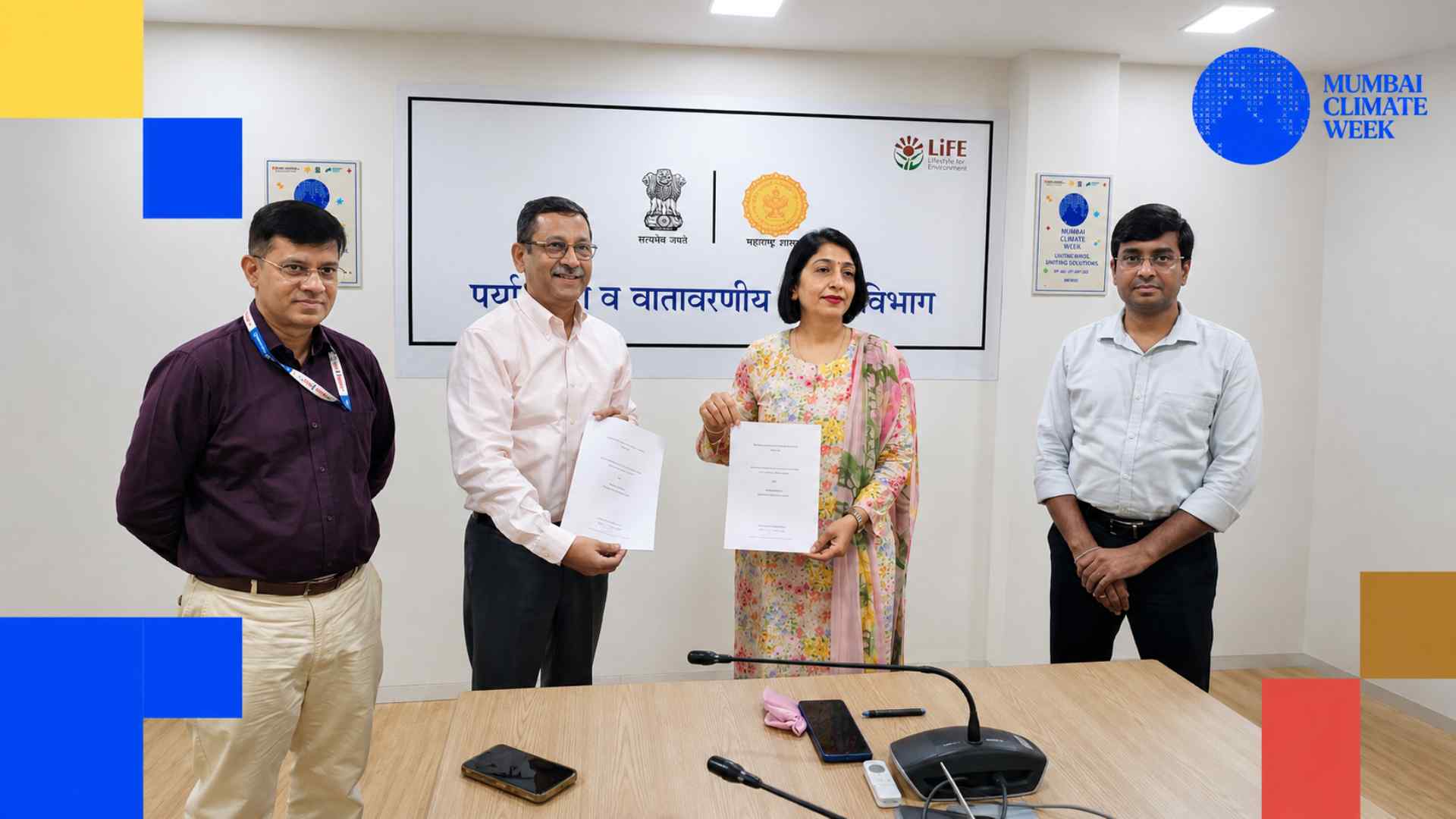
 Department of Environment and Climate Change to serve as nodal government partner, facilitating coordination with key state and civic agencies.





Mumbai, September 2, 2026: Ahead of the second edition of Mumbai Climate Week (MCW) in February 2027, the Department of Environment and Climate Change, Government of Maharashtra, and Project Mumbai have entered into a Memorandum of Understanding (MoU) to strengthen institutional coordination and support greater government participation in the city’s climate action dialogue.
Mumbai Climate Week will be held from February 23-26 at Jio Convention Centre, Mumbai, India.
Under the MoU, the Department of Environment and Climate Change, Government of Maharashtra, will serve as the nodal partner agency of the Government of Maharashtra for MCW 2027. As a knowledge partner, the Department will support Project Mumbai in hosting the second edition of the climate platform and facilitate coordination with relevant government departments and agencies. The Department will facilitate time-bound coordination and meetings between MCW 2027 theme leads and relevant Ministries, Commissioners and Secretaries of the Government of Maharashtra, including the Mumbai Metropolitan Region Development Authority (MMRDA) and the Brihanmumbai Municipal Corporation (BMC).
A key focus of the partnership will be to build a stronger connection between the conversations and thematic work emerging from MCW 2027—particularly around urban resilience, food systems, energy transition, biodiversity, and circularity—and the government institutions working on the ground. MCW will also explore climate and its intersections with literature, food, sports, cinema and healthcare.
Commenting on the partnership, Smt. Pankaja Munde, Minister of Environment & Climate Change, Maharashtra, said, “The Environment and Climate Change Department, Government of Maharashtra, is delighted to partner with Project Mumbai for Mumbai Climate Week (MCW) 2027. MCW 2027 will serve as a significant platform bringing together governments, businesses, civil society, experts and citizens to advance meaningful climate action and strengthen the resilience of Maharashtra and India. Building on the momentum of the previous edition, the partnership aims to further strengthen climate leadership and make MCW 2027 an even more impactful platform for climate collaboration and sustainable urban development. The Department looks forward to working with Project Mumbai and all stakeholders towards advancing meaningful climate action, strengthening climate resilience and fostering a sustainable future.”
Emphasising the significance of the partnership in advancing actionable climate solutions, Shishir Joshi, CEO and Founder, Project Mumbai & Chief Convenor of Mumbai Climate Week, said, “Project Mumbai is honoured to have the Department of Environment and Climate Change, Government of Maharashtra, as our knowledge partner. Together, we can ensure that the conversations at MCW 2027 translate into ideas, partnerships and solutions that have a lasting impact.”
As climate change increasingly intersects with the way Mumbai plans its infrastructure, mobility, water, waste management, energy and urban resilience, MCW 2027 will provide a platform for government, business, civil society, academia and the wider climate ecosystem to come together around these challenges.
The MoU further strengthens the institutional framework supporting MCW 2027 and reflects a shared commitment to creating greater alignment between Mumbai’s climate-action ecosystem and the Government of Maharashtra.





-23-300x250.png)





















