 Thursday, October 08, 2026
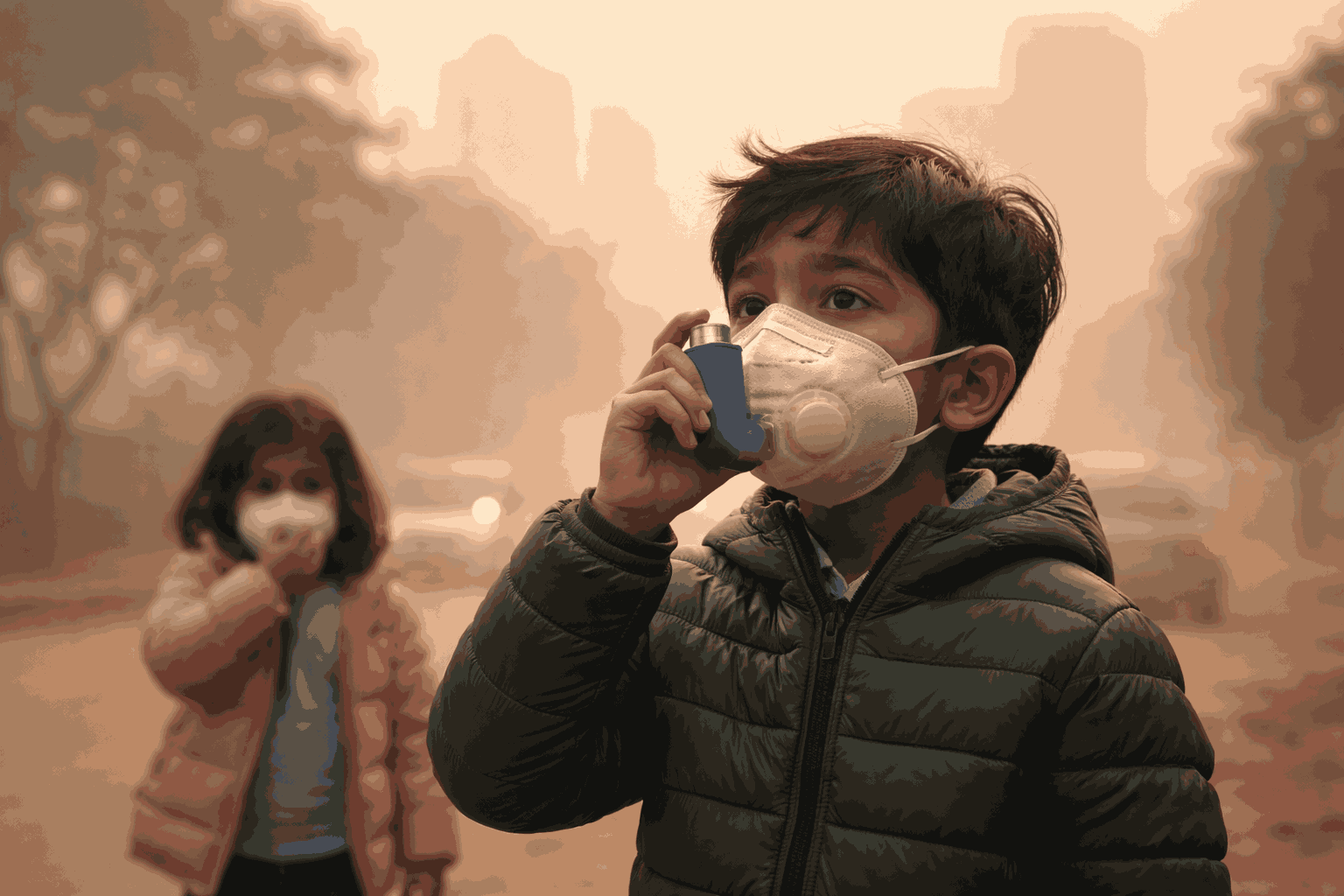
 Air pollution is no longer just an environmental headline, it’s slowly becoming a daily health reality for children, especially those growing up in cities with poor air quality.




Air pollution is no longer just an environmental headline, it’s slowly becoming a daily health reality for children, especially those growing up in cities with poor air quality. Paediatricians across the country are noticing a worrying trend: kids are developing breathing problems much earlier than they used to. What once showed up in later childhood is now being seen in toddlers and even infants, often after episodes of smog, dust, or recurring viral infections. Parents are understandably confused — is it just a stubborn cough? Another cold? Or something more serious like asthma? The challenge is that early asthma symptoms often look exactly like common childhood illnesses, making it easy to miss the warning signs. Add polluted air into the mix, and young lungs, still growing and highly sensitive, struggle even more.
Cold Weather Concerns: Understanding and Managing Your Child’s Asthma
From traffic-related smog and fine dust particles to seasonal smoke and poor ventilation, children today are exposed to pollutants far more frequently than previous generations. And while not every child exposed to pollution will develop asthma, bad air can act as a powerful trigger, bringing symptoms earlier and making them more severe.
In an exclusive interview with TOI, Dr. Jyothi Raghuram, Senior Consultant — General Paediatrics & Pediatric Rheumatology at Aster Whitefield Hospital, explains why children are more vulnerable to air pollution, how asthma is showing up at younger ages, what signs parents should watch out for, and whether tools like masks and air purifiers actually help. Most importantly, it looks at what needs to change — at home, in cities, and at a policy level — to protect young lungs and prevent asthma before it takes hold.
Are doctors seeing children develop asthma earlier than before because of poor air quality?
“Yes, honestly, we are seeing this more than we used to. Earlier, asthma would usually show up a little later in childhood, but now we’re seeing very young children having breathing issues. Cities that have very bad AQI (air quality index), these conditions become worse,” Dr. Raghuram says. Smoggy weather results in a sudden increase in children with symptoms of cough, wheezing, or breathlessness.
However, only a few children who are exposed to pollution will develop asthma, but bad air definitely makes breathing problems start earlier and more frequently. Asthma is multi-factorial — genetics, environment, and the child’s own physiology all contribute, not just one cause. If there is a strong family history of asthma and the child has frequent viral-triggered wheezing from early childhood, then that child has a stronger possibility of developing asthma than one without family history. However, doctors are now seeing asthma in children without any other family member being affected. Pollution interferes with lung development and makes them more susceptible.
Which pollutants are most harmful, and why are children more affected than adults?
The major problems with smog are that the dust particles are extremely fine, and that smog is largely a result of traffic-related air pollution. Those dust particles are so tiny that they reach the deepest parts of your lungs and remain there, causing irritation and inflammation. Children are considered the most vulnerable group because their lungs are still developing.
Children breathe more than adults since they are more active and play outside, and thus they take in more dust than adults. Asthma can be very difficult to diagnose in young children because the symptoms resemble other viral illnesses. Apart from wheezing, other signs might include a persistent cough after exercise, increased coughing during a cold, night-time cough, low stamina, and easy fatigue. Prolonged cough continuing after a short 2–3 day fever and cold may be a sign of asthma.
Will air purifiers and masks help protect children from pollution?
Air purifiers and masks may help decrease a child’s interaction with air pollution to some extent. However, experts recommend that parents who live in highly polluted areas avoid outdoor activities during periods of high pollution and allow children outside only when air quality improves or when otherwise required medically. Educating children to recognize poor air quality and make decisions about outdoor activities accordingly may help them avoid respiratory problems in the future.
What changes do parents need to adopt to prevent children from developing asthma?
Air pollution must be controlled to protect children. This includes reducing pollution from cars, improving mass transit systems, using cleaner fuels, and, as much as possible, keeping heavy traffic away from schools and homes. Air quality is an environmental issue, but it’s also the basis of preventive healthcare. If we want to see fewer children suffering from asthma, improving air quality needs to be a top priority — though that requires coordinated efforts at the city, state, and national level.
Relocation is not always feasible and may not solve the problem in all cases. Early diagnosis through detailed history taking, physical examinations, pulmonary function tests (if the child is over 7 years old), and treating co-morbid conditions such as allergic rhinitis or worm infestation is necessary. Parents should understand that inhaled corticosteroids are safe and effective for asthma treatment and should follow up regularly with their pediatrician and comply with prescribed treatment.






.jpeg)










.jpg)
.jpg)
.jpg)
.jpg)
.jpg)
.jpg)


.jpg)