 Thursday, November 19, 2026
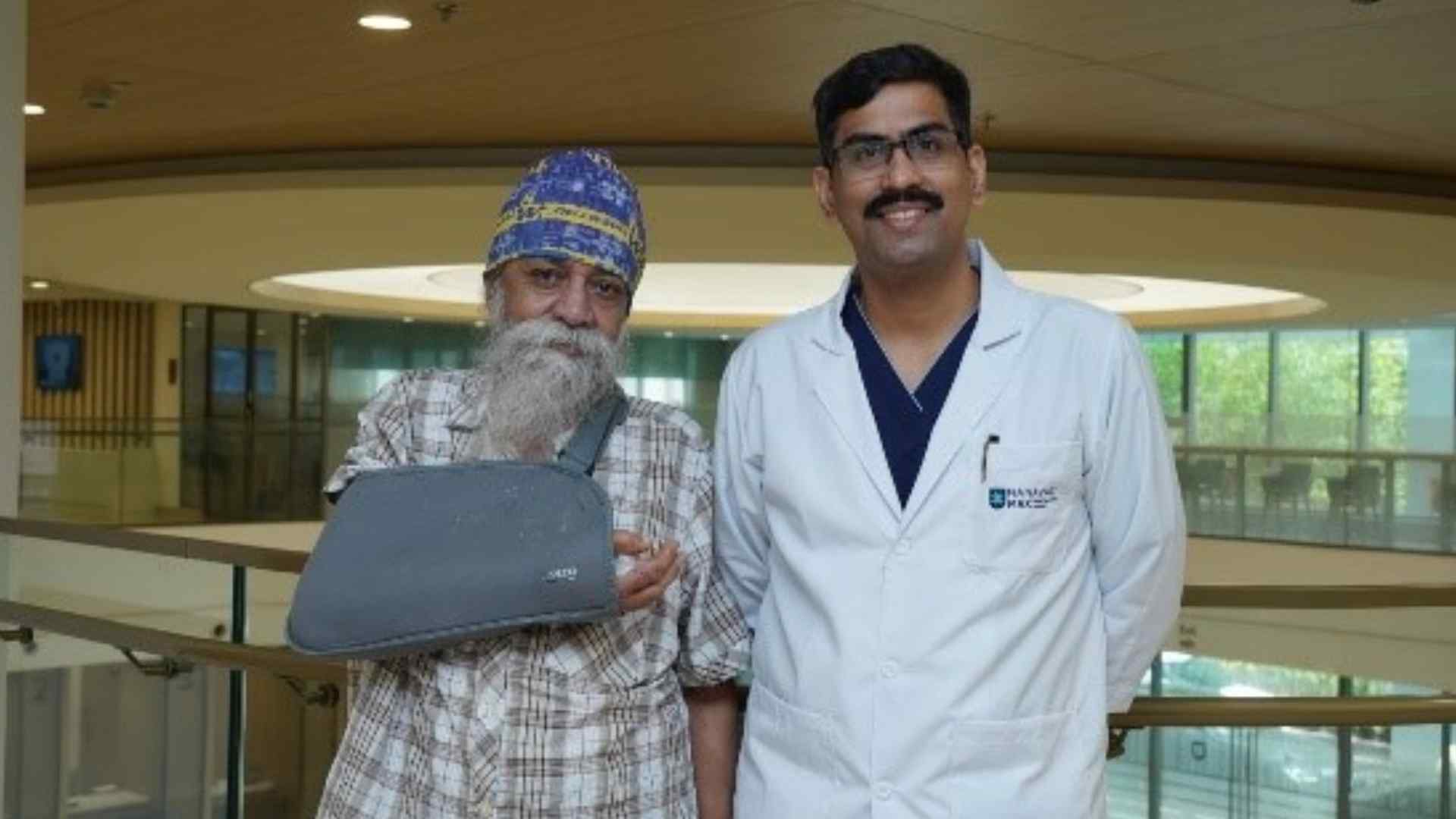
 Doctors at Nanavati Max Super Speciality Hospital successfully performed a complex eight-hour thumb replantation surgery on a 69-year-old taxi driver from Sion, Mumbai, after his thumb was completely amputated in a lift accident.





Mumbai, September 08, 2026: Doctors at Nanavati Max Super Speciality Hospital successfully performed a complex eight-hour thumb replantation surgery on a 69-year-old taxi driver from Sion, Mumbai, after his thumb was completely amputated in a lift accident. Timely preservation of the amputated thumb, followed by specialised microsurgical intervention, enabled the surgical team to restore blood circulation and preserve the thumb.
Mr. Ahinderpal Singh Alag sustained the injury when his hand became trapped in a lift door as the lift started moving. The accident resulted in a severe avulsion injury, causing his thumb skin, tissue, muscle, tendon, ligament, and even bone to be forcibly pulled away from their normal attachment and resulting in extensive damage to the surrounding soft tissues.
Following the incident, Mr. Alag’s family immediately placed the severed thumb in moist gauze inside a plastic bag and kept it cooled with ice to preserve the amputated part. He was immediately taken to a nearby hospital for first aid and to receive expert care and advanced treatment; his family brought him to Nanavati Max Hospital.s
Given the time-sensitive nature of the injury, a team led by Dr. Bharat Saxena, Principal Consultant, Centre for Plastic, Aesthetic & Reconstructive Surgery, Nanavati Max Super Speciality Hospital, immediately evaluated the patient and prepared him for surgery. Revascularisation (restoring the blood supply) of the amputated thumb began immediately.
Speaking about the case, Dr. Bharat Saxena, said, “The thumb is critical to hand function because it allows us to grip and oppose the other fingers. Its loss can significantly affect everyday activities and, for a working individual, could potentially impact his ability to return to his livelihood. This procedure involved stabilising the amputated thumb, followed by microsurgical repair of the artery, veins, nerves, tendons and muscles. Our surgical team subsequently reconstructed the skin and soft-tissue cover. Using an operating microscope, the surgeons meticulously reconnected the tiny blood vessels to restore circulation to the amputated thumb.”
The procedure was particularly challenging because the injury was an avulsion rather than a clean-cut amputation, making microsurgical reconnection considerably more complex.
Following the surgery, Mr. Alag was discharged within a week. The replanted thumb was completely viable, and the wounds healed without infection or tissue loss. Early movement has also been observed, and he began his physiotherapy sessions to regain full movement.
Dr. Saxena further added, “Correct preservation of an amputated part and timely referral to a centre with microsurgical expertise can significantly influence the possibility of successful replantation. In upper-limb amputations, replantation should always be considered when medically feasible, as preserving the patient’s own body parts can offer significant functional advantages.”
The successful treatment reflects the coordinated efforts of the Centre for Plastic, Aesthetic & Reconstructive Surgery, Anaesthesia, Critical Care, Nursing, Physiotherapy and Rehabilitation teams at Nanavati Max Super Speciality Hospital in managing a technically demanding emergency and supporting the patient’s recovery.





-23-300x250.png)





















