 Thursday, October 08, 2026
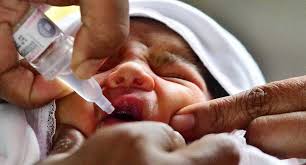
 India became polio free 11 years ago, and that remains one of our biggest health achievements in the country. But now, the government’s reported plan to close the National Polio Surveillance Network (NPSN) over the next three years has worried many doctors.




India became polio free 11 years ago, and that remains one of our biggest health achievements in the country. But now, the government’s reported plan to close the National Polio Surveillance Network (NPSN) over the next three years has worried many doctors. They say we still need to keep watch, as countries like Pakistan and Afghanistan are reporting new polio cases.
This surveillance network was started with WHO's help in the 1990s and there are over 200 centres across the country that monitor polio and other diseases. According to reports, as part of the government’s new plan, the number of units will be brought down gradually from around 280 to 190 next year, and then to 140 by 2027. Funding will also reduce in each phase.
“This is not the right time to lower our guard,” said Dr. Aashish Chaudhry, Managing Director & Head, Orthopaedics & Joint Replacement, Aakash Healthcare. “Polio is still present in countries around us. In South Asia, Pakistan reportedly had 30 cases this year, while Afghanistan also has new infections." Dr Chaudhry further said that the virus can easily spread across borders. If we stop such close monitoring, there is possibility of cases reappearing.
Dr Chaudhry, said even the Global Polio Eradication Initiative (GPEI) has launched a new action plan, which aims to ensure that its polio eradication strategy can be fully implemented. This became necessary amidst conflicts raging in various parts of the world, and lot of cuts in global health funding. At such a time, we should continue with our monitoring network, rather than shutting it down, he said.
India reported its last polio case in 2011 and was declared polio-free in 2014. The achievement came after years of hard work by lakhs of health workers who went door to door giving oral polio drops to children. Doctors say this success must be protected, not taken for granted.
Dr Chaudhry said that the risk today is not only from the wild virus but also from vaccine-derived strains that can spread where vaccination is weak. “If such a virus enters India, we could see new cases within months. Only strong surveillance can warn us in time,” he said.
Doctors say the NPSN centres also help monitor diseases like measles, rubella, and diphtheria, besides training local health staff. The centres also collect sewage samples regularly to check for signs of the polio virus, especially at mass gatherings like the Kumbh Mela.
“These centres are our early warning system,” said Dr. Sunil Rana, Associate Director and Head- Internal Medicine (Unit III), Asian Hospital, a public health specialist who has worked with vaccination teams. “They alert us before any disease spreads. If these are shut, it will take longer to detect outbreaks. That delay can cost lives.”
Dr Rana said, earlier, the government had planned to use the NPSN’s vast network to detect other new and emerging diseases. "But the closure plan goes against that idea".
According to WHO’s own reports, India still tests sewage samples across cities and towns to detect poliovirus. "This surveillance and detection is the main reason the country has stayed polio-free even with millions of people travelling across borders every year," said Dr Aakaar Kapoor, CEO and Lead Medical Advisor: City X-Ray and Scan Clinic. “India’s story is a global success,” said Dr Kapoor. “But polio is not finished. If we become careless now, all our hard work can be wasted. The network should be kept strong for a few more years, at least until the whole region is safe.”





.jpeg)










.jpg)
.jpg)
.jpg)
.jpg)
.jpg)
.jpg)


.jpg)