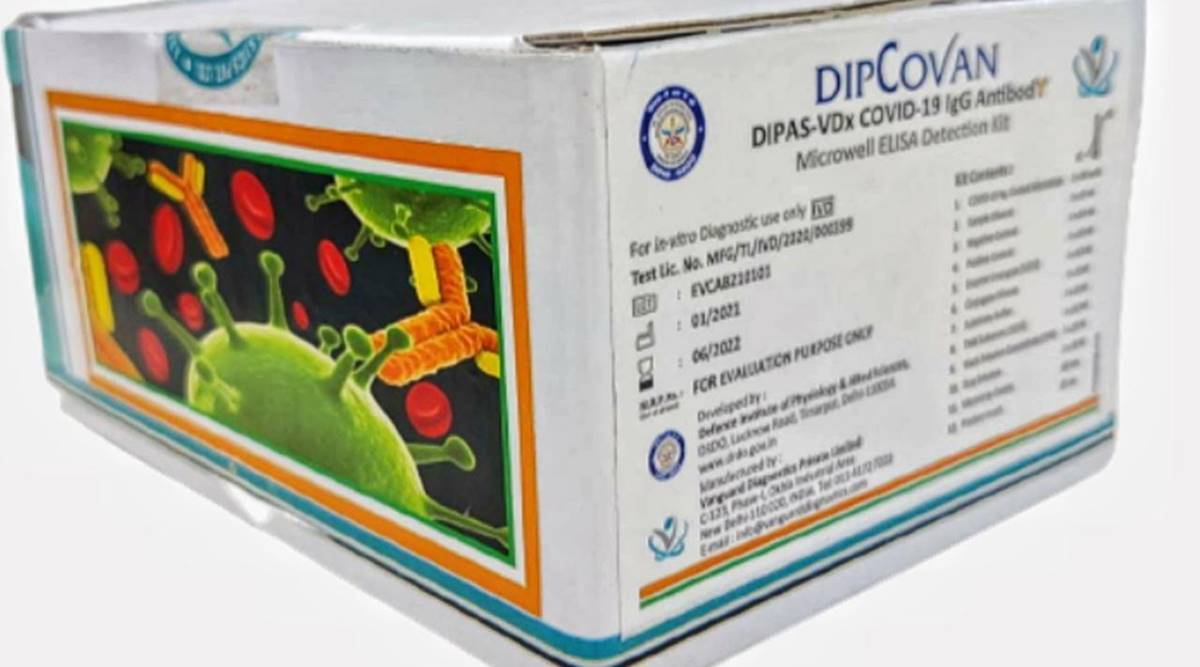
DRDO develops antibody detection-based kit 'DIPCOVAN'


Deprecated: strlen(): Passing null to parameter #1 ($string) of type string is deprecated in /home/medicircle/public_html/script_newsdetails.php on line 75
▴
DRDO helps with new Covid detection kit

Defence Research and Development Organisation, DRDO has developed an antibody detection-based kit 'DIPCOVAN', the DIPAS-VDx COVID-19 IgG Antibody Microwell ELISA for sero-surveillance. The kit will be very useful for understanding COVID‐19 epidemiology and assessing an individual's previous SARS‐CoV‐2 exposure. The kit can detect both spikes as well as nucleocapsid proteins of the SARS-CoV-2 virus with a high sensitivity of 97 per cent and specificity of 99 per cent.

The Defence Ministry said the kit has been developed in association with Vanguard Diagnostics Private Limited, a development and manufacturing diagnostics company based in New Delhi. The company will commercially launch the product during the first week of next month.

It requires just 75 minutes to conduct the test without any cross-reactivity with other diseases. The kit has a shelf life of 18 months and it is expected to be available at about 75 rupees per test.

The DIPCOVAN kit was developed indigenously by the scientists, followed by extensive validation on more than one thousand patient samples at various COVID designated hospitals in Delhi. The antibody detection kit is approved by Indian Council of Medical Research in April this year. In May, the product received regulatory approval from the Drugs Controller General of India to manufacture for sale and distribution. Defence Minister Rajnath Singh has appreciated the efforts of DRDO and the industry in developing the kit at the time of need.


Tags : #DRDO #Antibody #Dipcovan #RajnathSingh #MicrowellElisa

About the Author


Team Medicircle

Related Stories

Loading Please wait...

-Advertisements-


Trending Now

Digital Identity Fraud in Healthcare: What India Must KnowNovember 18, 2026
Wearables in Clinical Care: When Should Doctors Trust the Data?November 18, 2026
Cybersecurity for Medical Startups: What Founders MissNovember 18, 2026
Remote Patient Monitoring: The Next Phase of Virtual CareNovember 18, 2026
Digital Health Wallets: Future of Medical Records in IndiaNovember 17, 2026
How Hospitals Can Prepare for a Transparent Healthcare MarketNovember 17, 2026
Childhood Nutrition: Understanding Micronutrient Gaps Beyond CaloriesNovember 16, 2026
Anaemia in Adolescent Girls: Connecting Prevention, Testing and Nutrition SupportNovember 16, 2026
Health Information Exchanges in India: Are Medical Records Finally Going Portable?November 16, 2026
Hospital Accreditation in 2026: What Is Changing Beyond the Checklist?November 16, 2026
Digital Insurance Platforms and India's Health Coverage FutureNovember 14, 2026
ABDM 2.0: India's Digital Health Ecosystem FutureNovember 14, 2026
Vaccine Cold-Chain Management: Protecting Immunisation Quality From Storage to DeliveryNovember 14, 2026
Foodborne Illness Surveillance: How Public Health Systems Track RisksNovember 14, 2026
Interoperability in Indian Healthcare: Why Patient Data Still StrugglesNovember 13, 2026
Tuberculosis Contact Screening: How Preventive Care Works Around ExposureNovember 13, 2026
COPD Care in India: Linking Diagnosis, Inhaler Education and Follow-UpNovember 13, 2026
Management of ANCA Glomerulonephritis: Induction & Maintenance ProtocolsNovember 12, 2026
Smart Hospital Command Centres Transforming IndiaNovember 12, 2026
Gamma Knife Surgery in India: What You Need to KnowNovember 12, 2026