Wednesday, October 07, 2026
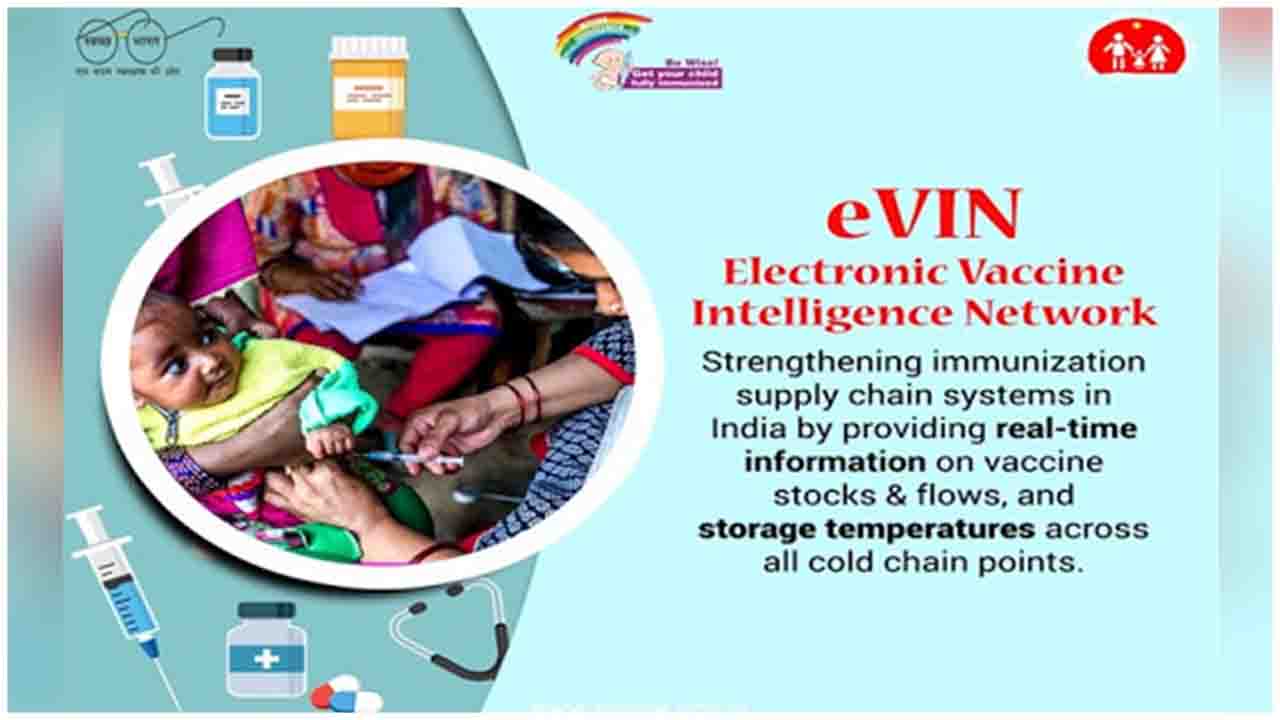
 Since April 2020, eight States are using the eVIN application with 100% adherence rate to track State specific COVID-19 material supplies




The Electronic Vaccine Intelligence Network (eVIN) is an innovative technological solution aimed at strengthening immunization supply chain systems across the country. This is being implemented under the National Health Mission (NHM) by the Ministry of Health and Family Welfare. eVIN aims to provide real-time information on vaccine stocks and flows, and storage temperatures across all cold chain points in the country. This robust system has been used with the requisite customization during the COVID pandemic for ensuring the continuation of the essential immunization services and protecting our children and pregnant mothers against vaccine-preventable diseases.
eVIN combines state-of-the-art technology, a strong IT infrastructure and trained human resource to enable real time monitoring of stock and storage temperature of the vaccines kept in multiple locations across the country.
eVIN has reached 32 States and Union Territories (UTs) and will soon be rolled out in the remaining States and UTs of Andaman & Nicobar Islands, Chandigarh, Ladakh and Sikkim. At present, 23,507 cold chain points across 585 districts of 22 States and 2 UTs routinely use the eVIN technology for efficient vaccine logistics management. Over 41,420 vaccine cold chain handlers have been introduced to digital record-keeping by training them on eVIN. Nearly 23,900 electronic temperature loggers have been installed on vaccine cold chain equipment for accurate temperature review of vaccines in storage.
The Electronic Vaccine Intelligence Network has helped create a big data architecture that generates actionable analytics encouraging data-driven decision-making and consumption-based planning that helps in maintaining optimum stocks of vaccines leading to cost savings. Vaccine availability at all times has increased to 99% in most health centers. An activity rate of more than 99% reflects the high adoption of the technology across all health centers where eVIN is currently operational. While instances of stock-outs have reduced by 80%, the time taken to replenish stocks has also decreased by more than half, on average. This has ensured that every child who reaches the immunization session site is immunized, and not turned back due to the unavailability of vaccines.
To support the Government of India’s efforts to combat COVID-19, eVIN India is helping the State/UT governments monitor the supply chain of COVID response material. Since April 2020, eight States (Tripura, Nagaland, Manipur, Meghalaya, Arunachal Pradesh, Haryana, Punjab and Maharashtra) are using the eVIN application with 100% adherence rate to track State-specific COVID-19 material supplies, ensure availability and raise alerts in case of shortage of 81 essential drugs and equipment.
This strong platform has the potential to be leveraged for any new vaccine including the COVID-19 vaccine, as and when available.






.jpeg)




.jpg)
.jpg)
.jpg)
.jpg)
.jpg)
.jpg)


.jpg)
.jpg)
.jpg)
.jpg)
.jpg)
.jpg)