Friday, October 23, 2026
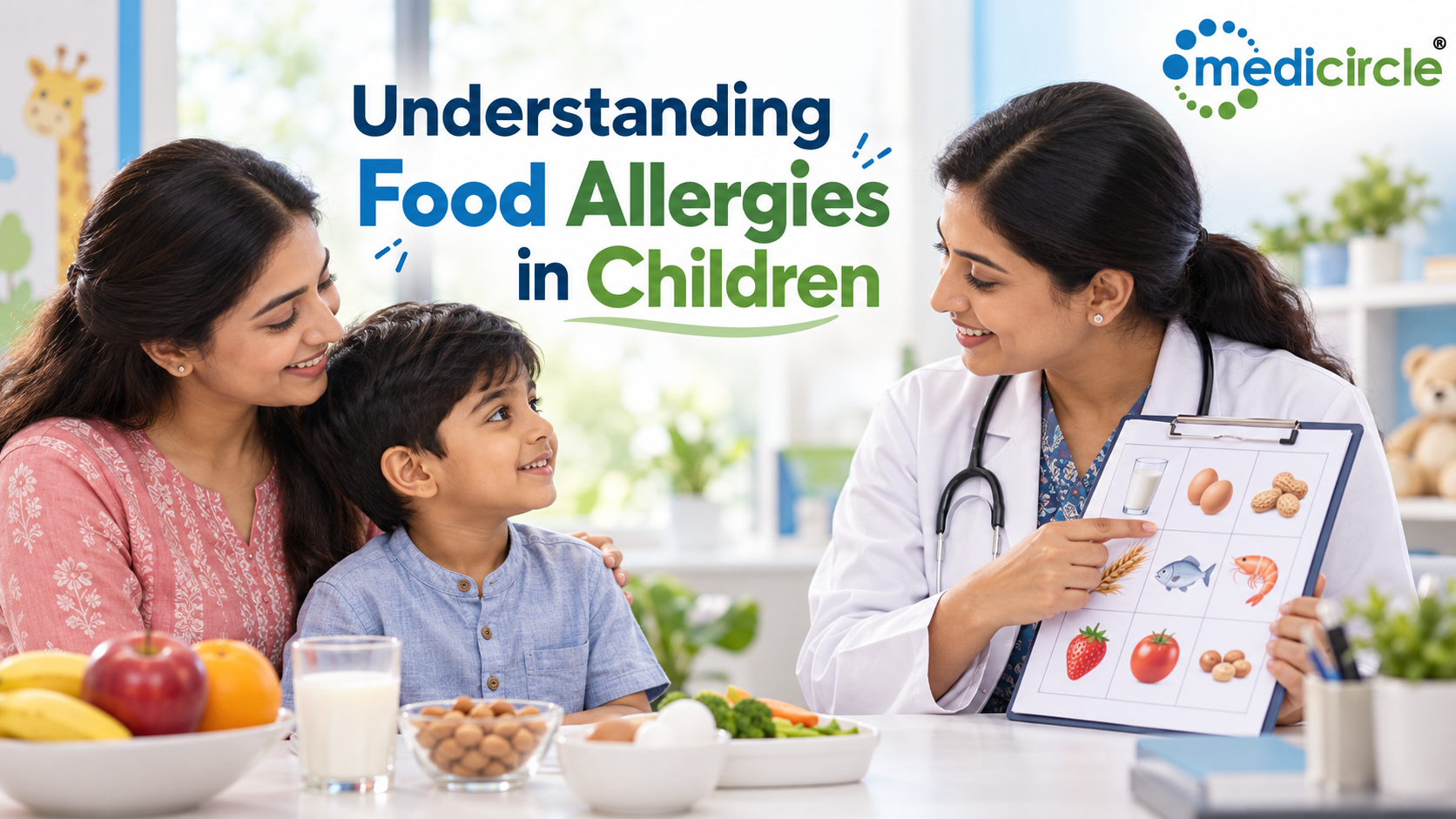
 Food allergies in children can cause skin, digestive, breathing, or severe reactions. Early recognition, proper testing, supervised avoidance, balanced nutrition, school planning, and emergency preparedness help families manage allergies safely.




Imagine preparing your child’s tiffin for school and noticing a sudden rash after lunch, or seeing them refuse a festive sweet because it “tastes funny” and soon after they complain of a stomach ache. For parents in India, food is central to celebrations, family life and school routines — so when a child reacts to something they eat, it can feel scary and isolating.
This article is for caregivers who want clear, practical information about food allergy symptoms and management in children in India. We’ll explain what an allergic reaction looks like, how testing works, sensible steps you can take at home and school, and how to keep your child’s nutrition balanced while staying safe. The aim is to help you make informed decisions and to know when to seek professional help.
What it meansA food allergy is an immune system response to a food protein that the body treats as harmful. When a sensitised child eats that food, their immune system can trigger an allergic reaction that ranges from mild skin symptoms to severe, life‑threatening reactions.
Allergic reactions differ from food intolerance. Intolerance (for example, lactose intolerance) usually affects the digestive system and does not involve the immune system. Allergic reactions often involve the skin, breathing and sometimes the gut, and they can occur quickly after eating.
Common food culprits in many parts of the world — and relevant in India — include milk, eggs, peanuts, tree nuts (like almonds and cashews), fish, shellfish, wheat, soy and sesame. Foods in Indian diets such as peanuts (in chikki or chutneys), milk products (paneer, curd), eggs in bakery items, and sesame (in til and ladoo) are practical examples where vigilance may be needed if a child has a suspected allergy.
Why it mattersFood forms a huge part of social life — school tiffins, birthday parties, temple prasad, wedding sweets and street foods. A child who has an allergic reaction may face social exclusion or anxiety, and parents may worry about safety during festivals and travel.
Beyond the social side, the clinical importance lies in recognising the potential for severe allergic reactions, particularly anaphylaxis. Anaphylaxis is a rapid, systemic allergic reaction that can affect breathing and circulation and needs urgent emergency care. Awareness and early action can save lives.
At the same time, unnecessary or prolonged avoidance of foods without clear evidence of allergy can harm child nutrition. Removing staples like milk, eggs or wheat without a proper plan can lead to deficiencies and impact growth.
Practical guidanceBelow are practical, evidence‑based steps you can take at home, in medical settings, and at school. These suggestions are educational — they are not a diagnosis or prescription. Always consult your child’s doctor or an allergy specialist before making major changes.
- Notice and record patterns. Keep a food‑symptom diary showing what your child ate, the timing, portion size, and what symptoms followed. Note whether symptoms were immediate (minutes to two hours) or delayed (several hours). This simple habit helps clinicians link a food to symptoms.
- Know the typical signs of an allergic reaction. Symptoms can include: itchy skin or hives, swelling of the lips or face, nausea, vomiting, diarrhoea, abdominal pain, wheeze or noisy breathing, coughing, hoarseness, repetitive throat clearing, fainting or dizziness. Mild symptoms may be limited to the skin or gut; breathing problems, swelling of the throat, or collapse signal an emergency.
- Seek clinical assessment for suspicious reactions. If your child has had a convincing allergic reaction — especially any breathing or throat symptoms — consult your paediatrician promptly. For ongoing or unclear symptoms, an allergy specialist (paediatric allergist or immunologist) can advise testing and management.
- Understand allergy testing. Common diagnostic tools include:
- Skin prick testing: a tiny amount of allergen is placed on the skin and the skin is pricked to check for a local reaction. It gives quick results but can be influenced by skin conditions and medicines.
- Specific IgE blood tests: measure antibodies to particular foods. Useful when skin tests are not possible but, like skin tests, they can give false positives or negatives.
- Oral food challenge: under medical supervision, the child eats increasing amounts of the suspected food to see if a reaction occurs. This is considered the gold standard but must be done in a clinic prepared to treat anaphylaxis.
No single test is perfect. Results need to be interpreted together with the child’s history. Allergy testing is not recommended for general screening of healthy children without relevant symptoms.
- Use elimination diets carefully. Temporarily removing a suspected food can help identify triggers. However, do this under medical supervision or with a dietitian, especially for young children. Unsupervised elimination can cause nutritional gaps and anxiety.
- Plan for anaphylaxis awareness. If a child is at risk of severe reactions, the treating clinician may prescribe an emergency plan. In many countries, immediate intramuscular epinephrine is the first‑line treatment for anaphylaxis. In India, access to and familiarity with epinephrine auto‑injectors may vary; parents should discuss emergency medication, carriage and administration training with their doctor.
- Create a school allergy plan. A school allergy plan makes day‑to‑day care safer and reduces stress for parents and children. Important elements include:
- A written emergency action plan provided to the school.
- Clear labelling of the child’s tiffin and avoidance instructions for snacks that pose a risk.
- Staff awareness of signs of an allergic reaction and the procedure to summon help.
- Strategies to reduce cross‑contact during meal times and cooking classes.
- Clear communication with other parents about birthday treats and shared snacks, handled sensitively to avoid stigma.
- Keep child nutrition balanced. If a food must be avoided, work with a dietitian to ensure replacement nutrients. For example, if milk is excluded, find alternative calcium and protein sources appropriate for Indian meals. Where possible, offer varied home‑cooked foods the child tolerates to support growth and social inclusion.
- Read labels and ask questions when eating out. Packaged foods can contain hidden allergens; read ingredient lists carefully and look for advisory statements such as "may contain nuts". At restaurants or street food stalls, ask about ingredients and cross‑contact risks. When unsure, choose safer, simple options the child usually tolerates.
- Consider culturally relevant substitutions. If a sweet containing nuts is a problem at festivals, offer a nut‑free homemade alternative that fits the occasion. Teaching family and extended family members about the allergy can reduce accidental exposures during gatherings.
Q: How quickly do food allergy reactions appear?
A: Most IgE‑mediated allergic reactions start within minutes to two hours after eating. Some non‑IgE reactions can be delayed by many hours or even days, depending on the mechanism. Accurate timing, recorded in your food diary, helps clinicians interpret tests.
Q: Are food allergies the same as food intolerances?
A: No. Food allergies involve the immune system and can be life‑threatening. Food intolerances involve digestion and do not trigger immune responses. Both can cause discomfort, but they are managed differently.
Q: Can my child grow out of a food allergy?
A: Some children outgrow allergies such as milk or egg allergy, while others (for example, peanut or shellfish) are less likely to disappear. Decisions about reintroducing foods should be made with medical supervision.
Q: Are allergy tests reliable for diagnosing food allergy?
A: Tests help but are not definitive on their own. Skin prick and blood IgE tests show sensitisation, which may not equal clinical allergy. Oral food challenges, supervised by a specialist, are often needed to confirm the diagnosis.
Q: What should I do if my child has a mild reaction at home?
A: For mild skin or gut symptoms, contact your paediatrician or the child’s allergy specialist for advice. Do not attempt home remedies without medical guidance. For any breathing difficulty, swelling of the face or throat, fainting, or collapse, seek emergency care immediately.
Q: Are epinephrine auto‑injectors available in India?
A: Availability can vary by region and clinic. If an auto‑injector is prescribed, parents and caregivers should receive training on when and how to use it and be instructed on storage and expiry checks. The prescribing clinician will advise on local access.
Q: How do I manage allergies during festivals and family functions?
A: Plan ahead—speak to hosts about the child’s needs, bring safe alternatives, label the child’s plate, and teach older children to explain their allergy. For younger children, supervision at serving times reduces accidental exposures.
Q: Can probiotics or supplements prevent food allergies?
A: Current evidence is mixed and evolving. Do not start supplements to treat or prevent allergy without discussing this with a healthcare professional. Always consider evidence and safety for children before starting any supplement.
ConclusionManaging suspected or confirmed food allergies in children is both a medical and practical family challenge. Being observant, keeping good records, and seeking professional assessment are the first steps. Testing can clarify sensitisation, but results must be interpreted alongside symptoms. An elimination diet may be useful but should be supervised to protect nutrition. For children at risk of severe reactions, an emergency action plan and clear school allergy plan are essential.
In India’s rich food culture, safety and participation are both important. With the right medical advice, careful meal planning, good communication with schools and family, and attention to nutrition, most families can create a safe and inclusive environment for their child.
When to seek professional help: consult your paediatrician or allergy specialist promptly if your child has breathing problems, swelling of the throat, repeated vomiting, fainting, or any worrying symptoms after eating. For non‑emergency but persistent symptoms — recurrent rashes, intermittent stomach upset after certain foods, or worries about nutrition after avoiding a food — arrange outpatient evaluation.
Medical/Professional/Technology disclaimer
This article provides general information to help understand food allergy symptoms and management in children in India. It is not medical advice, does not diagnose or prescribe, and is not a substitute for personalised clinical care. Always consult a registered paediatrician, allergist or qualified dietitian for assessment and management tailored to your child. If your child shows signs of a severe allergic reaction or anaphylaxis (breathing difficulty, throat swelling, collapse), seek emergency medical care immediately.
Resources
- Centers for Disease Control and Prevention (CDC) - Food Allergies in Schools: https://www.cdc.gov/healthyschools/foodallergies/index.htm
- NHS - Food allergy: https://www.nhs.uk/conditions/food-allergy/
- World Health Organization (WHO) - Official website: https://www.who.int
- Indian Council of Medical Research (ICMR) - Official website: https://www.icmr.gov.in
- National Health Portal of India (NHP): https://www.nhp.gov.in
- PubMed search results for 'food allergy': https://pubmed.ncbi.nlm.nih.gov/?term=food+allergy
Interlinking Keywords
child health, pediatric nutrition, eczema in children, asthma management, school health policies, immunization schedule, paediatric mental health





-23-300x250.png)

.jpeg)
.jpg)
.jpg)
.jpg)
.jpg)
.jpg)
.jpg)
.jpg)
.jpg)
.jpg)