Friday, October 23, 2026
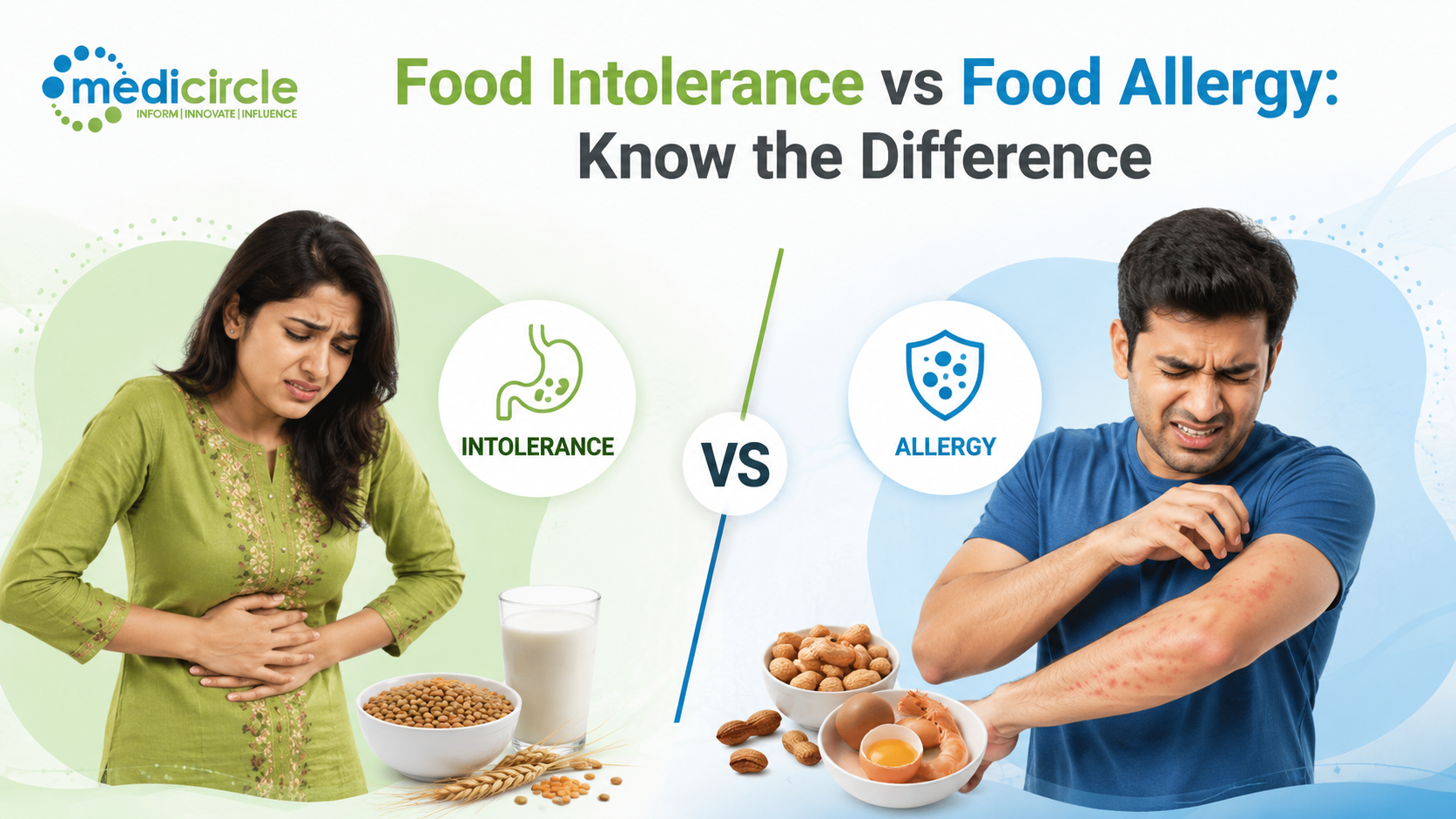
 Food intolerance involves digestive difficulty without immune activation, while food allergy triggers immune responses and can be life-threatening. Correct diagnosis is essential for safe, effective management.




Food Intolerance vs Food Allergy: Symptoms Patients Often Confuse
Every day, thousands of people across India experience discomfort after eating certain foods. Some feel bloated and gassy after a glass of milk. Others develop hives or swelling within minutes of eating prawns. Many of these individuals carry the same assumption: they have a food allergy. However, in a significant number of cases, what they are experiencing is not a food allergy at all but rather a food intolerance, a condition that is far more common, often misunderstood, and frequently mismanaged.
The confusion between food intolerance and food allergy is not merely a matter of terminology. It has real consequences for patient health, dietary decisions, and medical treatment. When a person mistakes a food intolerance for a food allergy, they may unnecessarily eliminate entire food groups from their diet. When they mistake a food allergy for a simple intolerance, they may ignore warning signs that could escalate into a life-threatening reaction. Understanding the distinction is, therefore, a matter of both clinical importance and everyday health literacy.
Medicircle, as India's trusted healthcare media and knowledge platform, is committed to bridging this awareness gap. Through expert-led content, hospital partnerships, and patient education, Medicircle helps individuals make sense of complex medical information in a clear, responsible, and practical way. This article aims to do exactly that: to help Indian readers understand, with confidence and clarity, what separates a food intolerance from a food allergy.
What Is a Food Allergy and How Does It Work
A food allergy is a reaction driven by the immune system. When a person with a food allergy consumes a specific food, their immune system incorrectly identifies certain proteins in that food as harmful substances. In response, it triggers the release of chemicals such as histamine, which produces a cascade of symptoms throughout the body. This reaction is mediated by immunoglobulin E (IgE) antibodies, making it a true immune-mediated event.
The key characteristic of a food allergy is speed. Symptoms typically appear within minutes to two hours of consuming the allergenic food. Even a very small quantity of the trigger food can provoke a strong reaction. Common food allergens globally, and increasingly in India, include peanuts, tree nuts, shellfish, fish, eggs, milk, wheat, and soy. In the Indian dietary context, peanuts deserve particular attention because they are deeply embedded in everyday cuisine, appearing in chutneys, curries, snacks, sweets, and cooking oils, sometimes without clear labeling.
The most severe form of allergic reaction is anaphylaxis, a systemic and life-threatening emergency that can cause sudden blood pressure drop, throat swelling, breathing difficulty, and loss of consciousness. Anaphylaxis requires immediate medical attention and treatment with epinephrine. This is the critical reason why food allergies must never be dismissed as minor inconveniences or confused with digestive complaints.
Common Symptoms of Food Allergy
Food allergy symptoms can affect multiple systems of the body simultaneously. On the skin, a person may experience hives, redness, itching, or swelling around the face, lips, or eyes. Respiratory symptoms can include nasal congestion, sneezing, wheezing, or shortness of breath. Gastrointestinal signs such as nausea, vomiting, abdominal cramps, or diarrhea may also appear. In severe cases, the cardiovascular system is affected, leading to dizziness, rapid pulse, and a sharp drop in blood pressure. The presence of multiple symptoms across organ systems occurring rapidly after eating should always raise suspicion of a food allergy rather than intolerance.
What Is Food Intolerance and How Is It Different
Food intolerance is a condition that involves the digestive system, not the immune system. It occurs when the body lacks sufficient enzymes to properly digest a particular food component, or when a food substance irritates the gut lining and triggers uncomfortable digestive symptoms. Unlike a food allergy, food intolerance does not involve IgE antibodies, does not activate the immune defense mechanisms, and is not capable of causing anaphylaxis.
One of the most important distinctions is dose dependency. People with food intolerance can often consume small amounts of the trigger food without experiencing significant symptoms. It is typically only when consumed in larger quantities that symptoms become noticeable. Another distinguishing feature is the delay in symptom onset. While a food allergy reaction strikes quickly, food intolerance symptoms may take several hours, and sometimes even a full day, to develop. This delay makes the connection between the food consumed and the symptoms experienced far less obvious.
In India, food intolerance is remarkably prevalent, largely because of the central role that dairy products play in the traditional diet. Lactose intolerance is caused by reduced levels of the enzyme lactase, which is needed to digest the milk sugar lactose, and it is one of the most widespread food intolerances in South and Southeast Asia. Studies suggest that lactose intolerance affects the majority of adults across many Indian states, yet it remains widely confused with milk allergy. Similarly, non-celiac gluten sensitivity, intolerance to certain food additives such as monosodium glutamate (MSG), and intolerance to histamine-rich foods are all conditions that manifest with digestive discomfort but are not true allergic responses.
Common Symptoms of Food Intolerance
The symptoms of food intolerance are primarily gastrointestinal. Bloating, flatulence, abdominal cramps, loose stools, diarrhea, and a general sense of digestive discomfort are the hallmark presentations. In cases of histamine intolerance, headaches and skin flushing may also occur. Fatigue and low-grade nausea are also reported by some individuals. The symptoms are uncomfortable and disruptive to daily life, but they are not dangerous in the way that allergic reactions can be. A person experiencing food intolerance does not face the risk of anaphylaxis, and symptoms generally resolve on their own once the trigger food passes through the digestive system.
Side-by-Side Comparison: Food Allergy vs Food Intolerance
To bring clarity to this often-confused topic, it helps to compare the two conditions directly across key parameters.
The underlying mechanism is the single most fundamental distinction. A food allergy is an immune system reaction, specifically an IgE-mediated response. Food intolerance is a digestive or metabolic issue with no immune system involvement. In terms of onset, allergy symptoms appear rapidly, usually within minutes. Intolerance symptoms develop gradually, often several hours after eating. Regarding quantity, a food allergy can be triggered by even trace amounts of the allergen, whereas food intolerance generally requires a meaningful quantity of the offending food before symptoms appear.
The severity profile also differs sharply. Food allergy carries the risk of anaphylaxis and other serious systemic reactions, which can be life-threatening. Food intolerance, while distressing and disruptive, does not carry this life-threatening potential. Diagnosis pathways differ as well. Food allergies are confirmed through allergy skin prick tests and specific IgE blood tests. Food intolerance can be harder to diagnose definitively; the most reliable approach remains an elimination diet followed by careful food reintroduction under medical guidance. Finally, management strategies differ: strict and complete avoidance is essential for food allergies, while food intolerance may allow limited consumption or the use of enzyme supplements such as lactase for lactose-intolerant individuals.
Why Indian Patients So Often Confuse the Two
The overlap in some surface-level symptoms, particularly nausea, stomach cramps, and diarrhea, makes it genuinely understandable that patients confuse these two conditions. However, several factors specific to the Indian context make this confusion especially common.
Firstly, dairy is a cornerstone of the Indian diet. Milk, curd, paneer, ghee, lassi, and buttermilk are consumed across all regions and communities in large quantities. Many adults who developed lactose intolerance gradually over time, as lactase enzyme levels naturally decline with age, assume they have developed a milk allergy. They report that milk causes stomach upset and attribute this to an allergy. The mechanism, however, is digestive, not immune-mediated.
Secondly, the rich and complex spice profiles of Indian cooking introduce many variables. When a person develops symptoms after a meal, attributing those symptoms to a specific ingredient is difficult. Dishes may contain nuts, legumes, seafood, or food additives in combination, making it hard to isolate the true culprit without professional guidance.
Thirdly, awareness of both conditions remains limited in many parts of India, particularly in rural and semi-urban areas. The concept of food allergy is sometimes vaguely understood as any negative reaction to food, leading to misuse of the term even when symptoms point clearly to intolerance. Additionally, over-reliance on unvalidated at-home food sensitivity tests and social media health advice has led many individuals to adopt unnecessary and overly restrictive diets based on incorrect self-diagnosis.
Finally, access to qualified allergists and gastroenterologists remains uneven across India. Many patients in smaller towns and cities do not have access to allergy specialists and may never receive a formal diagnosis, leaving them to manage their conditions based on guesswork.
When to Seek Medical Attention
Any reaction that involves swelling of the lips, face, or throat, difficulty breathing, wheezing, a rapid drop in blood pressure, dizziness, or loss of consciousness after eating must be treated as a medical emergency. These are signs of anaphylaxis and require immediate hospitalization and epinephrine administration. This is non-negotiable.
Beyond emergencies, patients should consult a qualified healthcare professional, ideally an allergist or a gastroenterologist, whenever they notice consistent negative reactions after eating specific foods, even if those reactions seem mild. Self-diagnosis is unreliable, and without proper testing, a person may be avoiding the wrong foods entirely, or worse, failing to avoid a food that is genuinely dangerous for them.
In India, healthcare platforms such as Medicircle play a valuable role in helping patients identify the right specialist for their symptoms, understand diagnostic processes, and access credible medical information before and after their consultations. Through its network of expert partnerships, hospital collaborations, and health awareness initiatives, Medicircle supports informed healthcare decisions at every stage of a patient's journey.
Diagnosis: How Doctors Tell Them Apart
Diagnosing a food allergy typically begins with a thorough clinical history, during which a doctor maps the pattern of symptoms, including their nature, timing, and the foods associated with them. This is followed by a skin prick test, in which small amounts of purified allergen extracts are placed on the skin and observed for reactions. Blood tests measuring specific IgE antibodies against particular foods provide further evidence. In some clinical settings, an oral food challenge conducted under medical supervision may be used to confirm or rule out allergy to a specific food.
Food intolerance, by contrast, is more challenging to diagnose with laboratory tests alone. For lactose intolerance, a hydrogen breath test is the most reliable non-invasive diagnostic method. For non-celiac gluten sensitivity, an elimination diet followed by systematic reintroduction is often recommended after first ruling out celiac disease and wheat allergy through appropriate testing. Keeping a detailed food diary, recording what was eaten, when, and what symptoms followed, is an invaluable tool that helps clinicians identify patterns over time.
It is worth noting that the medical community has expressed significant caution about certain commercial food sensitivity tests, including some IgG-based panels marketed directly to consumers. These tests are not validated for diagnosing food allergy or intolerance and can produce misleading results that lead to unnecessary dietary restrictions. Patients should always seek testing and interpretation from qualified medical professionals.
Management and Living Well with Food Reactions
For individuals with confirmed food allergies, strict avoidance of the allergenic food is the primary management strategy. This requires careful reading of food labels, transparent communication with restaurants and food vendors, and in cases of high allergy risk, carrying an auto-injectable epinephrine device at all times. Indian consumers have historically faced challenges with food labeling, but awareness is growing and regulatory frameworks around food allergen declaration are gradually improving.
For those with food intolerance, the approach is more flexible. Lactose-intolerant individuals may find that they can tolerate small amounts of dairy or fermented dairy products such as curd or aged cheese, where the lactose content is naturally reduced. Lactase enzyme supplements taken before consuming dairy products can also help manage symptoms effectively. For those with intolerance to specific additives or histamine-rich foods, identifying and reducing the primary triggers is usually sufficient.
In both cases, working with a registered dietitian is highly valuable. A dietitian can help design a nutritionally complete eating plan that eliminates trigger foods without compromising overall nutrient intake. This is a concern that is particularly important for Indian vegetarians who depend heavily on dairy for protein and calcium.
Conclusion
Food intolerance and food allergy are two distinct medical conditions that are frequently confused with each other, and the consequences of that confusion range from unnecessary dietary restriction to life-threatening delays in emergency care. The core difference lies in the involvement of the immune system: food allergies are immune-mediated and can be life-threatening, while food intolerances are digestive or metabolic in origin and are never fatal, though they can significantly affect quality of life.
For Indian patients, who navigate a diverse and complex food culture, this distinction carries particular relevance. Whether it is the widespread challenge of lactose intolerance, the omnipresence of peanuts in Indian cuisine, or the difficulty of isolating triggers in spice-rich meals, clarity on this topic can meaningfully improve health outcomes. The right diagnosis, achieved through qualified medical consultation and validated testing, is the only reliable foundation for effective management.
Platforms like Medicircle are committed to making this kind of expert-backed health knowledge accessible to every Indian, from metro cities to smaller towns, so that patients can approach their healthcare decisions with greater confidence, awareness, and accuracy.
Frequently Asked Questions
Can food intolerance turn into a food allergy over time?
No. Food intolerance and food allergy are fundamentally different conditions with separate underlying mechanisms, and one does not convert into the other. A food intolerance involves a digestive or metabolic difficulty and does not engage the immune system. A food allergy, by contrast, is an immune-mediated reaction. However, it is possible for a person to have both conditions simultaneously, for example having lactose intolerance as well as a shellfish allergy. Each condition must be assessed and managed independently through proper medical evaluation.
Is lactose intolerance the same as a milk allergy?
No. These are two completely different conditions that are very commonly confused. Lactose intolerance is caused by a deficiency of the enzyme lactase, which is needed to digest lactose, the natural sugar found in milk and dairy products. The resulting symptoms are primarily digestive. A milk allergy, on the other hand, involves an immune system response to the proteins in milk, such as casein or whey, and can cause skin reactions, respiratory symptoms, and in severe cases, anaphylaxis. Lactose intolerance is extremely common among adults across India and most of Asia. Milk allergy is less prevalent in adults and more often seen in young children.
How can I find out whether I have a food allergy or food intolerance without self-diagnosing?
The most reliable approach is to consult a qualified healthcare provider, preferably an allergist for suspected food allergies or a gastroenterologist for suspected food intolerances. An allergist can conduct validated skin prick tests and specific IgE blood tests to confirm or rule out food allergies. For food intolerance, clinicians may use breath tests, detailed dietary histories, and structured elimination diets. Avoid relying on unvalidated commercial sensitivity panels or self-directed elimination diets, which can produce inaccurate results and lead to nutritional deficiencies. Medicircle can help you identify the right specialists and understand the diagnostic journey before your consultation.
Food intolerance involves digestive difficulty without immune activation, while food allergy triggers immune responses and can be life-threatening. Correct diagnosis is essential for safe, effective management.





-23-300x250.png)

.jpeg)


.jpg)
.jpg)
.jpg)
.jpg)
.jpg)
.jpg)
.jpg)
.jpg)
.jpg)