 Thursday, November 19, 2026
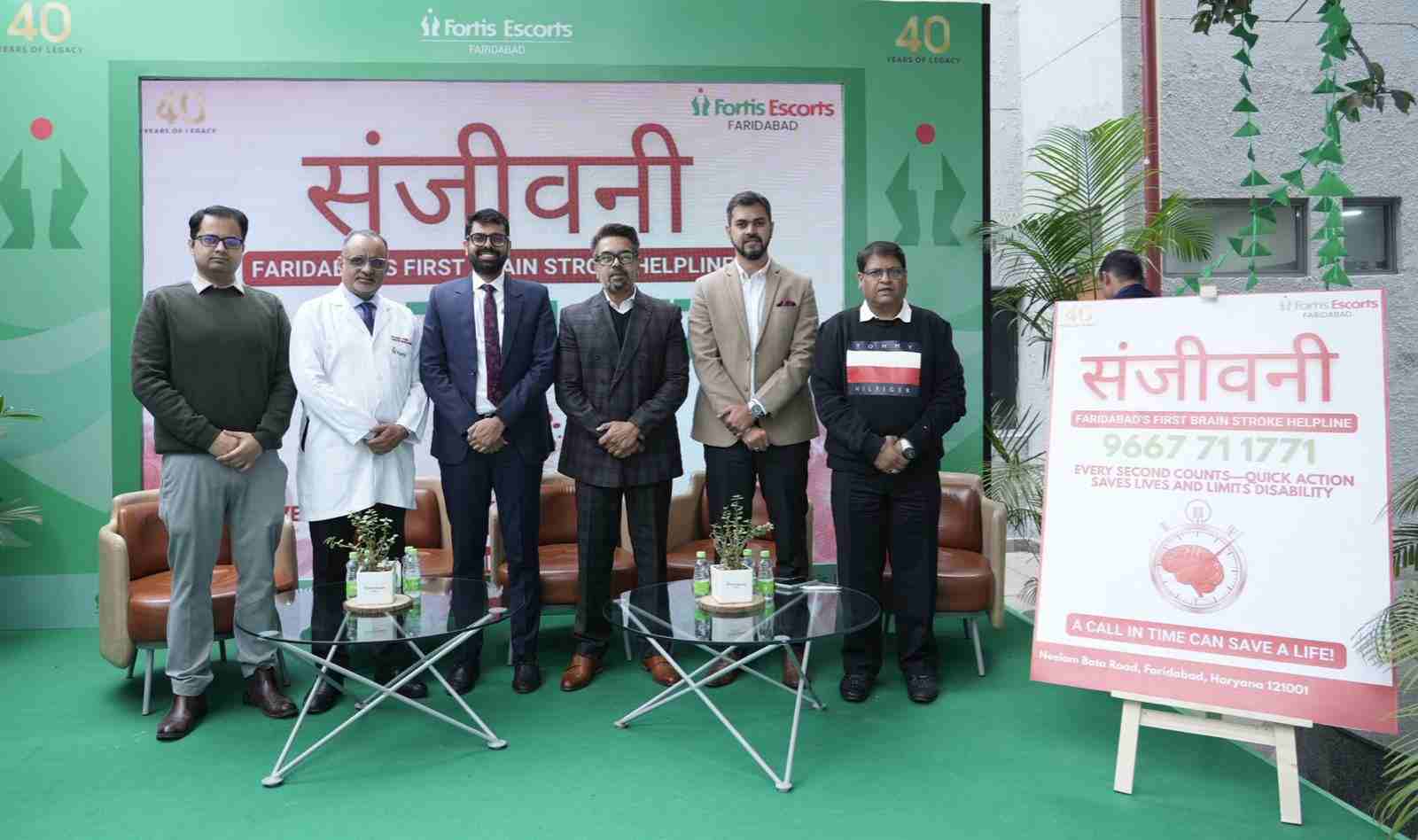
 In a first-of-its-kind initiative for the city, Fortis Escorts Faridabad today launched ‘SANJEEVANI’, Faridabad’s first dedicated 24×7 stroke helpline, along with a round-the-clock stroke clinic and specialised stroke ambulance service, aimed at drastically reducing the critical time between stroke onset and treatment.





Faridabad, 28 January, 2026: In a first-of-its-kind initiative for the city, Fortis Escorts Faridabad today launched ‘SANJEEVANI’, Faridabad’s first dedicated 24×7 stroke helpline, along with a round-the-clock stroke clinic and specialised stroke ambulance service, aimed at drastically reducing the critical time between stroke onset and treatment.
The SANJEEVANI Stroke Helpline (96677 11771) provides immediate access to expert medical guidance, rapid hospital coordination, and ambulance mobilisation, ensuring that patients experiencing stroke symptoms receive urgent, specialised care without delay. In stroke management, where “time is brain”, early medical intervention significantly improves survival rates and reduces the risk of long-term disability.
The initiative addresses a major gap in emergency stroke care, where delays often occur due to lack of awareness, absence of coordinated response systems and delayed transportation to stroke-ready hospitals. By integrating a single helpline with a dedicated stroke clinic and ambulance support, Fortis Escorts Faridabad aims to enable faster decision-making, quicker transfers, and immediate access to advanced stroke treatment - all within the crucial golden hour.
Speaking at the launch, Dr Vinit Banga, Director - Neurology, Fortis Escorts Hospital Faridabad said, “In India, nearly 60% of stroke patients do not even reach a hospital in time, and only about 10% are treated at stroke-ready centres. This delay costs precious lives and long-term quality of life. SANJEEVANI has been launched to bridge this critical gap by helping people recognise the early warning signs of stroke through the BE-FAST approach sudden balance problems, loss of vision, facial drooping, arm weakness, and slurred or difficult speech. Once a possible stroke is identified, the system connects the caller to the nearest stroke-ready hospital, arranges an ambulance, and alerts doctors in advance, so treatment can begin the moment the patient reaches the hospital.’
Dr Kamal Verma, Director, Neurosurgery, Fortis Escorts Hospital Faridabad said, “In stroke care, time is brain, as delays in medical intervention can lead to irreversible brain damage and long-term neurological disabilities. Quick and Timely access to a specialized centre allows timely imaging, accurate diagnosis and immediate intervention, including advanced neurosurgical support when required. The dedicated stroke clinic, ambulance and the helpline nos will play a crucial role in ensuring that patients receive care within the golden hour, without losing valuable time. This initiative will significantly improve clinical outcomes by enabling coordinated, multi-disciplinary stroke management care from the very first point of contact.”
Dr Abhishek Sharma, Facility Director, Fortis Escorts Hospital, Faridabad said, “Stroke is a true medical emergency where every minute can mean the difference between life, disability and death. Unfortunately, the absence of a dedicated and reliable stroke helpline alongwith a dearth of 24/7 ambulance services often leads to critical delays in treatment. With the launch of dedicated facilities for the treatment of stroke, our objective is to bridge this crucial gap and ensure that patients and their families have immediate access to expert guidance and rapid medical support.”





-23-300x250.png)





















